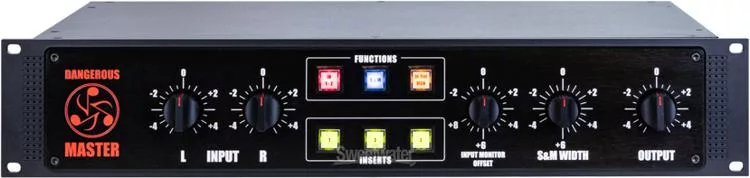
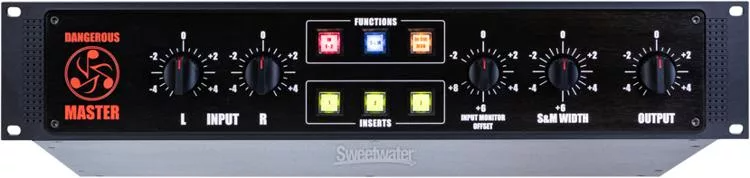
| Content | Dangerous Music's MASTER brings the amazing analog sound and functionality of previous Dangerous boxes to the mastering world with a truly unique approach that will give your projects an edge over your competitors. Three insert points are front-panel switchable for integrating external analog processing and there's something special lurking behind the S&M Width knob. With the S&M button depressed, MASTER engages a "Sum or Minus" mode that controls the stereo spread and much more. Every mastering engineer that incorporates outboard gear into their rig needs a MASTER!
Powerful processing at your fingertips
There's truly nothing quite like MASTER. The S&M functionality adds a remarkable element to your mastering arsenal. Imagine being able to modify the frequency content of the program material residing in the left/right aspects of the stereo field without changing the spectrum of the center material. With MASTER, you can. Hit the S&M button, activate insert #2 with a stereo EQ connected, and you can work wonders with the sound. Say the vocals (panned center) sound fine in the mix, but you'd like to brighten the guitars and cymbals a bit (which reside in the left and right panning positions). S&M removes the center material temporarily so you can process the extreme left and right signals without coloring the center material. The S&M Width knob can also modify the width of the overall stereo field. The engineers here at Sweetwater love the flexibility of the MASTER!
A plethora of useful controls
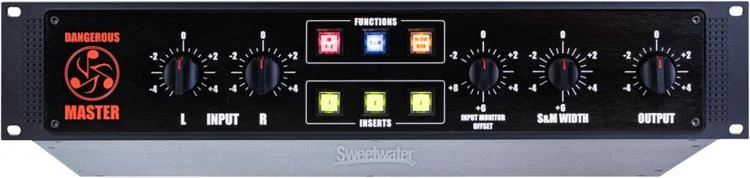
From left to right, you've got L/R Level controls, three buttons that trigger the insertion of outboard gear in the signal path, a button that individually selects which inputs are being processed, a button that triggers Stereo or Middle Sides mode on insert 2, and a button that selects whether the Monitor Output jacks have the Input or Output signal sent to the monitor section. Next up is the Input Monitor Offset. This is very handy to match the input and output levels to listen to the effect of processing without the level difference clouding one's judgment. The engineer can also match input and output level, look down at the scale, and determine the relative gain obtained from the mastering process. This control has a scale of -2 to +8dB in 0.5 dB steps. The S&M Width was covered in depth in the previous paragraph. Lastly, the Output level control dictates the final level that passed on to the A/D convertor.
What the pros are saying about the MASTER:
- "I've never mastered a song without a Dangerous MASTER! And I can't imagine it. With the S&M feature on the MASTER, you can really fix some problems in mixes, and address balance issues... Comparing it to Mid-Side processors in the digital realm I just think it's a 'Day and Night' difference." — Colin Leonard (Mastering Engineer)
- "I'm a huge fan of the Dangerous MASTER's S&M circuitry. It always seems to add an elegant width and depth to the mix. The Dangerous gear has certainly created an advantage. Another reason we have been able to establish ourselves in a highly competitive field is that aside from the gear sounding great...our Dangerous gear has been truly steady and stable." — Emily Lazar (Mastering Engineer)
- "I can't say enough about the quality components and sonic integrity...it doesn't get much better than this. I could hear the difference between AD/DA converters...choosing between them...for each session...has become effortless. I cannot imagine working without the Dangerous MASTER." — Larry DiVivo (TapeOp Magazine)
- "Dangerous Music really got it right with the Dangerous MASTER." — Andrew Mendelson (Mix Magazine)
- "I love all the Dangerous Music equipment. I use the MONITOR ST, the MASTER, and two 2-BUS LTs for my mixing and stem-mastering." — Noël Jackson (Mastering Engineer)
- "The Dangerous MASTER immediately made a huge improvement in the quality of my work. I think it's the cleanest sounding solution available." — Dave McNair (Mastering Engineer)
Dangerous Music MASTER Features:
- Audiophile-grade components yield crystal-clear sound
- 3 insert points are front-panel switchable for integrating external analog processing
- S&M button provides you with integrated Mid-Side processing
- S&M Width knob modifies the width of your overall stereo field
- Stepped controls ensure easy repeatability
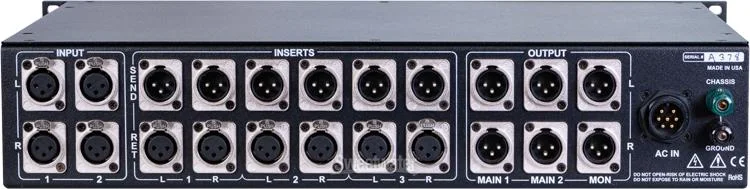
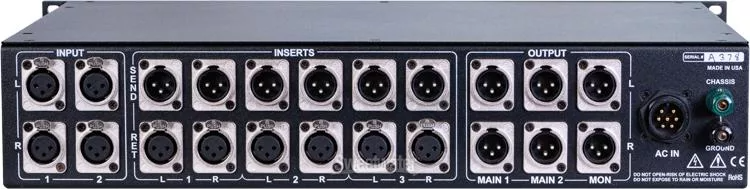
- 2 stereo inputs and 3 stereo outputs (1 for monitoring)
- Seamless connection with the Dangerous Liaison
| Midas Pro2C. Brand new, full Midas warranty.
Compact Live Digital Console Control Centre with 64 Input Channels, 8 Midas Microphone Preamplifiers, 27 Mix Buses, 96 kHz Sample Rate and Touring Grade Road Case
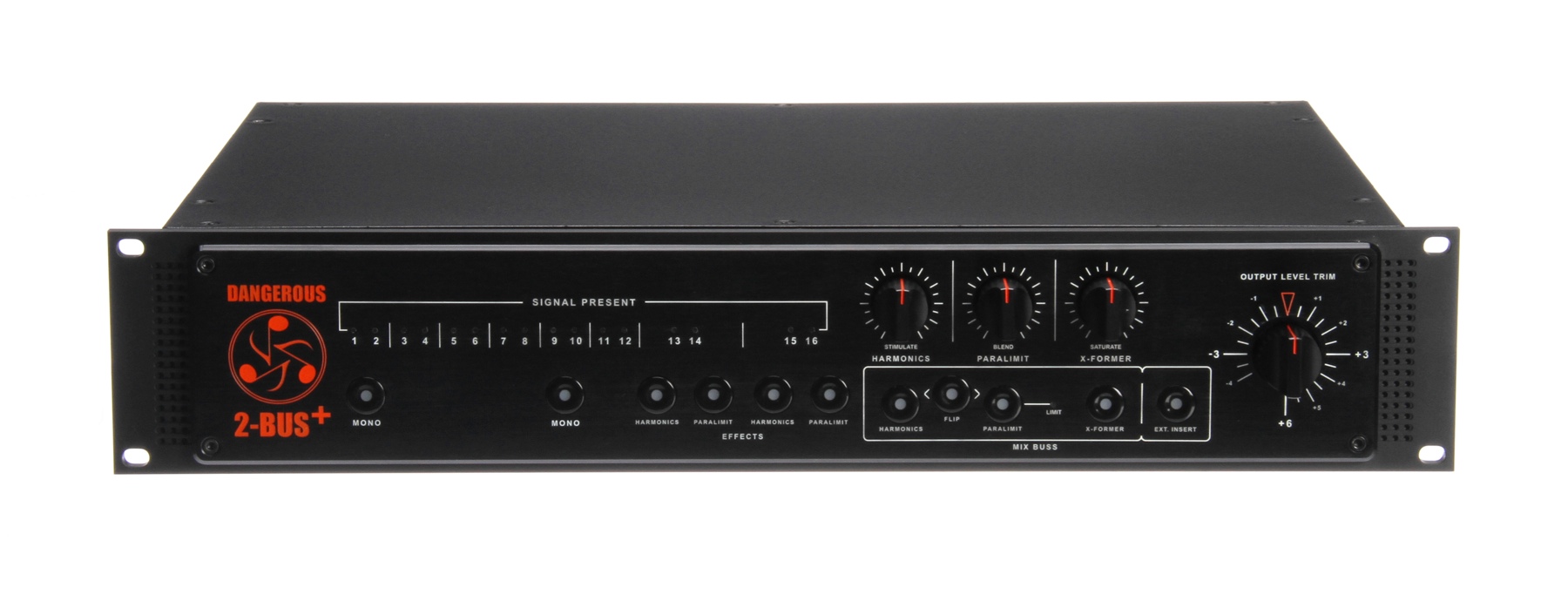
Shipping will cost extra based on buyers location. If purchased without an agreement in place, buyer will be responsible for organizing their own pickup or shipping. | The Dangerous Music 2-BUS+ is a 2U, 16-channel analog summing mixer with both XLR and D-sub inputs. It raises the bar on its legendary 2-BUS predecessor with even lower crosstalk, distortion, and noise-floor performance, along with stunningly precise soundstaging and center focus. Dangerous spent over two years developing three onboard audio processors that, with a simple push of a button and twist of a knob, add tone and color to your stems or across your entire mix directly from the 2-BUS+. The 2-BUS+ is smartly designed, extremely useful, and sounds incredible.
A trio of custom audio processors
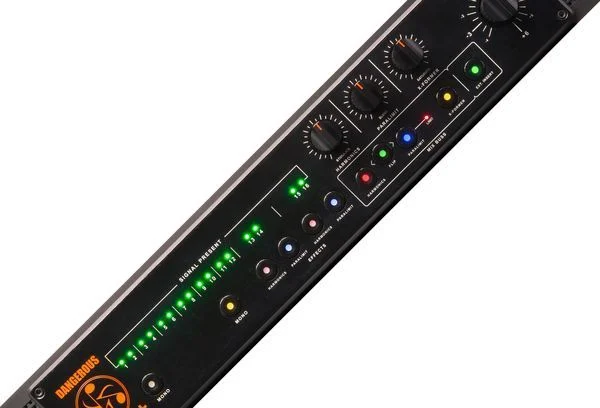
In sync with Dangerous Music's doctrine of tonal coloration as a per-project artistic choice, the 2-BUS+ features three separate custom audio processors that selectively add tone and color to your mixes. In parallel processing mode, you can deploy Harmonics, a tuned harmonic distortion generator, and Paralimit, a FET limiter on steroids. At Sweetwater, we've applied both of these across stereo mixes and on pairs of stems. X-Former kicks in a pair of custom transformers with core-saturation control on your stereo mix outs. You can have all three tone processors active concurrently, and you can flip the order of signal flow through distortion and limiting.
Outstanding flexibility
Dangerous Music knows that each engineer — and session — is unique, so they designed the 2-BUS+ for outstanding professional flexibility. They spec'd it with an XLR stereo insert before the outputs for adding a separate compressor or processing chain that you can bypass at the touch of a button for a quick reference comparison. Channels 1/2 and 9/10 can be set to mono to rout; for instance, vocals/bass and kick/snare each to its own mono input. They also gave the 2-BUS+ an output control stepped in 0.5dB increments from -4dB to +6dB, and included XLR connections for both the main and monitor outputs.
Gang 'em for high channel count
Need a full-on analog "console" summing experience? Gang together multiple 2-BUS+ units via the stereo expansion inputs XLR to create a customized channel count. For the ultimate in tonal flexibility and control, the custom audio processors on each unit apply across the ganged group output. With three units, for instance, you'll have 48 channels of analog summing, with the first two units employing Harmonics (distortion), and Paralimit (limiter) across two separate stereo stems, and the third unit applying X-Former transformer saturation on the master stereo outputs.
What the pros are saying about the 2-BUS+:
- "The Paralimit and X-Former appear to be magic knobs. Special mention goes to the Paralimit because it does that lovely thing of bringing up the general ambience without slamming the track, something I particularly love on drums. Plugged it into my system along with my old 2-BUS and Dangerous MONITOR ST, and wow ... it's fantastic! Bags of air and space around the mix." — Chris Blackwell (drummer/composer)
- "Since the 2-BUS has so much headroom, it's really easy for me to decide that I want the entire vocal submix to be brighter or warmer, or more or less compressed." — Michael James (producer/mix engineer)
- "The Dangerous Music 2-BUS is one of the reasons my studio delivers a killer sound that grants the edge on the competition." — Alberto Rizzo Schettino (engineer)
- "Between SSL, in-the-box, and 2-BUS ... in blind tests ... it was a unanimous decision that the Dangerous mixes beat out everything. The 2-BUS mixes ... were simply cleaner and warmer than the SSL or in-the-box mixing ... I just don't miss my console." — Gina Fant-Saez (mix engineer)
- "With the 2-BUS LT, elements have their own place. You end up with a quicker, bigger mix and retain a more natural, less processed sound." — Phil Greiss (producer/engineer)
- "The Dangerous Music equipment is the centerpiece of my mixing rig. Everything I do goes through a Dangerous MONITOR, 2-BUS, MASTER, and BAX EQ. Everything." — Fab Dupont (mix engineer)
- "I don't understand how the 2-BUS has been in the studio for so long, but hasn't gotten to live shows — the sound is unbelievable." — Horace Ward (FOH engineer)
- "The harmonic and transformer flavors are great options to have and the parallel limiter is a genius idea." — Chris Tabron (producer/mix engineer)
Dangerous Music 2-BUS+ Analog Summing Mixer Features:
- Stunning 16-channel analog summing mixer injects your mixes with exceptional headroom and dimensionality
- 3 analog options (Harmonics, Paralimit, and X-Former) for adding tonal coloration to your mix
- XLR and D-sub input connectivity and flexible routing allow for a customized workflow
- Integrate your outboard gear easily with the switchable stereo analog insert
- Output control is stepped in 0.5dB increments for perfect recallability
- High-quality components ensure audiophile-grade sound
| Add the undeniably vibrant sound of analog summing to your DAW with the SPL MixDream XP 16 x 2 analog summing mixer. Take one of your past projects and mix it through the MixDream XP and you'll hear more depth, enhanced stereo imaging, and noticeably punchier dynamic impact. The Class A design and 60-volt rails in the MixDream XP provide amazing headroom and ultra-low noise, rivaling the sound of full-featured analog consoles. Once you've got your submixes sounding just right, Sweetwater can highly recommend the SPL MixDream XP summing mixer to take your mix over the top.
SPL MixDream XP 16 x 2 Summing Mixer at a Glance:
- Deeper, wider mixes from analog summing
- Premium analog design for top-notch sound
- Expandable for higher channel counts
Deeper, wider mixes from analog summing
While the debate over analog vs. digital summing is not new, most engineers agree that summing your mix through high-quality analog gear sounds awesome. Compared to the exact same mix summed in your DAW, you'll notice that the SPL MixDream XP sums your mix with greater depth and enhanced stereo definition, with an undeniably vibrant quality.
Premium analog design for top-notch sound
SPL designed the MixDream XP summing mixer with 60-volt rails for an outstanding 125dB dynamic range, with a very low noise floor too.The discrete Class A topology was designed to give you essentially the same sound as a high-end mixing console, in a convenient rackmount form factor.
Expandable for higher channel counts
Need more than 16 channels of analog summing? It's easy to expand your summing capabilities with additional MixDream XPs. Just use the expansion inputs to daisy-chain your MixDream XPs, or even mix and match with SPL MixDream model 2384 summing mixers.
SPL MixDream XP 16 x 2 Summing Mixer Features:
- 16-in, 2-out analog summing mixer
- Amazing dynamic range and ultra low noise, thanks to discrete Class A design and 60-volt rails
- Multiple units can be linked for surround operation
- Allows you to achieve an analog vibe that's difficult to create with plug-ins
- Ideal for mixing and mastering applications
| While the convenience and power of DAWs is indisputable, some engineers prefer the sound of analog, particularly when it comes to mixing. That's where the Burl Audio B32 Vancouver analog mix bus comes in. Designed specifically for the digital audio environment, this summing amp lets you realize the full potential of your DAW by delivering the kind of sound quality you'd expect from a classic, large-format analog console - from a compact 1U device. Built in the USA using only the finest mastering-grade components, Burl Audio's B32 Vancouver sums 32 channels (24 stereo, eight mono inputs) to dual stereo outputs, and gives you the flexibility of a 6dB gain boost and tone-enhancing switchable output transformer.
Burl Audio B32 Vancouver 32-channel Mix Bus at a Glance:
- Large-format analog console hugeness
- Impressive Sonic versatility and ease of use
- Burl Audio: pro gear driven by an audiophile sensibility
Large-format analog console hugeness
If you've ever worked on a classic large-format analog console, you've likely got that inimitable sound stuck in your head, and the results you're getting out of your DAW may not be cutting it. Enter the the Burl Audio B32 Vancouver. With no capacitors in its discrete analog Class A signal path, this 32-channel "mix bus" embues your mixes with the hugeness, impact, spatial detail, and clarity. It gives your mixes the "glue" they've been missing.
Impressive sonic versatility and ease of use
Burl Audio's B32 Vancouver gives you impressive sonic versatility, and it's so easy to use. Aside from your left- and right-channel mix level pots, there are just two other controls for each channel - a button that engages a 6dB summing amp Gain Boost, and a button to insert Burl's BX5 output transformer into the circuit. The Gain Boost endows your mix with hugeness and slam factor, while the BX5 output transformer provides an alternate tonality (which sounds amazing, trust us). The bottom line? If you want massive-sounding mixes, the Burl Audio B32 Vancouver is a no-brainer.
Burl Audio: pro gear driven by an audiophile sensibility
At Sweetwater, we've been nothing but impressed with Burl Audio gear. Based in a professional Santa Cruz, CA recording studio, Paradise Recording, Burl is driven by an audiophile sensibility; their gear is designed by pro recording engineers, for recording engineers of all levels. The company's directive is simple: to provide you with high-quality recording equipment that will improve your recording, mixing, and mastering. Their innovative solutions not only sound amazing; they intelligently address the challenges of the digital age.
Burl Audio B32 Vancouver 32-channel Mix Bus Features:
- Discrete analog Class A signal path
- Eight mono inputs, 24 stereo inputs
- Audiophile-grade 0.1% stepped attenuators
- Switchable BX5 output transformer
- Summing amp Gain Boost
- Dual stereo outputs
- Made in the USA
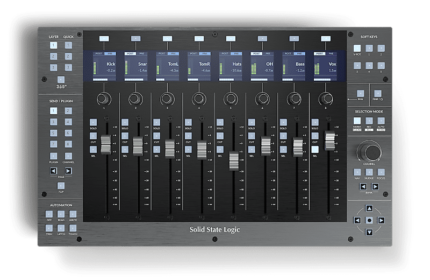
| Avid S1 eight-fader EUCON control surface
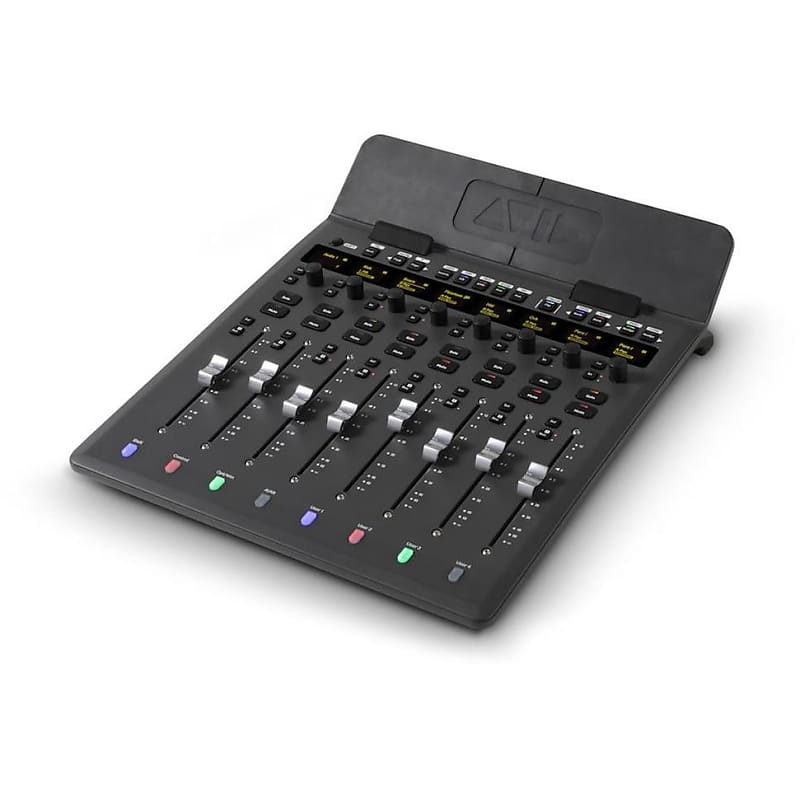
The Avid S1 is an eight-fader EUCON control surface with unparalleled speed, rich visual feedback, and software integration of Avid's high-end consoles in a slimline surface that's an easy fit for any space or budget. Avid S1 gives you deep hands-on control of your favorite audio and video software and, together with the free Pro Tools | Control app for iPad (iPad not included), provides great ergonomic efficiency, easy touch workflows, and S6-style metering and processing views, so you can navigate large sessions quickly, mix more intuitively, and turn around better sounding mixes fast.
Mix big on a smaller scale
While Avid S1 fits easily between your display and keyboard, it packs a lot of mixing power into its small surface. From motorized faders and knobs that respond to your touch, to fast-access touchscreen workflows and Soft Keys that enable you to perform complex tasks with a single press, S1 provides the speed and versatility to accelerate any music, audio post, or video project.
Get unmatched software integration
S1 is powered by EUCON, Avid’s high-speed Ethernet control protocol that delivers deep hardware/software integration, giving you full touch and tactile access to a host of Avid and third-party software functions and controls. You can even switch between multiple applications—and workstations—at the touch of a button, providing the most fluid editing and mixing experience.
Specifications:
- Faders: Eight motorized, touch-sensitive, 100 mm long-throw faders
- Knobs: Eight push-top, touch-sensitive rotary encoders
- Additional controls: Assorted hardware buttons/keys for various functions and mode selections, including Mute, Solo, Record-enable, Bank, Nudge, and more
- Software interface: Supports the free Pro Tools | Control app running on iPad (iPad not included), providing touchscreen control, project navigation, macro triggers, and more
- Displays: Eight high-resolution OLED displays, plus multiple status LEDs and multicolor track buttons; channel metering, monitoring, processing, track status, automation modes, and other views provided by Pro Tools | Control on iPad
- Height (front, rear): 1.2 inches, 3.8 inches (29 mm, 97 mm)
- Width: 12.3 inches (312 mm)
- Depth: 14.9 inches (377 mm)
|











Reviews
There are no reviews yet.