| Content | Made for Overbridge
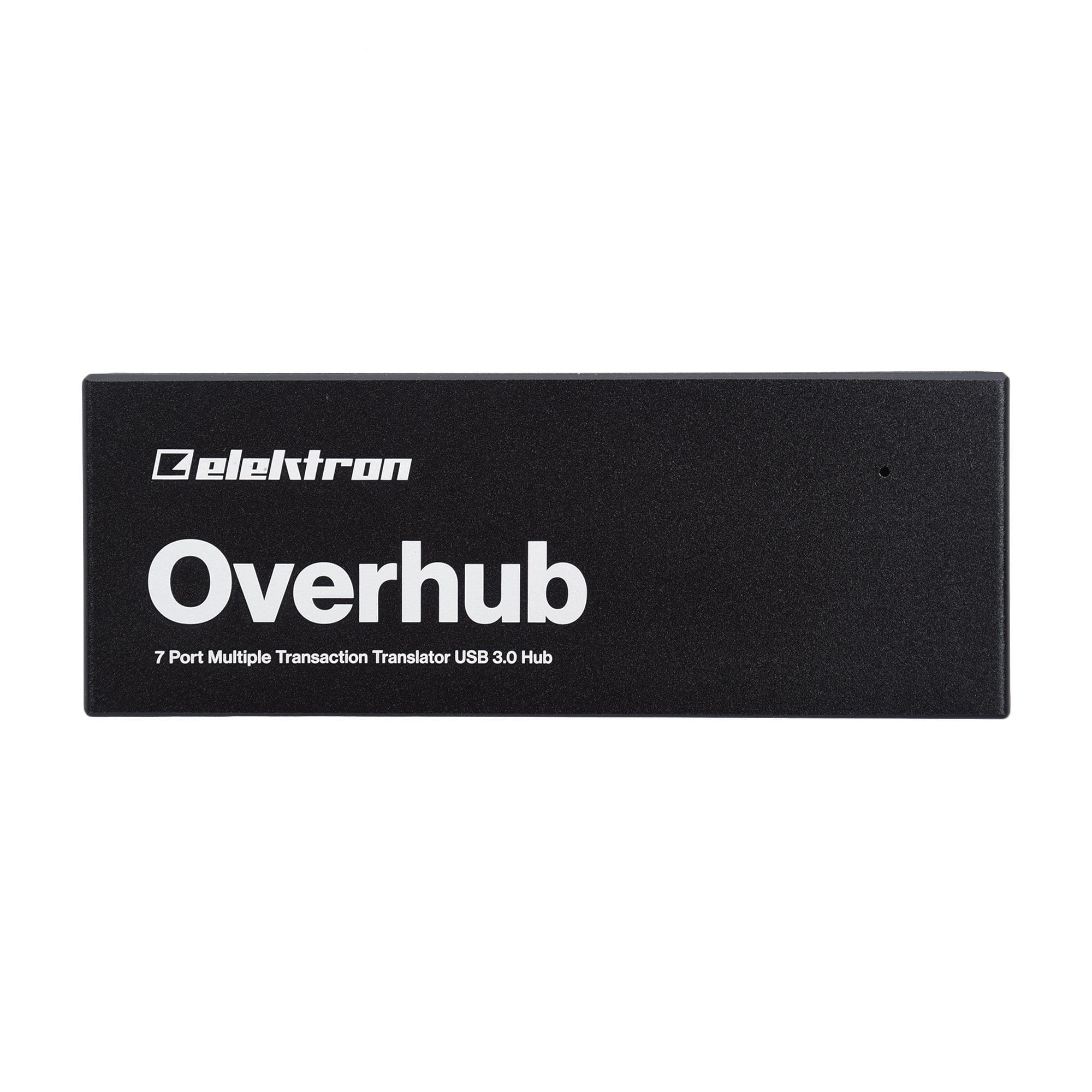
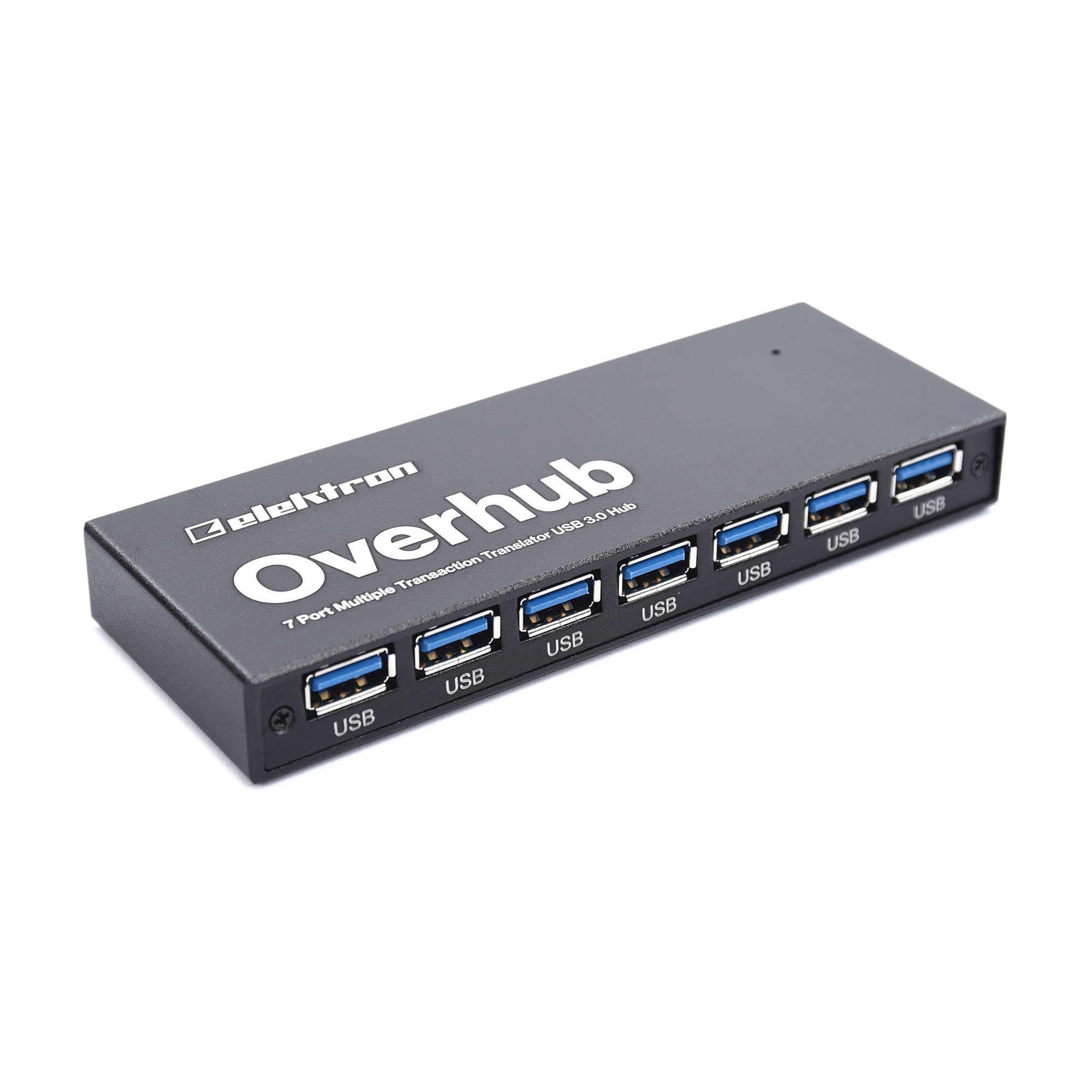
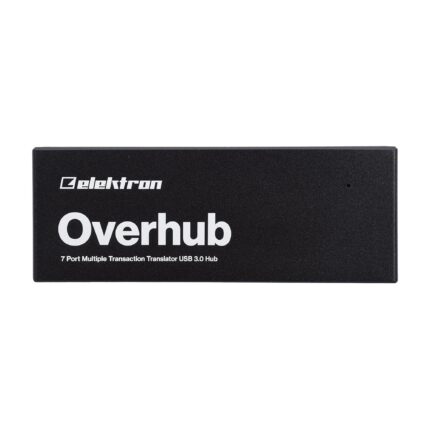
Overhub is the ideal USB hub solution for Overbridge enabled units. Connect up to 7 units to a single host computer for maximum productivity.
A USB hub for the modern studio
Naturally, Overhub is fully compatible with all USB peripherals. And it works in the most convenient manner too as operation is completely driverless.
Clever tech
Multi TT technology ensures ultimate USB data transfer performance. Every bit in its right place, at the right time. Overhub is a top performer.
Included in the box:
- 1 × Overhub Multiple Transaction Translator USB 3.0 Hub
- 1 × USB 2.0 A to Micro-B Connector Cable
- 1 × USB 3.0 A to Micro-B Connector Cable
- 1 × User manual
Key features:
- 7 USB ports
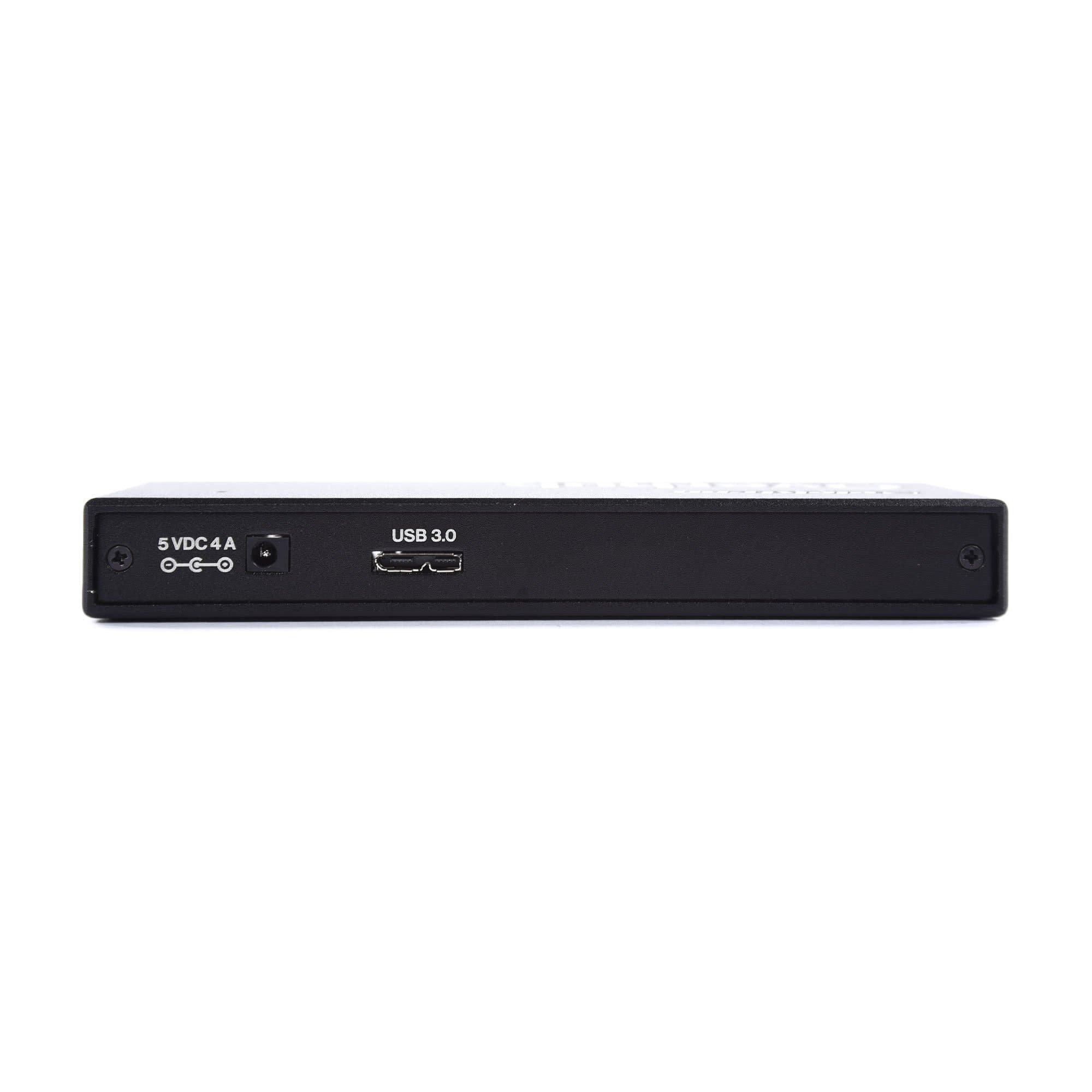
- Supports USB 3.0
- Specifically made for Overbridge enabled units
- Fully compatible with all USB peripherals
- MTT technology for efficient merging of multiple USB Full speed (12 Mbit/s) streams
- Driverless operation
| FEATURES
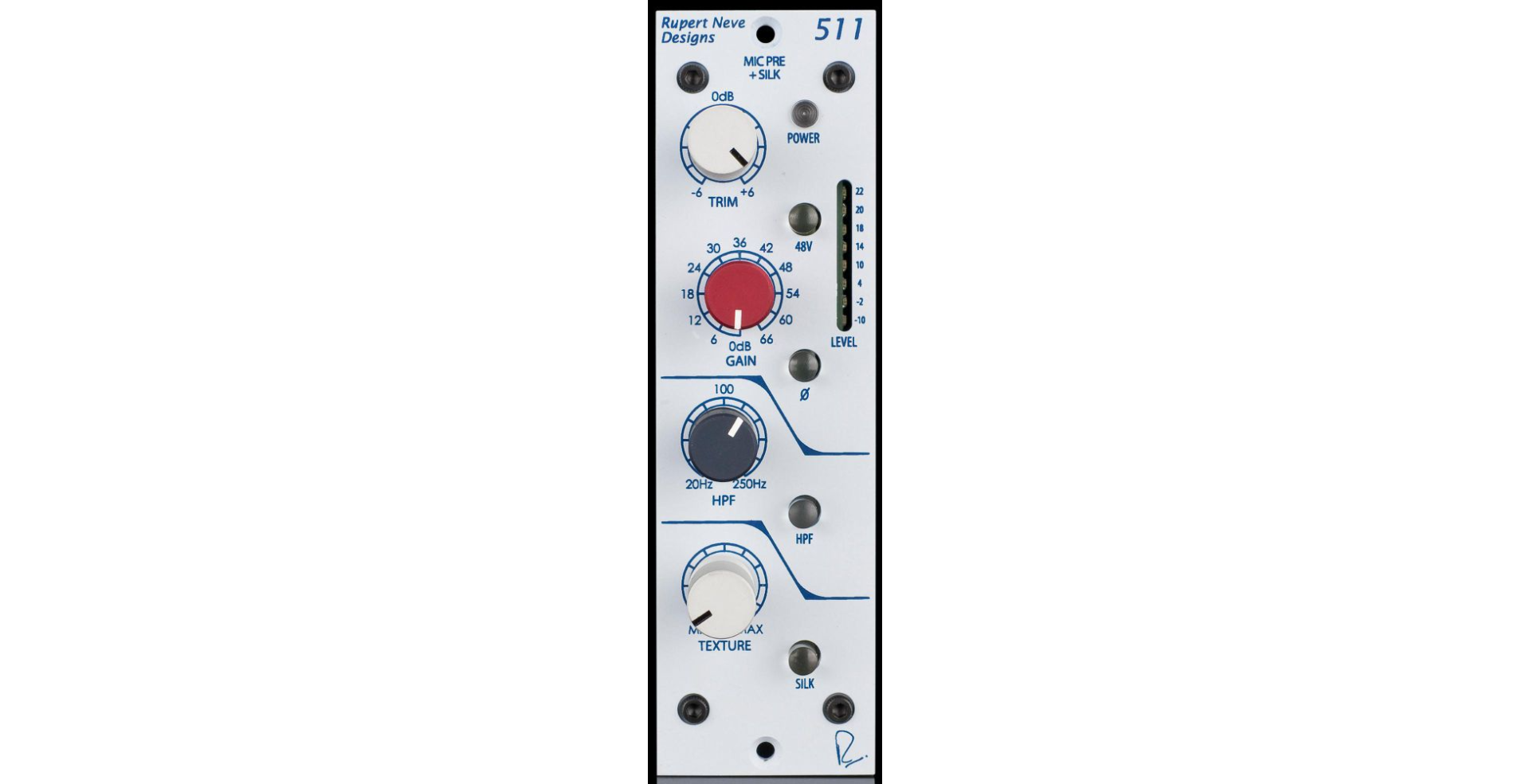
- 12-way precision rotary switch controls gain from 0 to 66 dB in 6 dB steps
- Continuously variable +/-6 dB level control
- Silk circuit, reduces negative feedback, adding harmonic content as needed
- Red Silk accentuates the saturation in the mid and high frequencies
- Same presence and sweetness found in standard Portico Series modules
|
Number of Channels |
Single |
|
Inputs |
1x XLR, balanced |
|
Output |
1x XLR, transformer-balanced |
|
Maximum Output Level |
+23dBu |
|
Meter |
8 segment LED meter |
|
Power Requirements |
Power Requirements @ +/-16VDC 100mA |
|
Dimensions |
Not specified by manufacturer |
|
Box Dimensions (LxWxH) |
10.2 x 7.8 x 2" |
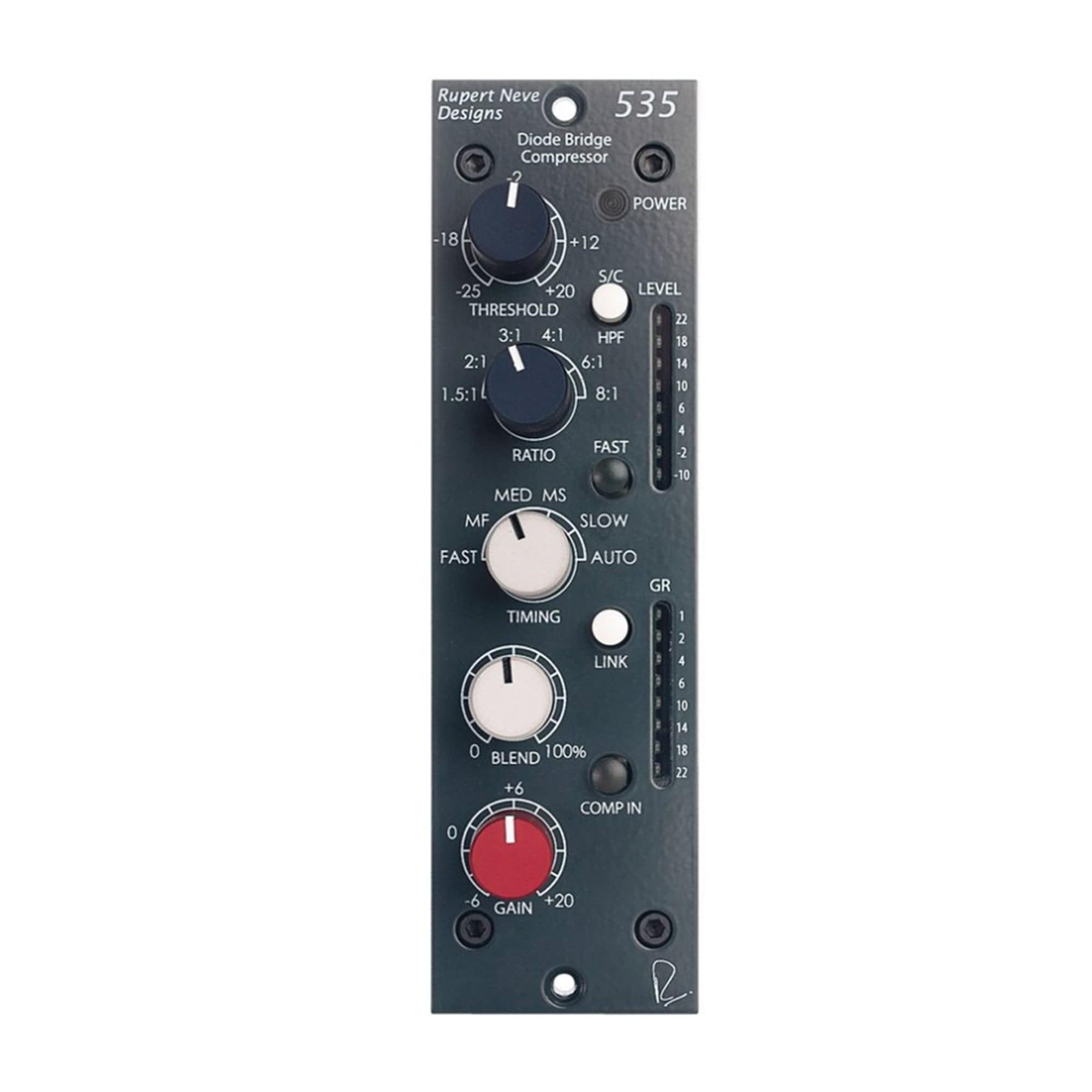
| Originally developed for the dynamics circuit of the acclaimed Shelford Channel, the 535 Diode Bridge Compressor captures the soul of Rupert Neve’s original 2254 compressor while providing modern updates including advanced timing control, significantly lower noise, fully stepped controls throughout, and internal parallel processing capabilities.
What is diode bridge compression?
Where the VCA compressor found in the Master Buss Processor provides unmatched clarity, the weighty, harmonically rich tonality of diode bridge compression can be essential in pushing key sources like vocals, electric guitars, bass and drums to the forefront of a mix.
By understanding the limitations of vintage units like the legendary 2254, painstaking effort was taken to reproduce the unique tone of these classics while improving the noise floor & accuracy, expanding inflexible time constants, adding full wave sidechain detection for improved dynamic response, and widening the range of threshold and ratio controls.
Delivering the powerful sound of these iconic designs with enhanced flexibility for the modern age, the 535 Diode Bridge Compressor is a dynamic tool equipped to make a bold statement on virtually any mix or track.
LINE INPUT TO LINE OUTPUT
- Compressor Bypassed.
- Z source = 40 Ohm Balanced
INPUT IMPEDANCE
10K Ohm
OUTPUT IMPEDANCE
40 Ohm
MAXIMUM INPUT LEVEL
+23.5 dBu
MAXIMUM OUTPUT LEVEL
+23.5 dBu
NOISE
- 22 Hz - 22 kHz BW.
- -101 dBu
FREQUENCY RESPONSE
- 10 Hz - 120 kHz, 30ft Output XLR Cable.
- +/- 0.25 dB
THD+N
- @ 1 kHz @ Maximum Output Level, 22 Hz - 22 kHz BW.
- 0.001%
| As with ELI’s other signal processors, the Lil FrEQ Equalizer takes a somewhat unique approach to its job. Instead of daisy chaining several equalizers and frequency processors, we combined most of the sound sculpting tools an engineer needs into a compact single rack space box, while still offering the highest performance of any design in its class.
Eight Sections of Processing
There are eight sections of processing – what other EQ offers that? Even better – in addition to a master bypass, each of the Lil FrEQ’s sections features its own dedicated bypass switch, letting you instantly A/B the effect of each section as you adjust and fine-tune them.
HIGH PASS – The High Pass section is a really easy to use sharp filter that cuts all content below one of eight preset frequencies from 30-330 Hz. This filter is very steep and has a special shape that prevents frequencies from thinning out just above the cutoff point. The corner frequency is selected using up/down buttons, and indicated by LEDs that glow softly when the section is bypassed, and brightly when the section is engaged.
HIGH & LOW SHELVING – These two knobs function similarly to the familiar “bass and treble” tone controls found on many consumer audio playback systems; however, these are designed to a much higher performance standard, providing exceptionally smooth and musical boost and cut on the high and low frequencies.
PARAMETRIC EQ – The Lil FrEQ has four sections of fully parametric EQ (LF, Lo Mid, Hi Mid and HF), with each section featuring individual gain, bandwidth (Q) and frequency controls. It may be the cleanest parametric EQ section ever produced, operating below .0007% THD (Total Harmonic Distortion) even at extremely high audio levels. Try finding those specs anywhere else!
DS (DYNAMIC EQ) – The DS section provides the highest performance, easiest to use, and possibly most natural sounding “De-esser” ever built. This powerful tool combines tunable filters with a compressor-like circuit that can help contain and control excessive high frequency content such as sibilants or other sharp transients, especially in the absence of other lower frequency content. It can also function as a one of a kind soft knee High Frequency limiter, which is one of the main things responsible for the Lil FrEQ becoming the go-to vocal EQ for engineers everywhere. It has been used on many acclaimed albums and major live performances all over the world, becoming the “go to” EQ for key tracks like lead vocals, snares, and bass. There are now dozens of hit record vocals that were processed thru the Lil FrEQ.
Frequency Response: 5 Hz to 140 kHz on transformerless inputs and outputs. Transformer output 10Hz to 110 kHz.
Dynamic Range: 120 dB from maximum output (.1% clipping) to minimum output. Greater than 110 dB signal to noise.
Distortion: Ranges between .00056% and .005% depending on mode and settings. DS section has THD < .005%.
I/O: DC coupled inputs and outputs and one transformer coupled output.
Dynamic Time Constraints: Attack is approximately .5 ms. Release .04 sec fixed internally.
Power Consumption: 15 Watts Max.
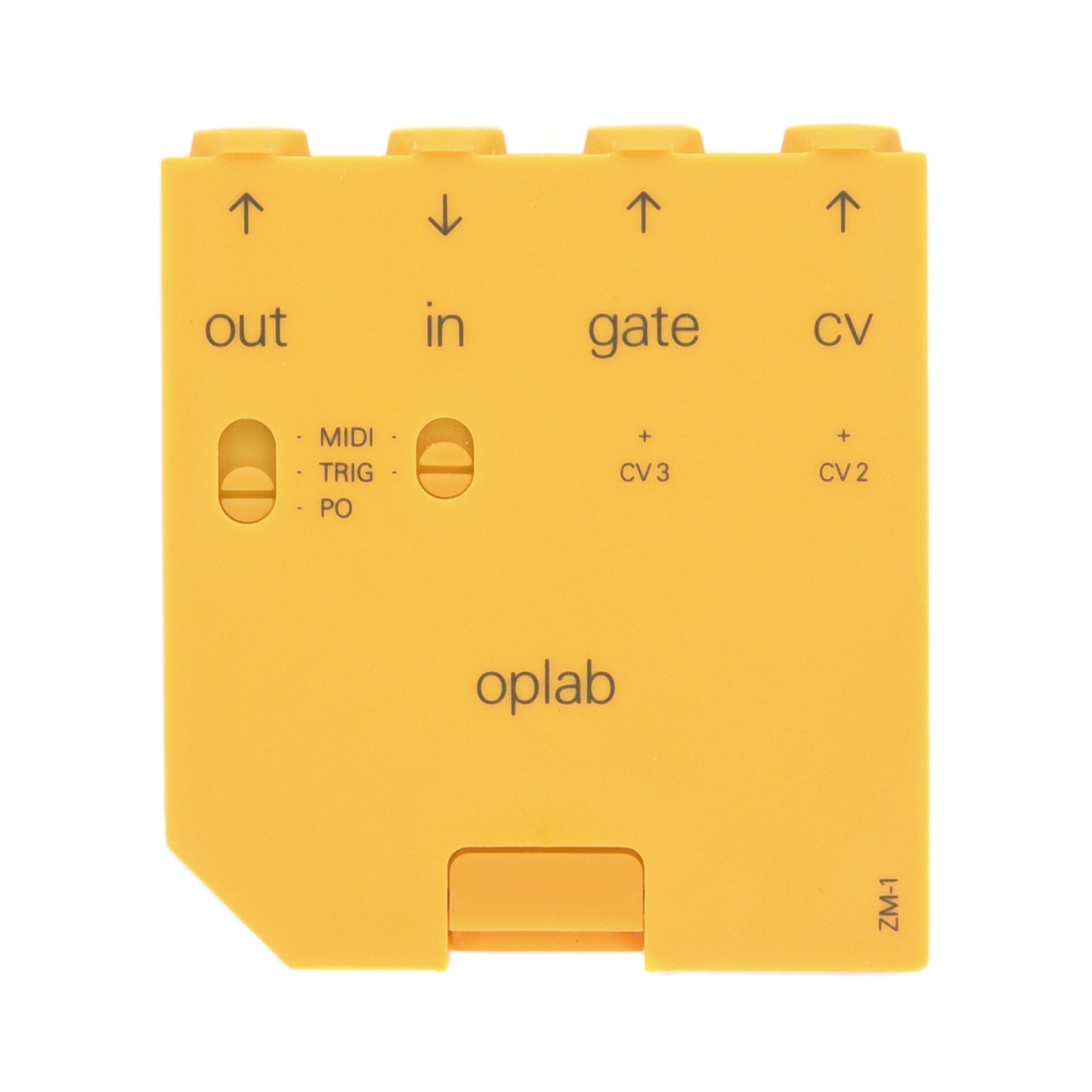
Metal Chassis: single height 1.75″ high, 10″ deep, 19″ wide. | Imagine having the power and flexibility of the OP-Z sequencer available to any other music equipment. Now you can, with the new oplab module - the magic link between OP-Z and the rest of the world. The oplab module is the first hardware expansion module for OP-Z. once mounted in the back of your OP-Z, you can use it to connect to any equipment using standard cv and gate, such as the pocket operator modular or any other modular system. It features three cv outs and one gate out, all programmable and playable from OP-Z. have your wall of modules sequenced from the palm of your hands. Use the po sync out to unleash the power of your regular pocket operators and have them play in sync with the rest of your setup. Even connect standard midi devices, using midi over 3.5 mm jack or the included midi over din adapter cable. Oplab features both midi in and out ports as well as trig in and out for other synthesizers and sequencers. | FEATURES
- World-class, transformer-coupled preamp, compressor, and DI
- Gain: 0 - 66dB in 6dB increments
- Compressor: Single-knob opto-coupler compressor with 2:1 ratio
- Blend: Determines balance of mic and DI inputs
- Instrument gain: 0 - 30dB on instrument input
- 48V phantom power
- Silk: Adds nostalgic warmth and presence when engaged
- Instrument input: Front-panel TRS input and passive-through for Hi-Z sources
- Polarity reverse
- Threshold: When signals exceed threshold level, gain is reduced at a controlled 2:1 ratio with fixed attack and release time constants
- Indicators: Signal presence and clipping on both mic and DI signals, as well as compressor activation.
TECHNICAL SPECIFICATION
Rupert Neve Designs Portico 517: 500 Series Mic Pre / DI / Comp
- Frequency Response: Main Output, no load, -0.2dB @ 10Hz -3dB @ 160kHz
- Noise measured at main output, unweighted, 22Hz - 22kHz, terminated 150 ohm: Gain at unity: better than -100dBu; gain at 66dB: better than -62dBu Equivalent Input Noise: better than -128dBu, noise factor 1.5dB
- Maximum output level from 20Hz to 40kHz: +23dBu
- Total Harmonic Distortion and Noise: @ 1kHz, +20 dBu output: Main Output: Better than 0.001% @ 20Hz, +20 dBu output: Main Output: Better than 0.002% Silk Engaged: Better than 0.2% Second harmonic
- Crosstalk: Measured channel to channel: Better than -90dB @ 15kHz.
- Phantom Power: +48 Volts DC +/- 1%
|





Reviews
There are no reviews yet.