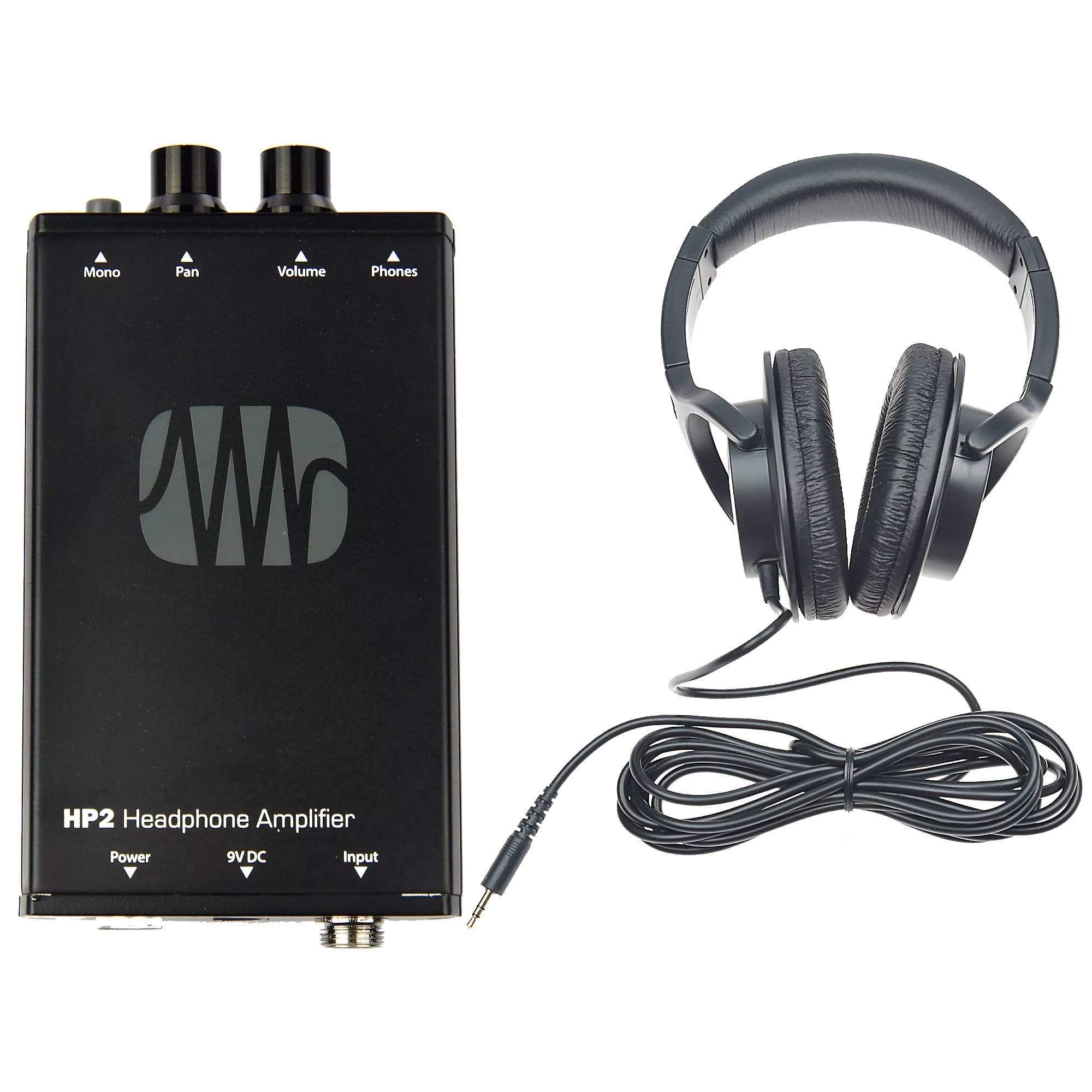
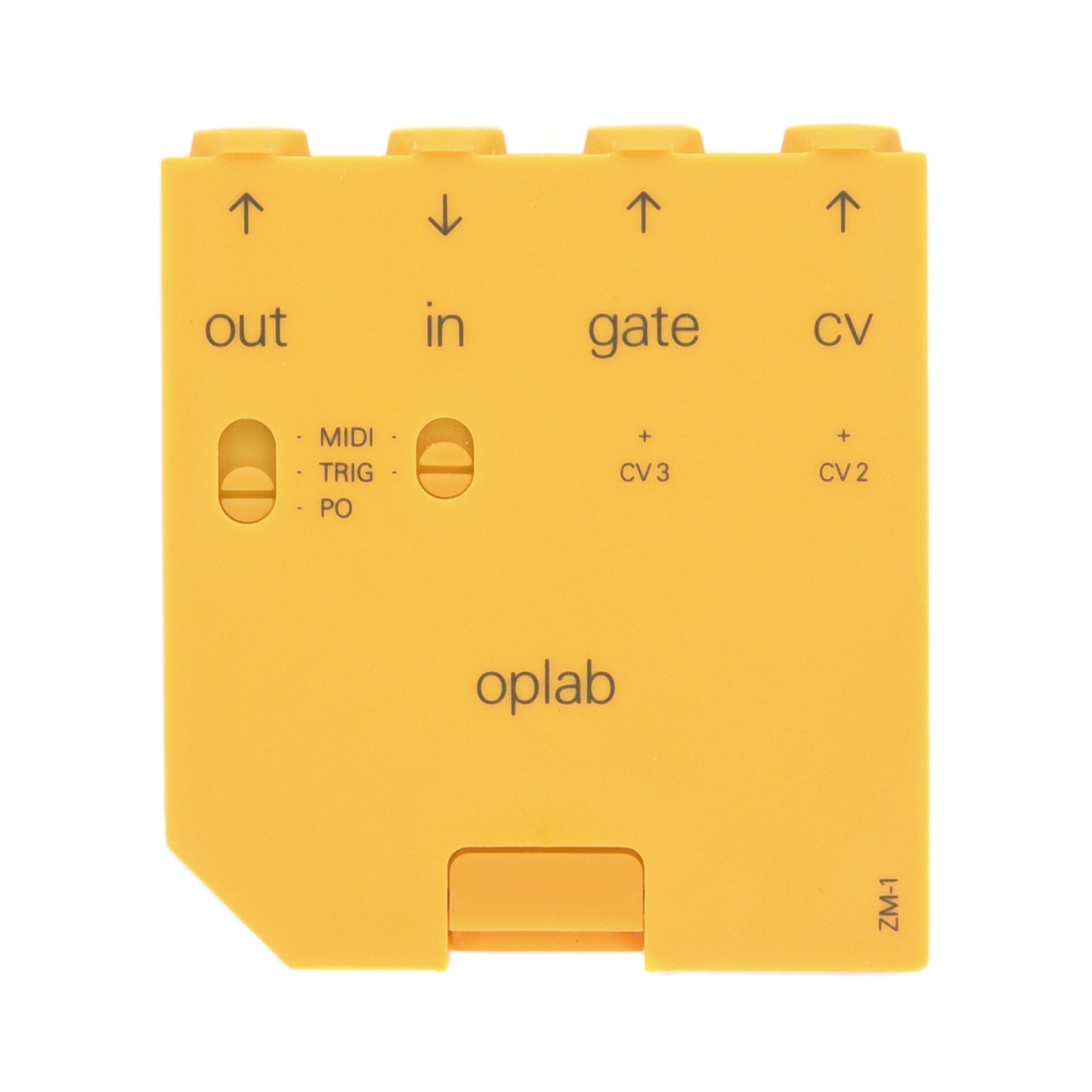
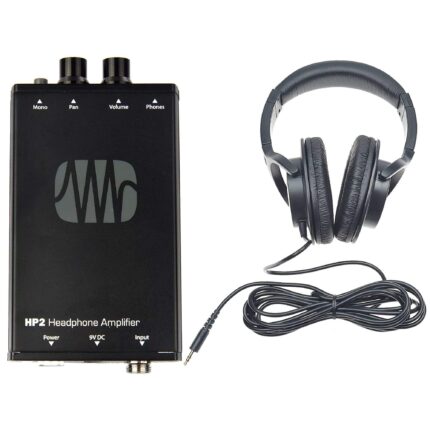
| Content | Designed for musicians and performers who demand mobility without compromising audio quality, the HP2 personal headphone amplifier is a great choice for driving wired in-ear monitors (IEMs), as well as headphones. PreSonus HP-series headphone amplifiers have long been popular for their loud, clean, clear sound and roadworthy built quality. The new HP2 delivers these qualities in an easily affordable, stereo device so you'll hear every note and beat clearly wherever your music takes you. | Imagine having the power and flexibility of the OP-Z sequencer available to any other music equipment. Now you can, with the new oplab module - the magic link between OP-Z and the rest of the world. The oplab module is the first hardware expansion module for OP-Z. once mounted in the back of your OP-Z, you can use it to connect to any equipment using standard cv and gate, such as the pocket operator modular or any other modular system. It features three cv outs and one gate out, all programmable and playable from OP-Z. have your wall of modules sequenced from the palm of your hands. Use the po sync out to unleash the power of your regular pocket operators and have them play in sync with the rest of your setup. Even connect standard midi devices, using midi over 3.5 mm jack or the included midi over din adapter cable. Oplab features both midi in and out ports as well as trig in and out for other synthesizers and sequencers. | Proven reverberation classic for the future
With the VSR 3.2, we happily rely on the proven old mechanical way to create reverberation. Rightly, because the used reverberation spring by AccuBell (formerly Accutronics) creates that magic 60's reverb which is slightly metallic and dense at the same time.
Just like it predecessors, VSR 3.2 has a straight-forward and honest approach: signal in - spring reverb - vintage sound out.
VSR 3.2 is equipped with an equalizer that is exactly adapted to the springs' frequency response. In addition, there are controls to mix the dry and effect signal as well as controls for the input and output level. This way, VSR 3.2 simply exactly does what it was designed to do.
Designed for every situation
Although using a large spring (type 9), VSR 3.2 fits in a 19" housing with one rack unit – minimal space requirements. Thanks to its extremely solid chassis, VSR 3.2 is a reliable vintage-effect that cannot only be used in a controlled studio environment. On the contrary, it also serves fine when being used in straining live situations.
VSR 3.2 grants your sound an elegant touch of "good old times". Its simplicity makes it an unbelievable versatile companion.
Inputs
- 1/4"-jack input front
- unbalanced
- max. input sensitivity: –40 dBu
- impedance: 1 MΩ
- 1/4"-jack input rear (1)
- unbalanced
- max. input sensitivity: 0 dBu
- impedance: 100 kΩ
- 1/4"-jack input rear (2)
- unbalanced
- max. input sensitivity: –20 dBu
- impedance: 10 kΩ
Outputs
- 1/4"-jack output (1)
- unbalanced
- max. output level: 0 dBu
- 1/4"-jack output (2)
- unbalanced
- max. output level: - 20 dBu
Signal-to-Noise Ratio
- direct: > 80 dBu
- effect: > 70 dBu
THD + Noise
Miscellaneous
- power supply: external DC-adapter with 12 V/1000 mA
- dimensions: 19“, 1 HE, ca. 190 mm deep
- weight: 2.5 kg
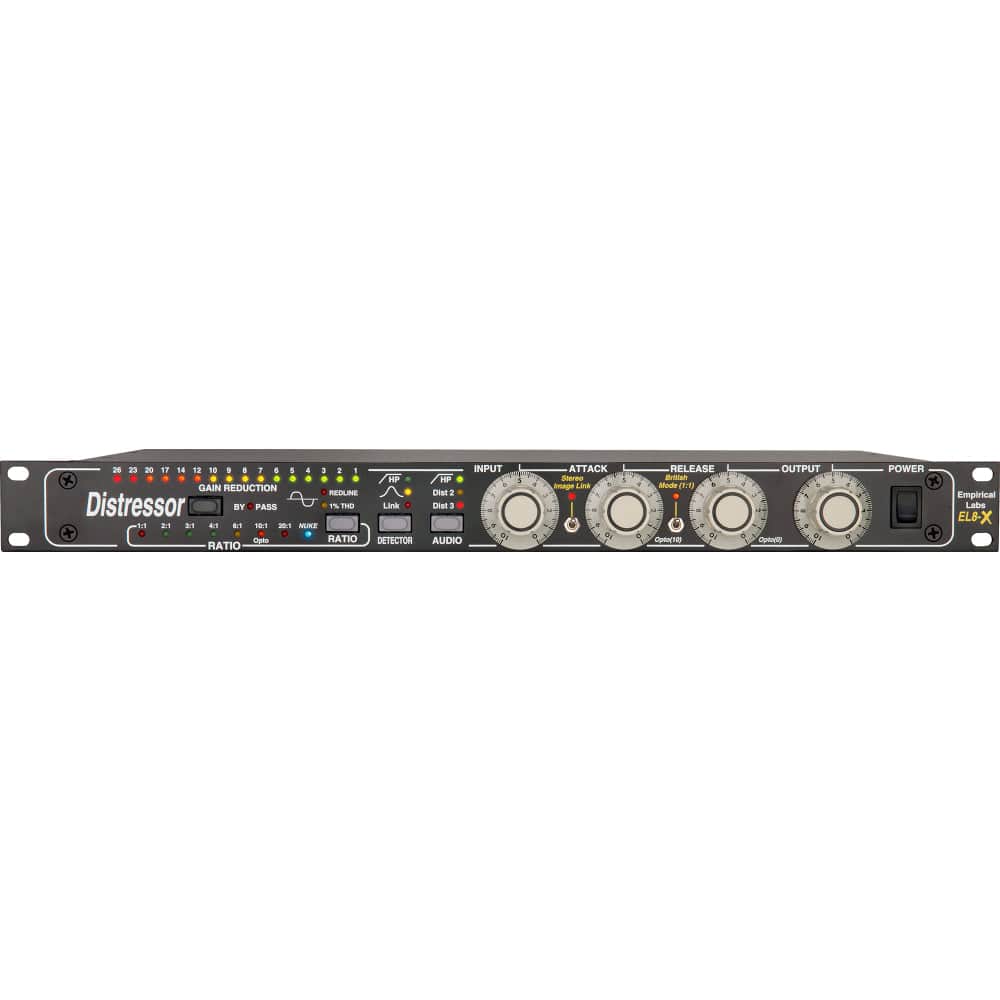
| The product that started it all for Empirical Labs. Born of founder Dave Derr’s love of classic compressors like the 1176, LA-2A and Gain Brain (among others), the Distressor incorporates his favorite sonic characteristics of these, along with other unique and interesting features that have made it a staple for audio engineers all over the world. With over 28,000 units in the field, it’s safe to say that the Distressor is one of the best selling high end compressors of all time… if not THE best selling. A prominent recording engineer recently wagered that there probably was not a top 40 record made in the last five years that didn’t have at least one Distressor on it.
Besides providing a wide range of control and a unique feature set, the Distressor offers a warm, vintage sound by using a custom designed gain control circuit. This “warmth” or “vintage sound” has become a major issue in the last few decades, as the super clear and linear digital technology does next to nothing to soften “harsh” sounds, nor emphasize the bass frequencies in music sources. Conversely, older analog tape, vinyl records and tube equipment could not be prevented from coloring the sound, often to the frustration of recording engineers. However, many people now realize that this coloring can be extremely pleasant and musical. Digital technology is often referred to as “cold” and “brittle” among other terms (although we prefer “unforgiving”).
Unique Compression Curves
All eight of the Distressor’s curves are unique and distinctive, from the 1:1 mode that simply warms up signal with low order harmonics without intentional compression, to the “Nuke” setting – a brick wall limiting curve that shines on live drum room mics. Each curve has its own personality and several actually use different circuitry, and are effectively different compressors. Most exceptional is the 10:1 “Opto” ratio which uses separate detector circuitry to emulate the oldest (and valued) “light controlled” devices, such as the LA-2A.
Distortion (Color) Modes
Another large part of the Distressor’s personality and power derive from three modes that color the signal, even without compression. These extended audio modes were designed to allow emulation of some very old and expensive vintage compressors & limiters, and let the Distressor deliver a classic “knee” sound all its own by providing user programmable, warm harmonic distortion. In addition to the basic distortion mode, Distort 2 emphasizes tube-like 2nd order harmonics, while in Distort 3 setting the distortion becomes dominated by 3rd harmonics more closely resembling tape. Two HP filters – one in the audio path, one in the detector path – are also available to help with low frequencies that can cause pumping and breathing.
British Mode
The concept of British Mode came from an unusual setting on the classic UREI LN1176 limiter. The unit was designed to have only four ratios, each ratio being engaged by selecting one of four buttons. However, as early as 1980 (or before), renegade recording engineers, always on the lookout for something a little more “over-the-top”, found that you could make all four buttons stay in if you pressed them just right. What resulted was a very aggressive sound that had some elements of the unit’s 20:1 ratio, but with an unusual knee and new envelope shape. Somewhere along the line, someone called it “British Mode”, and the name stuck.
The EL8-X has the advantage of being able to selectively apply this aggressive characteristic – not just to the new “British” ratio (1:1) – to any of the ratios, simply by engaging the dedicated “British Mode” switch.
The British Mode and Image Link options are only available on the EL8-X.
Image Link
The original Distressor stereo link function used a summing and phase detection method, which allowed slight stereo image shifting. Although frequently desirable for its phase correction, and its “thickening” on open room mics and other stereo sources, this approach can sometimes be a problem on stereo program material where the producer/engineers want to maintain absolute left/right balance at all times. With the new “Stereo Image Link” option, the EL8-X now has three link options – the original “phase” link, the new Image Link and the combination of the two, phase and image linking – something never before offered on any compressors or limiters.
- Frequency Response – 2 Hz to 160 kHz in clean audio mode (+0, -3 dB). Response is shaped in distortion modes (Dist 2, Dist 3).
- Dynamic Range – 110 dB from max. output to min. output in 1:1 mode. Greater than 100 dB signal to noise in distort 3 mode.
- Distortion – ranges between .02% and 20% depending on distortion mode and release times set on front panel.
- I/O – DC Coupled input and outputs.
- Time Constants – Attack range 50uS – 50mS. Release range .05 sec to 3.5 seconds, normal modes and up to 20 seconds in 10:1 opto mode. Time constants are dependent on ratio.
- Power Consumption – 15 Watts Max.
- Metal Chassis – single height 1.75″ high, 10″ deep, 19″ wide.
- Shipping info – 12.1 lbs mono. Mono box dimensions 22.5″ x 18.5″ x 3 1/4″.
| FEATURES
- World-class, transformer-coupled preamp, compressor, and DI
- Gain: 0 - 66dB in 6dB increments
- Compressor: Single-knob opto-coupler compressor with 2:1 ratio
- Blend: Determines balance of mic and DI inputs
- Instrument gain: 0 - 30dB on instrument input
- 48V phantom power
- Silk: Adds nostalgic warmth and presence when engaged
- Instrument input: Front-panel TRS input and passive-through for Hi-Z sources
- Polarity reverse
- Threshold: When signals exceed threshold level, gain is reduced at a controlled 2:1 ratio with fixed attack and release time constants
- Indicators: Signal presence and clipping on both mic and DI signals, as well as compressor activation.
TECHNICAL SPECIFICATION
Rupert Neve Designs Portico 517: 500 Series Mic Pre / DI / Comp
- Frequency Response: Main Output, no load, -0.2dB @ 10Hz -3dB @ 160kHz
- Noise measured at main output, unweighted, 22Hz - 22kHz, terminated 150 ohm: Gain at unity: better than -100dBu; gain at 66dB: better than -62dBu Equivalent Input Noise: better than -128dBu, noise factor 1.5dB
- Maximum output level from 20Hz to 40kHz: +23dBu
- Total Harmonic Distortion and Noise: @ 1kHz, +20 dBu output: Main Output: Better than 0.001% @ 20Hz, +20 dBu output: Main Output: Better than 0.002% Silk Engaged: Better than 0.2% Second harmonic
- Crosstalk: Measured channel to channel: Better than -90dB @ 15kHz.
- Phantom Power: +48 Volts DC +/- 1%
|
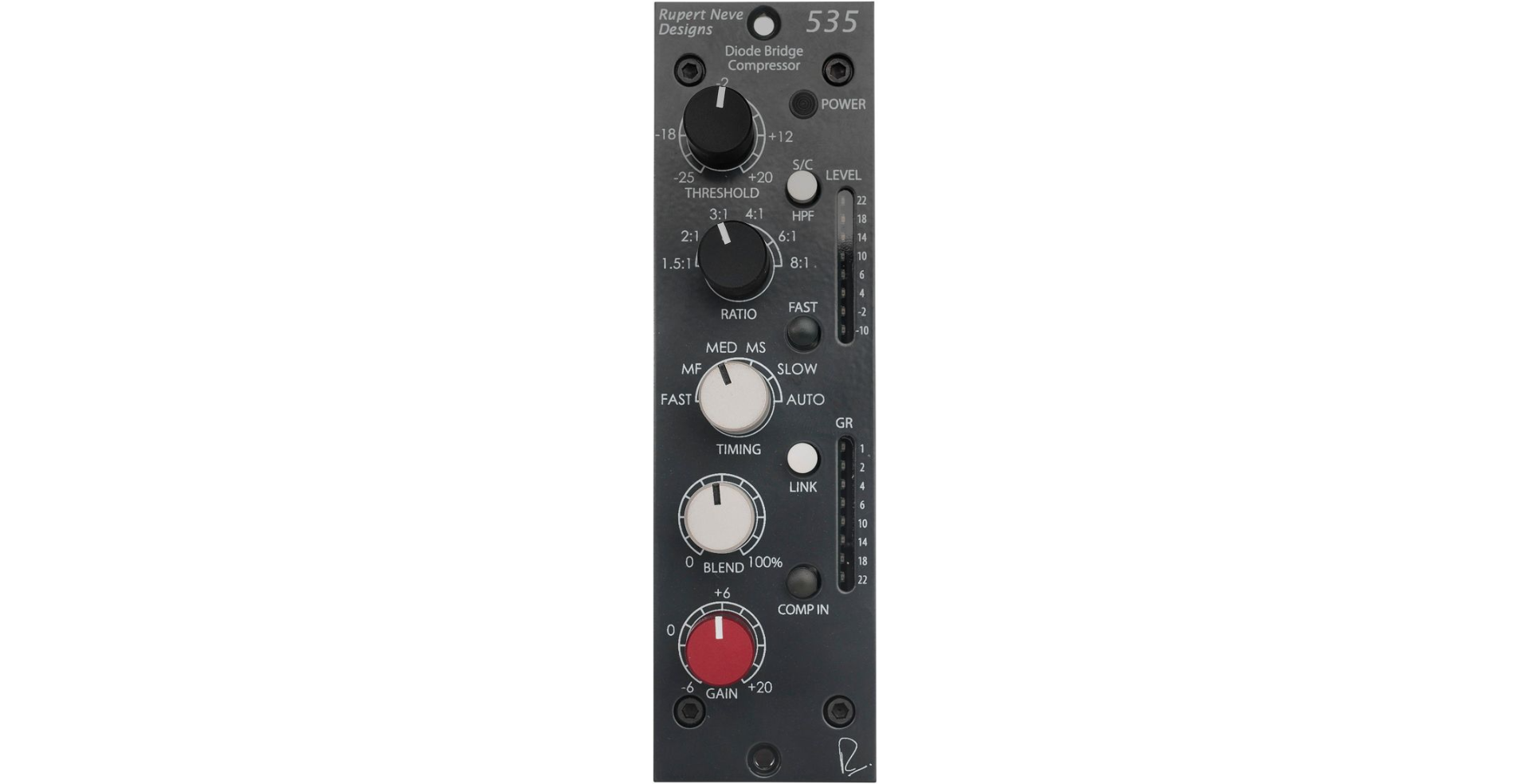
- FAST – Fast Attack (750us), Fast Release (130ms)
- MF – Medium Attack (2.25ms), Fast Release (130ms)
- MED – Medium Attack (2.25ms), Medium Release (400ms)
- MS – Medium Attack (4ms), Slow Release (725ms)
- SLOW – Slow Attack (10ms), Slow Release (1S)
- AUTO – Medium Attack (5ms), Dual Decay Release (T1 500ms, T2 1s)The LINK switch allows the compressor to be linked to another 535 compressor module via a sidechain control voltage. In link mode, the compressor generating the greater sidechain voltage (resulting in higher amounts of compression) will control the compression of both audio signal paths to maintain proper stereo center image while compressing. Note: it is advisable to always audition the unlinked sound as well, to decide if the benefit of a constant stereo center image is worth the potential trade-off of reduced left / right independence in the stereo field.
-
SIDECHAIN HPF
- The S/C HPF switch allows the user to insert a 12dB/octave 150Hz high-pass filter in the compressor sidechain. When this filter is engaged, the compressor will be considerably less responsive to information below 150Hz. For example: if used on a drum kit, the low end of the kick drum would have less proportional effect on the compression than a snare drum or cymbals, since a significant portion of the kick drum’s dynamic energy is focused below 150Hz.
LEVEL AND GAIN REDUCTION METERING
- These two LED meters provide accurate representations of both the output level of the compressor and the amount of gain reduction being applied to the input signal.
|






Reviews
There are no reviews yet.