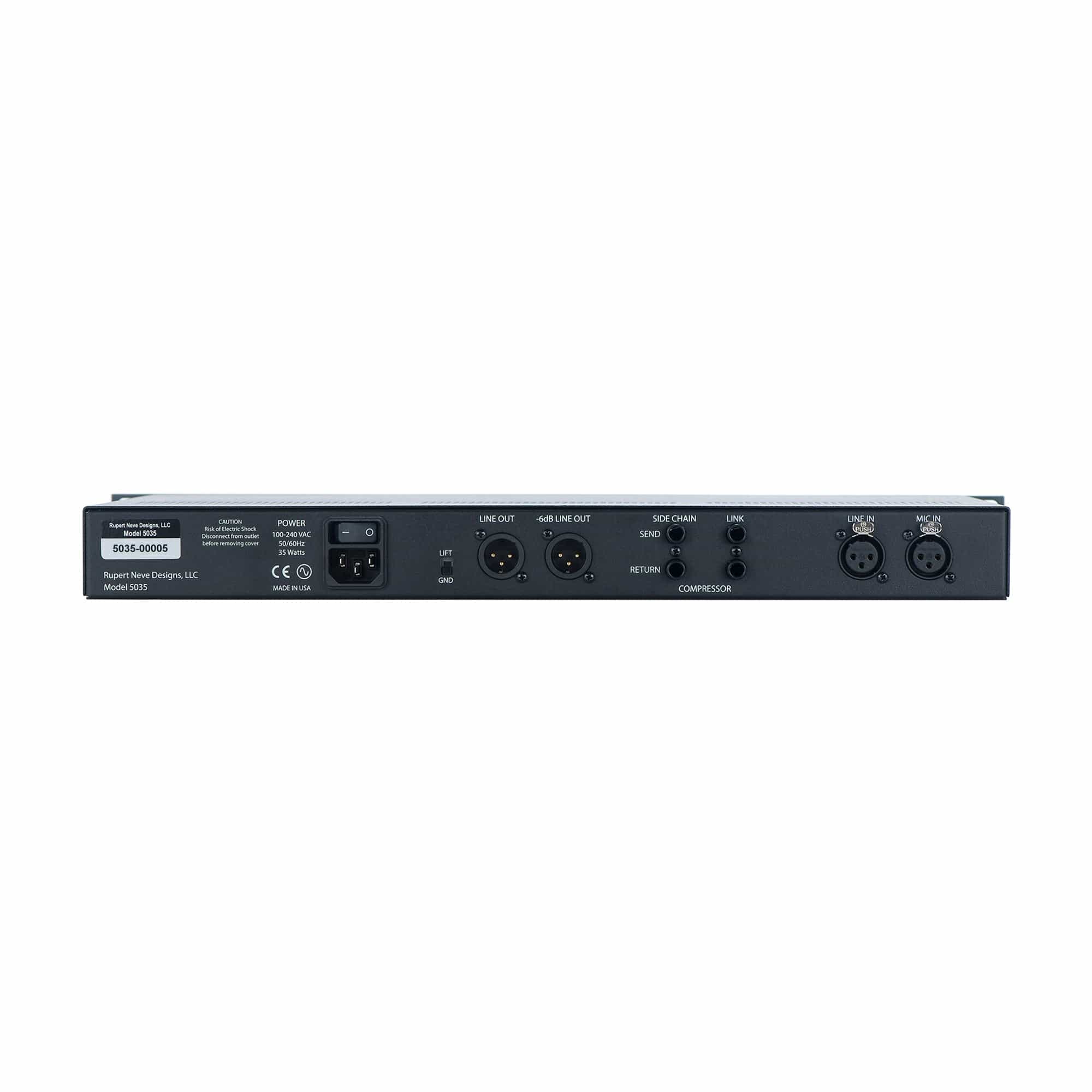
Rupert Neve Designs 5035 Shelford Channel Microphone Preamp / Inductor EQ / Compressor

$2,827.29

GTIN: 752423657360 SKU: RNEVE5035 Category: Tags: , ,

Description

The Shelford Channel is built around Rupert Neve’s first new transformer-gain, class-A microphone preamplifier in over 40 years, a “best-of-the-classics” inductor EQ section, a tone-packed diode bridge compressor, the power of variable Silk saturation, a new dual-tap transformer output stage, and twice the operating voltage of vintage designs.

The Input Stage and Transformer Gain Mic Pre
Like Rupert’s designs from his time in Little Shelford , the Shelford Channel’s preamplifier uses a directly-coupled transformer input with gain provided by the custom transformer itself – a first in over 40 years for Rupert Neve. This new custom-designed input transformer, along with its careful integration with the surrounding class-A circuitry, is critical to the Channel’s bold and instantly recognizable character.

Conveniently, the Direct Input uses the same topology as the best-selling RNDI Active Transformer Direct Interface, providing astonishing clarity for high-Z instrument signals, with unparalleled low-frequency response and an incredibly smooth high end.

What is Silk?
The Silk & Texture circuit on the Shelford Channel allows you to fine-tune the amount (and type) of harmonic content in the output stage. This means your signal can be adjusted from quite transparent to settings that produce nearly 10x the amount of sonic color as Rupert’s vintage modules – and in two very unique modes. No matter what sound you’re looking for, Silk can help get you there.

The Dual Tap Transformer Output
Complementing the Silk circuit is the custom-designed output transformer, which uses Rupert Neve Designs’ unique dual-tap output topology. This offers both full-headroom (+26dBu) and -6dB outputs, allowing the engineer to drive the unit fully into classic transformer saturation without clipping converters and other devices later in the chain.

The “Best-Of” EQ
The Shelford Channel’s 3-band, custom-tapped inductor EQ was inspired by our favorite elements of Rupert’s vintage EQ designs. The low frequency band is designed to produce a creamy, resonant bass response similar to a vintage 1064 – but unlike the vintage modules, the LF band on the Shelford Channel can be used as either a shelf or a peak filter, adding punch, dimension, and control to your low end.

The midrange band is based on that of the 1073, ideal for sweetening vocals and instruments while bringing them forward in a mix, and its proportional “Q” response makes it well-suited for minimizing problematic frequencies. The high frequency band is a hybrid vintage / modern design, blending inductor circuitry with capacitor-based topologies to achieve vintage tones with enhanced control, with the shelf / peak corner switchable between 8K or 16K.

The Diode Bridge Compressor
Like the Inductor EQ and Transformer Gain microphone preamp, the Diode Bridge Compressor in the Shelford Channel is based on the same topologies found in Rupert’s vintage designs – but refined & adapted for the modern engineer.

What is diode bridge compression? Where the VCA compressor found in the Master Buss Processor provides unmatched clarity, the weighty, harmonically rich tonality of diode bridge compression can be essential in pushing key sources like vocals, electric guitars, bass and drums to the forefront of a mix.

By understanding the limitations of vintage units like the legendary 2254, painstaking effort was taken to reproduce the unique tone of these classics while improving the noise floor & accuracy, expanding inflexible time constants, adding full wave sidechain detection for improved dynamic response, and widening the range of threshold and ratio controls.

Delivering the powerful sound of these iconic designs with enhanced flexibility for the modern age, the Shelford’s diode bridge compressor is a dynamic tool equipped to make a statement on virtually any mix or track.

MIC PREAMP

INPUT IMPEDANCE
2200 Ohm

MAXIMUM INPUT

  • +21.5 dBu from 150 Hz to 22 kHz
  • +8 dBu 20 Hz to 22 kHz

NOISE

  • Un-weighted, 22 Hz-22 kHz, source impedance 150 Ohm balanced.
  • Main Out @ unity gain -100.9 dBu
  • -6 dB Out @ unity gain -106.6 dBu
  • +30 dB gain (Main Out) -91.37 dBu
  • +66 dB Gain (Main Out) -64.1 dBu
  • Equivalent Input Noise -121.37 dBu

FREQUENCY RESPONSE
+/-0.25 dB from 17 Hz to 45 kHz

DIRECT INPUT


MAXIMUM INPUT
8 dBu @ 20 Hz to 120 kHz

NOISE (MAIN OUTPUT)
-100 dBu (22 Hz to 22 kHz)

LINE INPUT

MAXIMUM INPUT LEVEL
+30.5 dBu 20 Hz to 30 kHz

TOTAL HARMONIC DISTORTION AND NOISE

  • @ 1 kHz, +20 dBu output level, no load: Better than 0.002%
  • @ 20 Hz, +20 dBu output level, no load: 0.05% Typical (2nd and 3rd harmonic)

NOISE (MAIN OUTPUT)
Un-weighted, 22 Hz – 22 kHz, source impedance 40 Ohm balanced, no load.
-101.1 dBu


FREQUENCY RESPONSE
+/- 0.25 dBu from less than 10 Hz to 110 kHz
-0.32 dB @ 120 kHz

MAXIMUM OUTPUT LEVEL
+26 dBu @ 16 Hz to 20 kHz

TOTAL HARMONIC DISTORTION AND NOISE WITH SILK ENGAGED

RED

  • MIN TEXTURE @ 100 Hz, +20 dBu input level, no load: 0.0131%, mostly 3rd harmonic (typical)
  • MAX TEXTURE @ 100 Hz, +20 dBu input level, no load: 1.66%, mostly 2rd harmonic (typical)

BLUE

  • MIN TEXTURE @ 100Hz, +20 dBu input level, no load: 0.0079%, mostly 3rd harmonic (typical)
  • MAX TEXTURE @ 100Hz, +20 dBu input level, no load: 0.941%, mostly 2rd harmonic (typical)

HIGH PASS FILTER

  • Continuously variable swept frequency from 20 Hz to 250 Hz.
  • Slope: 12 dB/Octave

EQ NOISE
Un-weighted, 22 Hz-22 kHz: -92 dBu

SIGNAL PRESENT
Illuminates GREEN when input stage signal level reaches -20 dBu

OVERLOAD INDICATOR
Illuminates RED when input stage signal level reaches -23 dBu

DIODE BRIDGE COMPRESSOR

  • NOISE (BW 22 Hz – 22 kHz)
  • 0 dB Makeup Gain: -84.5 dBu
  • +20 dB Makeup Gain: -64.2 dBu

TIME CONSTANTS

  • Measurements taken represent full range achievable between 1.5:1 Ratio and 8:1 Ratio setting.
  • 0 dBu I/P 1kHz Burst Tone used for all recorded measurements.
  • Fast (TC1): Attack 180µS — 1.8mS // Release 100mS – 150mS
  • MedFast (TC2): Attack 750µS – 5.25mS // Release 160mS – 250mS
  • Med (TC3): 2.7mS – 18mS // Release 350mS – 525mS
  • MedSlow (TC4): 4.6mS – 38mS // Release 600mS – 1 S
  • Slow (TC5): 11mS – 72.5mS // Release 800mS – 1.25 S
  • Auto (TC6): 5.75mS – 35.5mS // Release T1 400mS – 850mS, T2 TBD
  • “Fast” Mode Multiplier: Modifies aforementioned TC’s by 70% of original value

PRODUCT DIMENSIONS
19” (48.3 cm) x 10.5” (26.7 cm) x 1.75” (4.4 cm)

Reviews

There are no reviews yet.

Be the first to review “Rupert Neve Designs 5035 Shelford Channel Microphone Preamp / Inductor EQ / Compressor”

Your email address will not be published. Required fields are marked *

Quick Comparison

SettingsRupert Neve Designs 5035 Shelford Channel Microphone Preamp / Inductor EQ / Compressor removeSuhr Reactive Load removeRupert Neve Designs Portico 511 500-Series Mic Preamp with Texture Control Standard removeTeenage Engineering Oplab Module removeRupert Neve Designs 535 500 Series Diode Bridge Compressor removeZoom ZHA-4 Handy Headphone Amp remove
Image
SKURNEVE5035819438029299014109676608873500730323417524236573774515260025541
Rating
Price$2,827.29$233.31$876.68$98.98$706.29$52.32
Stock
Availability
Add to cart

Add to cart

Add to cart

Add to cart

Add to cart

Add to cart

Add to cart

Description
ContentThe Shelford Channel is built around Rupert Neve’s first new transformer-gain, class-A microphone preamplifier in over 40 years, a “best-of-the-classics” inductor EQ section, a tone-packed diode bridge compressor, the power of variable Silk saturation, a new dual-tap transformer output stage, and twice the operating voltage of vintage designs. The Input Stage and Transformer Gain Mic Pre Like Rupert’s designs from his time in Little Shelford , the Shelford Channel’s preamplifier uses a directly-coupled transformer input with gain provided by the custom transformer itself – a first in over 40 years for Rupert Neve. This new custom-designed input transformer, along with its careful integration with the surrounding class-A circuitry, is critical to the Channel’s bold and instantly recognizable character. Conveniently, the Direct Input uses the same topology as the best-selling RNDI Active Transformer Direct Interface, providing astonishing clarity for high-Z instrument signals, with unparalleled low-frequency response and an incredibly smooth high end. What is Silk? The Silk & Texture circuit on the Shelford Channel allows you to fine-tune the amount (and type) of harmonic content in the output stage. This means your signal can be adjusted from quite transparent to settings that produce nearly 10x the amount of sonic color as Rupert’s vintage modules – and in two very unique modes. No matter what sound you’re looking for, Silk can help get you there. The Dual Tap Transformer Output Complementing the Silk circuit is the custom-designed output transformer, which uses Rupert Neve Designs’ unique dual-tap output topology. This offers both full-headroom (+26dBu) and -6dB outputs, allowing the engineer to drive the unit fully into classic transformer saturation without clipping converters and other devices later in the chain. The “Best-Of” EQ The Shelford Channel’s 3-band, custom-tapped inductor EQ was inspired by our favorite elements of Rupert’s vintage EQ designs. The low frequency band is designed to produce a creamy, resonant bass response similar to a vintage 1064 – but unlike the vintage modules, the LF band on the Shelford Channel can be used as either a shelf or a peak filter, adding punch, dimension, and control to your low end. The midrange band is based on that of the 1073, ideal for sweetening vocals and instruments while bringing them forward in a mix, and its proportional “Q” response makes it well-suited for minimizing problematic frequencies. The high frequency band is a hybrid vintage / modern design, blending inductor circuitry with capacitor-based topologies to achieve vintage tones with enhanced control, with the shelf / peak corner switchable between 8K or 16K. The Diode Bridge Compressor Like the Inductor EQ and Transformer Gain microphone preamp, the Diode Bridge Compressor in the Shelford Channel is based on the same topologies found in Rupert’s vintage designs – but refined & adapted for the modern engineer. What is diode bridge compression? Where the VCA compressor found in the Master Buss Processor provides unmatched clarity, the weighty, harmonically rich tonality of diode bridge compression can be essential in pushing key sources like vocals, electric guitars, bass and drums to the forefront of a mix. By understanding the limitations of vintage units like the legendary 2254, painstaking effort was taken to reproduce the unique tone of these classics while improving the noise floor & accuracy, expanding inflexible time constants, adding full wave sidechain detection for improved dynamic response, and widening the range of threshold and ratio controls. Delivering the powerful sound of these iconic designs with enhanced flexibility for the modern age, the Shelford’s diode bridge compressor is a dynamic tool equipped to make a statement on virtually any mix or track. MIC PREAMP INPUT IMPEDANCE 2200 Ohm MAXIMUM INPUT
  • +21.5 dBu from 150 Hz to 22 kHz
  • +8 dBu 20 Hz to 22 kHz
NOISE
  • Un-weighted, 22 Hz-22 kHz, source impedance 150 Ohm balanced.
  • Main Out @ unity gain -100.9 dBu
  • -6 dB Out @ unity gain -106.6 dBu
  • +30 dB gain (Main Out) -91.37 dBu
  • +66 dB Gain (Main Out) -64.1 dBu
  • Equivalent Input Noise -121.37 dBu
FREQUENCY RESPONSE +/-0.25 dB from 17 Hz to 45 kHz DIRECT INPUT MAXIMUM INPUT 8 dBu @ 20 Hz to 120 kHz NOISE (MAIN OUTPUT) -100 dBu (22 Hz to 22 kHz) LINE INPUT MAXIMUM INPUT LEVEL +30.5 dBu 20 Hz to 30 kHz TOTAL HARMONIC DISTORTION AND NOISE
  • @ 1 kHz, +20 dBu output level, no load: Better than 0.002%
  • @ 20 Hz, +20 dBu output level, no load: 0.05% Typical (2nd and 3rd harmonic)
NOISE (MAIN OUTPUT) Un-weighted, 22 Hz - 22 kHz, source impedance 40 Ohm balanced, no load. -101.1 dBu FREQUENCY RESPONSE +/- 0.25 dBu from less than 10 Hz to 110 kHz -0.32 dB @ 120 kHz MAXIMUM OUTPUT LEVEL +26 dBu @ 16 Hz to 20 kHz TOTAL HARMONIC DISTORTION AND NOISE WITH SILK ENGAGED RED
  • MIN TEXTURE @ 100 Hz, +20 dBu input level, no load: 0.0131%, mostly 3rd harmonic (typical)
  • MAX TEXTURE @ 100 Hz, +20 dBu input level, no load: 1.66%, mostly 2rd harmonic (typical)
BLUE
  • MIN TEXTURE @ 100Hz, +20 dBu input level, no load: 0.0079%, mostly 3rd harmonic (typical)
  • MAX TEXTURE @ 100Hz, +20 dBu input level, no load: 0.941%, mostly 2rd harmonic (typical)
HIGH PASS FILTER
  • Continuously variable swept frequency from 20 Hz to 250 Hz.
  • Slope: 12 dB/Octave
EQ NOISE Un-weighted, 22 Hz-22 kHz: -92 dBu SIGNAL PRESENT Illuminates GREEN when input stage signal level reaches -20 dBu OVERLOAD INDICATOR Illuminates RED when input stage signal level reaches -23 dBu DIODE BRIDGE COMPRESSOR
  • NOISE (BW 22 Hz – 22 kHz)
  • 0 dB Makeup Gain: -84.5 dBu
  • +20 dB Makeup Gain: -64.2 dBu
TIME CONSTANTS
  • Measurements taken represent full range achievable between 1.5:1 Ratio and 8:1 Ratio setting.
  • 0 dBu I/P 1kHz Burst Tone used for all recorded measurements.
  • Fast (TC1): Attack 180µS — 1.8mS // Release 100mS – 150mS
  • MedFast (TC2): Attack 750µS – 5.25mS // Release 160mS – 250mS
  • Med (TC3): 2.7mS – 18mS // Release 350mS – 525mS
  • MedSlow (TC4): 4.6mS – 38mS // Release 600mS – 1 S
  • Slow (TC5): 11mS – 72.5mS // Release 800mS – 1.25 S
  • Auto (TC6): 5.75mS – 35.5mS // Release T1 400mS – 850mS, T2 TBD
  • “Fast” Mode Multiplier: Modifies aforementioned TC’s by 70% of original value
PRODUCT DIMENSIONS 19” (48.3 cm) x 10.5” (26.7 cm) x 1.75” (4.4 cm)
The Suhr Reactive Load delivers a simple solution to capture all of the warmth, and dynamics of your sound, without the hassle of miking a speaker cabinet during a live or recorded performance. The Reactive Load takes the place of your speaker cabinet in your signal chain. It provides an 8Ω load for your tube amplifier (maximum 100 watts), and produces a balanced and unbalanced signal that interfaces with recording devices, effects, and power amplifiers. The Suhr Reactive Load is the perfect link between your amplifier and computer audio recording interface. You can use the Reactive Load with your existing library of speaker impulse responses (IR) for the most realistic direct recording experience possible. Traditional resistive load boxes will safely load your amplifier, but they also alter the tone, dynamics, and response of your amplifier. Real speakers do not have a fixed resistance across the entire frequency spectrum. Real speakers are reactive. The impedance curve of the Reactive Load has been painstakingly tuned to react like a speaker. Your amp will never know the difference. The Reactive Load is dedicated to being the absolute best load box possible with zero compromises, and therefore does not include speaker emulation. You can use the Reactive Load with your speaker-sim or impulse response of choice, and benefit from the natural response, dynamics, and touch sensitivity of your amp. The Suhr Reactive Load features a balanced or unbalanced line level output. The INPUT is optimized for the 8 ohm output of your amplifier and the THRU jack can be connected to a physical speaker cabinet. If a physical cabinet is connected to the THRU jack, the Reactive Load’s internal load is bypassed and the amp will see the load of the physical cabinet. SPEAKER INPUT IMPEDANCE: 8 Ohm DI / LINE OUT LEVEL: +4 dBu at 7 watts input, maximum level setting BALANCED LINE OUTPUT IMPEDANCE: Less than 6KΩ UNBALANCED LINE OUTPUT IMPEDANCE: Less than 6KΩ MAXIMUM RECOMMENDED INPUT POWER: 100 Watts RMS ROHS COMPLIANT: Yes DIMENSIONS: 8.8" (W) x 8.9" (D) x 3.6" (H) WEIGHT: 6.6lb

FEATURES

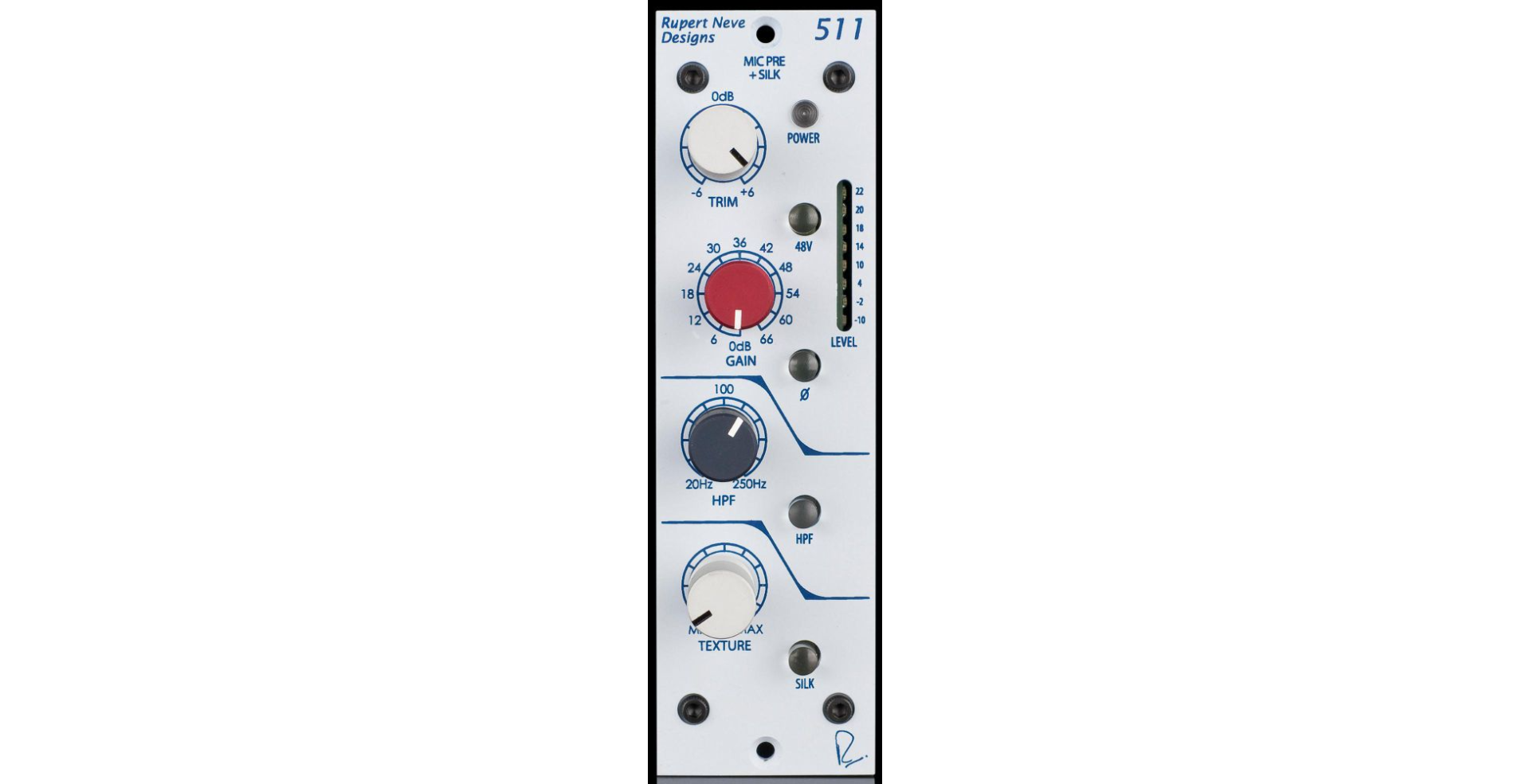
  • 12-way precision rotary switch controls gain from 0 to 66 dB in 6 dB steps
  • Continuously variable +/-6 dB level control
  • Silk circuit, reduces negative feedback, adding harmonic content as needed
  • Red Silk accentuates the saturation in the mid and high frequencies
  • Same presence and sweetness found in standard Portico Series modules
Number of Channels
Single
Inputs
1x XLR, balanced
Output
1x XLR, transformer-balanced
Maximum Output Level
+23dBu
Meter
8 segment LED meter
Power Requirements
Power Requirements @ +/-16VDC 100mA
Dimensions
Not specified by manufacturer
Box Dimensions (LxWxH)
10.2 x 7.8 x 2"
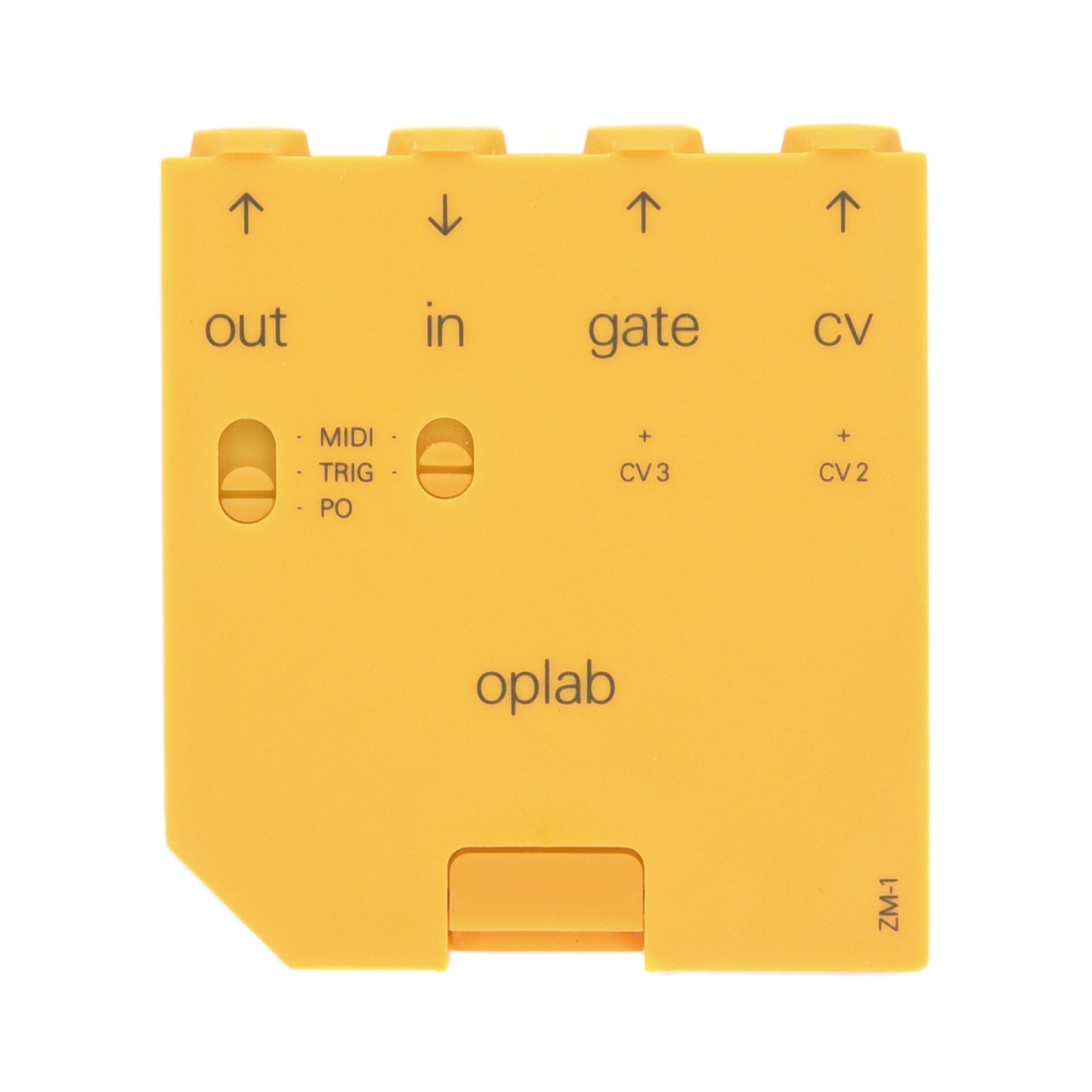
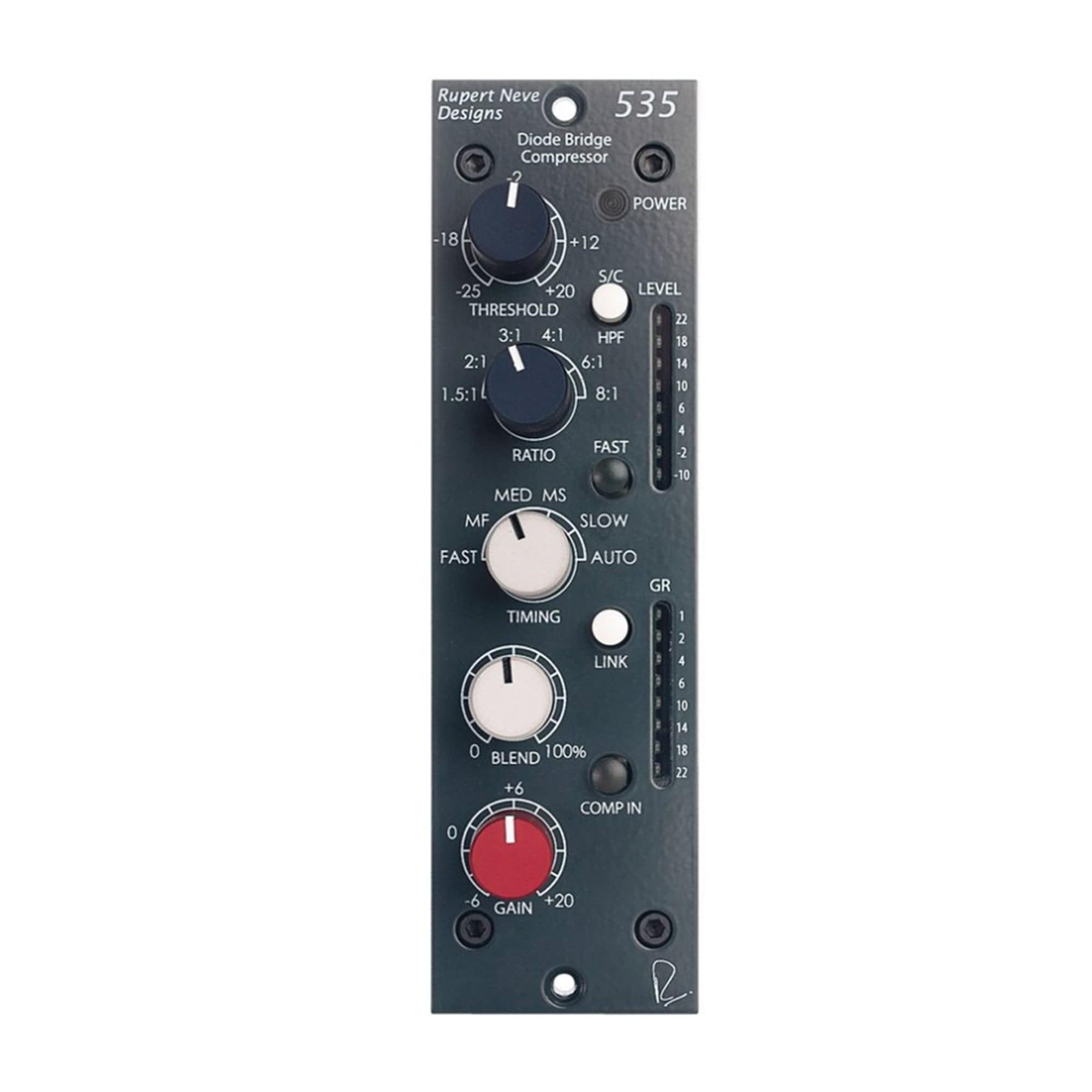
Imagine having the power and flexibility of the OP-Z sequencer available to any other music equipment. Now you can, with the new oplab module - the magic link between OP-Z and the rest of the world. The oplab module is the first hardware expansion module for OP-Z. once mounted in the back of your OP-Z, you can use it to connect to any equipment using standard cv and gate, such as the pocket operator modular or any other modular system. It features three cv outs and one gate out, all programmable and playable from OP-Z. have your wall of modules sequenced from the palm of your hands. Use the po sync out to unleash the power of your regular pocket operators and have them play in sync with the rest of your setup. Even connect standard midi devices, using midi over 3.5 mm jack or the included midi over din adapter cable. Oplab features both midi in and out ports as well as trig in and out for other synthesizers and sequencers.Originally developed for the dynamics circuit of the acclaimed Shelford Channel, the 535 Diode Bridge Compressor captures the soul of Rupert Neve’s original 2254 compressor while providing modern updates including advanced timing control, significantly lower noise, fully stepped controls throughout, and internal parallel processing capabilities. What is diode bridge compression? Where the VCA compressor found in the Master Buss Processor provides unmatched clarity, the weighty, harmonically rich tonality of diode bridge compression can be essential in pushing key sources like vocals, electric guitars, bass and drums to the forefront of a mix. By understanding the limitations of vintage units like the legendary 2254, painstaking effort was taken to reproduce the unique tone of these classics while improving the noise floor & accuracy, expanding inflexible time constants, adding full wave sidechain detection for improved dynamic response, and widening the range of threshold and ratio controls. Delivering the powerful sound of these iconic designs with enhanced flexibility for the modern age, the 535 Diode Bridge Compressor is a dynamic tool equipped to make a bold statement on virtually any mix or track. LINE INPUT TO LINE OUTPUT
  • Compressor Bypassed.
  • Z source = 40 Ohm Balanced
INPUT IMPEDANCE 10K Ohm OUTPUT IMPEDANCE 40 Ohm MAXIMUM INPUT LEVEL +23.5 dBu MAXIMUM OUTPUT LEVEL +23.5 dBu NOISE
  • 22 Hz - 22 kHz BW.
  • -101 dBu
FREQUENCY RESPONSE
  • 10 Hz - 120 kHz, 30ft Output XLR Cable.
  • +/- 0.25 dB
THD+N 
  • @ 1 kHz @ Maximum Output Level, 22 Hz - 22 kHz BW.
  • 0.001%
This item is in excellent working condition and barely used. The ZHA-4 splits a single stereo headphone output into four separate powered 1/8” headphone jacks, each with their own volume and mute control. Perfect for bands, podcasts, productions, and more. Two AA batteries provide hours of portable power. For longer sessions, connect the USB-C port to a portable battery or plug directly into the wall. What’s in the Box?
  • ZHA-4 Handy Headphone Amplifier
  • AA Batteries (x2)
  • Stereo Mini Audio Cable (19” / 50cm)
  • Quick Guide
Please Note: The item displayed in the images may not be the actual item you receive.
Weight
DimensionsN/AN/AN/AN/AN/AN/A
Additional information