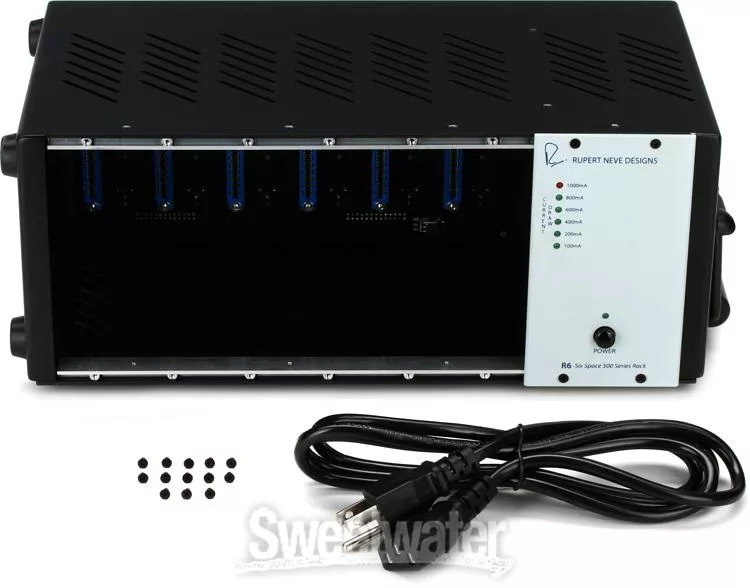
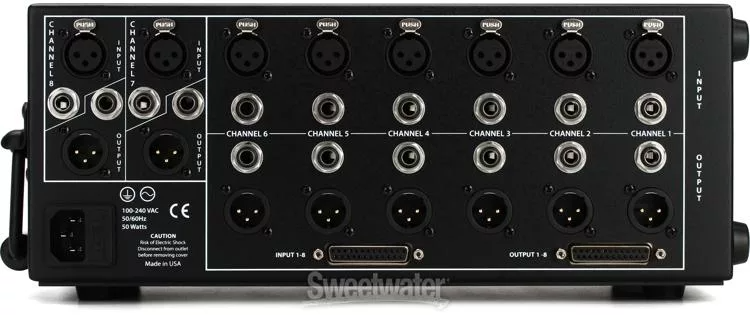
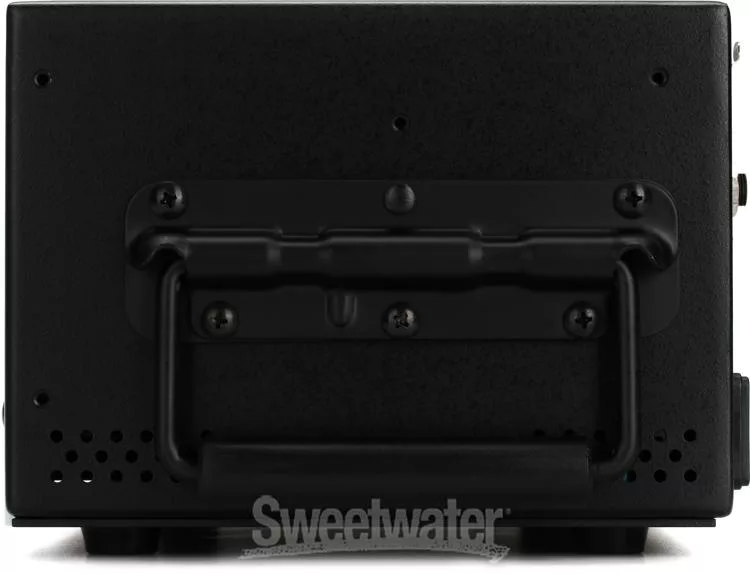
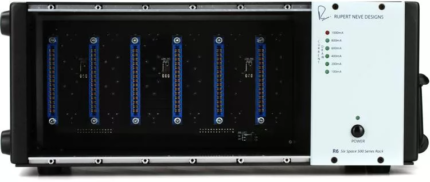
| Content | Rupert Neve Designs R6 500 Series chassis is a 6-space, steel rack enclosure that sports XLR, TRS, and DB-25 I/O to work with any studio setup. To ensure your modules are properly powered, the R6 has 150% of the required current, so you'll never be underpowered. It also has a built-in LED display to show current consumption and a double-shielded internal power supply that won't add any interference or unwanted noise to your signal. Rupert Neve is an audio legend. So you know when he designs a 500 Series chassis, it's top-shelf, all the way. Give your 500 Series modules the pampering they deserve with the Rupert Neve Designs R6 500 Series rack.
Genius in the details
With the Rupert Neve Designs' RND R6, there's genius in the details. The R6's double-shielded internal power supply was meticulously designed to avoid magnetic induction in any of its module slots. The power supply is a Switchmode type, and great care was taken to ensure that the frequencies are considerably outside the audible band. There's an internal jumper configuration that makes it easy to link slots in pairs. It's even fitted with variable-position screw holes that slide to accommodate modules that are slightly out-of-spec, which makes the insertion of modules quick and easy. Trust Sweetwater: when it comes to 500 Series racks, the RND R6 is as good as it gets.
Rupert Neve Designs RND R6 500 Series Rack Features at a Glance:
- Supplies 150% of the required current
- LED current consumption meter displays available current
- XLR, TRS, and DB-25 I/O
- Variable-position screw holes make for quick and easy module insertion
- Double-shielded internal power supply designed to avoid magnetic induction in module slots
- Switchmode PSU with frequencies considerably outside audible band
- Internal jumper configuration lets you link slots in pairs
| The Shelford Channel is built around Rupert Neve’s first new transformer-gain, class-A microphone preamplifier in over 40 years, a “best-of-the-classics” inductor EQ section, a tone-packed diode bridge compressor, the power of variable Silk saturation, a new dual-tap transformer output stage, and twice the operating voltage of vintage designs.
The Input Stage and Transformer Gain Mic Pre
Like Rupert’s designs from his time in Little Shelford , the Shelford Channel’s preamplifier uses a directly-coupled transformer input with gain provided by the custom transformer itself – a first in over 40 years for Rupert Neve. This new custom-designed input transformer, along with its careful integration with the surrounding class-A circuitry, is critical to the Channel’s bold and instantly recognizable character.
Conveniently, the Direct Input uses the same topology as the best-selling RNDI Active Transformer Direct Interface, providing astonishing clarity for high-Z instrument signals, with unparalleled low-frequency response and an incredibly smooth high end.
What is Silk?
The Silk & Texture circuit on the Shelford Channel allows you to fine-tune the amount (and type) of harmonic content in the output stage. This means your signal can be adjusted from quite transparent to settings that produce nearly 10x the amount of sonic color as Rupert’s vintage modules – and in two very unique modes. No matter what sound you’re looking for, Silk can help get you there.
The Dual Tap Transformer Output
Complementing the Silk circuit is the custom-designed output transformer, which uses Rupert Neve Designs’ unique dual-tap output topology. This offers both full-headroom (+26dBu) and -6dB outputs, allowing the engineer to drive the unit fully into classic transformer saturation without clipping converters and other devices later in the chain.
The “Best-Of” EQ
The Shelford Channel’s 3-band, custom-tapped inductor EQ was inspired by our favorite elements of Rupert’s vintage EQ designs. The low frequency band is designed to produce a creamy, resonant bass response similar to a vintage 1064 – but unlike the vintage modules, the LF band on the Shelford Channel can be used as either a shelf or a peak filter, adding punch, dimension, and control to your low end.
The midrange band is based on that of the 1073, ideal for sweetening vocals and instruments while bringing them forward in a mix, and its proportional “Q” response makes it well-suited for minimizing problematic frequencies. The high frequency band is a hybrid vintage / modern design, blending inductor circuitry with capacitor-based topologies to achieve vintage tones with enhanced control, with the shelf / peak corner switchable between 8K or 16K.
The Diode Bridge Compressor
Like the Inductor EQ and Transformer Gain microphone preamp, the Diode Bridge Compressor in the Shelford Channel is based on the same topologies found in Rupert’s vintage designs – but refined & adapted for the modern engineer.
What is diode bridge compression? Where the VCA compressor found in the Master Buss Processor provides unmatched clarity, the weighty, harmonically rich tonality of diode bridge compression can be essential in pushing key sources like vocals, electric guitars, bass and drums to the forefront of a mix.
By understanding the limitations of vintage units like the legendary 2254, painstaking effort was taken to reproduce the unique tone of these classics while improving the noise floor & accuracy, expanding inflexible time constants, adding full wave sidechain detection for improved dynamic response, and widening the range of threshold and ratio controls.
Delivering the powerful sound of these iconic designs with enhanced flexibility for the modern age, the Shelford’s diode bridge compressor is a dynamic tool equipped to make a statement on virtually any mix or track.
MIC PREAMP
INPUT IMPEDANCE
2200 Ohm
MAXIMUM INPUT
- +21.5 dBu from 150 Hz to 22 kHz
- +8 dBu 20 Hz to 22 kHz
NOISE
- Un-weighted, 22 Hz-22 kHz, source impedance 150 Ohm balanced.
- Main Out @ unity gain -100.9 dBu
- -6 dB Out @ unity gain -106.6 dBu
- +30 dB gain (Main Out) -91.37 dBu
- +66 dB Gain (Main Out) -64.1 dBu
- Equivalent Input Noise -121.37 dBu
FREQUENCY RESPONSE
+/-0.25 dB from 17 Hz to 45 kHz
DIRECT INPUT
MAXIMUM INPUT
8 dBu @ 20 Hz to 120 kHz
NOISE (MAIN OUTPUT)
-100 dBu (22 Hz to 22 kHz)
LINE INPUT
MAXIMUM INPUT LEVEL
+30.5 dBu 20 Hz to 30 kHz
TOTAL HARMONIC DISTORTION AND NOISE
- @ 1 kHz, +20 dBu output level, no load: Better than 0.002%
- @ 20 Hz, +20 dBu output level, no load: 0.05% Typical (2nd and 3rd harmonic)
NOISE (MAIN OUTPUT)
Un-weighted, 22 Hz - 22 kHz, source impedance 40 Ohm balanced, no load.
-101.1 dBu
FREQUENCY RESPONSE
+/- 0.25 dBu from less than 10 Hz to 110 kHz
-0.32 dB @ 120 kHz
MAXIMUM OUTPUT LEVEL
+26 dBu @ 16 Hz to 20 kHz
TOTAL HARMONIC DISTORTION AND NOISE WITH SILK ENGAGED
RED
- MIN TEXTURE @ 100 Hz, +20 dBu input level, no load: 0.0131%, mostly 3rd harmonic (typical)
- MAX TEXTURE @ 100 Hz, +20 dBu input level, no load: 1.66%, mostly 2rd harmonic (typical)
BLUE
- MIN TEXTURE @ 100Hz, +20 dBu input level, no load: 0.0079%, mostly 3rd harmonic (typical)
- MAX TEXTURE @ 100Hz, +20 dBu input level, no load: 0.941%, mostly 2rd harmonic (typical)
HIGH PASS FILTER
- Continuously variable swept frequency from 20 Hz to 250 Hz.
- Slope: 12 dB/Octave
EQ NOISE
Un-weighted, 22 Hz-22 kHz: -92 dBu
SIGNAL PRESENT
Illuminates GREEN when input stage signal level reaches -20 dBu
OVERLOAD INDICATOR
Illuminates RED when input stage signal level reaches -23 dBu
DIODE BRIDGE COMPRESSOR
- NOISE (BW 22 Hz – 22 kHz)
- 0 dB Makeup Gain: -84.5 dBu
- +20 dB Makeup Gain: -64.2 dBu
TIME CONSTANTS
- Measurements taken represent full range achievable between 1.5:1 Ratio and 8:1 Ratio setting.
- 0 dBu I/P 1kHz Burst Tone used for all recorded measurements.
- Fast (TC1): Attack 180µS — 1.8mS // Release 100mS – 150mS
- MedFast (TC2): Attack 750µS – 5.25mS // Release 160mS – 250mS
- Med (TC3): 2.7mS – 18mS // Release 350mS – 525mS
- MedSlow (TC4): 4.6mS – 38mS // Release 600mS – 1 S
- Slow (TC5): 11mS – 72.5mS // Release 800mS – 1.25 S
- Auto (TC6): 5.75mS – 35.5mS // Release T1 400mS – 850mS, T2 TBD
- “Fast” Mode Multiplier: Modifies aforementioned TC’s by 70% of original value
PRODUCT DIMENSIONS
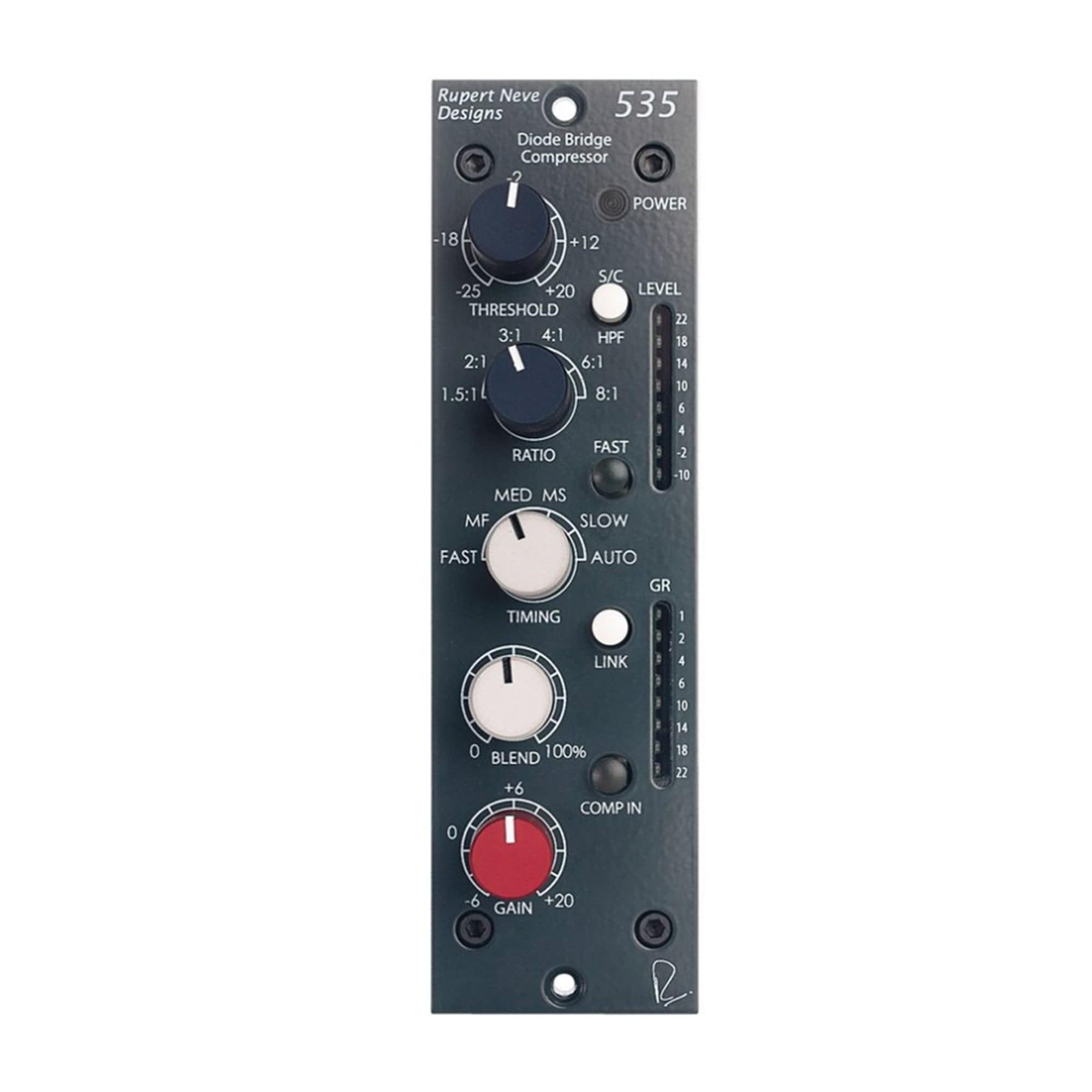
19” (48.3 cm) x 10.5” (26.7 cm) x 1.75” (4.4 cm) | Originally developed for the dynamics circuit of the acclaimed Shelford Channel, the 535 Diode Bridge Compressor captures the soul of Rupert Neve’s original 2254 compressor while providing modern updates including advanced timing control, significantly lower noise, fully stepped controls throughout, and internal parallel processing capabilities.
What is diode bridge compression?
Where the VCA compressor found in the Master Buss Processor provides unmatched clarity, the weighty, harmonically rich tonality of diode bridge compression can be essential in pushing key sources like vocals, electric guitars, bass and drums to the forefront of a mix.
By understanding the limitations of vintage units like the legendary 2254, painstaking effort was taken to reproduce the unique tone of these classics while improving the noise floor & accuracy, expanding inflexible time constants, adding full wave sidechain detection for improved dynamic response, and widening the range of threshold and ratio controls.
Delivering the powerful sound of these iconic designs with enhanced flexibility for the modern age, the 535 Diode Bridge Compressor is a dynamic tool equipped to make a bold statement on virtually any mix or track.
LINE INPUT TO LINE OUTPUT
- Compressor Bypassed.
- Z source = 40 Ohm Balanced
INPUT IMPEDANCE
10K Ohm
OUTPUT IMPEDANCE
40 Ohm
MAXIMUM INPUT LEVEL
+23.5 dBu
MAXIMUM OUTPUT LEVEL
+23.5 dBu
NOISE
- 22 Hz - 22 kHz BW.
- -101 dBu
FREQUENCY RESPONSE
- 10 Hz - 120 kHz, 30ft Output XLR Cable.
- +/- 0.25 dB
THD+N
- @ 1 kHz @ Maximum Output Level, 22 Hz - 22 kHz BW.
- 0.001%
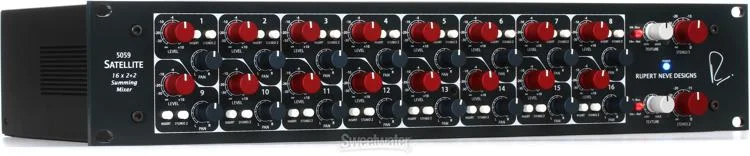
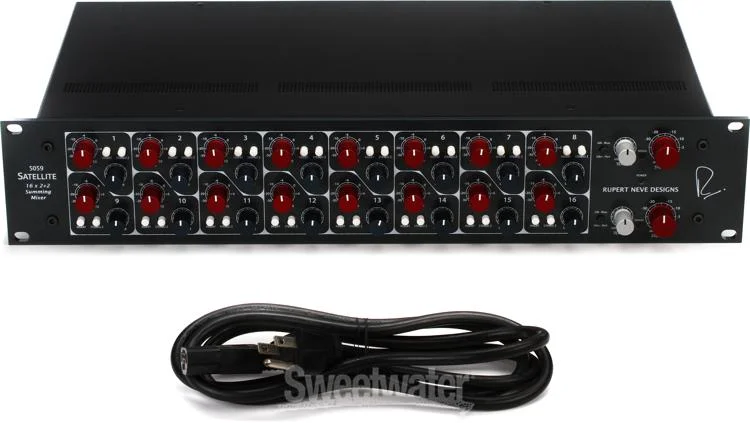
| Working inside the box? Sweetwater would like to recommend a summing mixer that will seriously up your game: the Rupert Neve Designs 5059 Satellite Shelford Edition. If you record and mix entirely within your DAW, you’re hampered by the inability to leverage the sonic advantages of high-quality analog outboard gear. Enter the 5059 Satellite. The 5059 gives you 16 channels — each with individual level and pan, plus insert and bus-2 send buttons. You get two stereo buses with RND’s proprietary Silk Texture controls, giving you effortless integration with outboard equipment, total control for two separate stem mixes, and the facility to dial in harmonic enhancement in two distinct flavors.
It’s a Neve
In serious audio circles, Rupert Neve needs no introduction. Large-format Neve consoles from the 1970s are considered by many to be the pinnacle of analog mixer design. Boasting the same design heritage and sonic perfectionism that went into the boards used to record countless hit records, the 5059 Satellite Summing Mixer graces your tracks with legendary Rupert Neve warmth, punch, and presence. With 16 channels of Rupert Neve designed Class A alchemy and flexible tonal and routing options, the Rupert Neve Designs 5059 Satellite Summing Mixer will take your DAW-based studio’s sound to a whole new level.
Dial in the Silk
The Rupert Neve Designs’ 5059 Satellite Summing Mixer’s continuously variable Texture controls with Silk and Silk+ modes let you fine-tune the harmonic ratio and tonality of each of 5059’s stereo buses. The Silk mode adds sparkle to your tracks by introducing alluringly airy transformer saturation in the high frequencies. Silk+ mode accentuates saturation in the low frequencies, adding density and thickness to the source — particularly desirable when you’ve got a dry, lackluster mix. Distinctly different sounding from equalization, Texture saturates the output transformers, adding sweet, musical even-order harmonics to your source material for authoritative, radio-ready mixes that blast right out of the speakers.
Flexibility: it’s a beautiful thing
The dual stereo outputs of the Rupert Neve Designs 5059 Satellite Summing Mixer are perfect for creating stem mixes, which you can enhance using the 5059’s Silk/Texture controls, then process through bus compressors or other devices via the inserts, finally feeding into the inputs of another mixer or your interface. You can send any input to stereo bus 1 or 2, and create two very different-sounding mixes from the same 16 channels. These are just some examples of the amazing flexibility you’ll enjoy when integrating the 5059 into your recording rig. Smartly attired in classic Shelford livery, the Rupert Neve Designs 5059 Satellite Summing Mixer is housed in a rugged, fan-cooled 2U steel chassis for dependable, no-compromise professional performance year after year, in the studio or on the road.
The legend continues
Rupert Neve’s 80-series consoles had a huge, punchy, and authoritative sound that defined the sound of ’70s rock. From London to New York to Los Angeles and beyond, top studios were installing Neve boards as fast as they could. By 1977, with the introduction of the NECAM automation system, 80-series boards were the main component of the success formula for any recording studio with world-class aspirations. Mr. Neve’s current company, Rupert Neve Designs, continues to advance the state of the art with cutting-edge products that sound incredible and intelligently address the challenges of the digital age. With your Rupert Neve Designs 5059 Satellite Shelford Edition from Sweetwater, the legend continues.
Rupert Neve Designs 5059 Satellite Summing Mixer Shelford Edition Features:
- Classic Neve: Class A, all transformer-balanced, and awesome-sounding
- Zero crossover distortion and unmatched purity
- Custom transformers provide galvanic isolation and serve up "larger than life" sound
- Sets a standard for rackmountable summing mixers
- 16 inputs/channels (with level controls, pans, and inserts); 2 stereo buses
- Send any input to stereo bus 1 or 2, each with variable Silk/Silk+ Texture
- Dual Stereo Outputs let you split the input channels into 2 stems for further processing and mixing
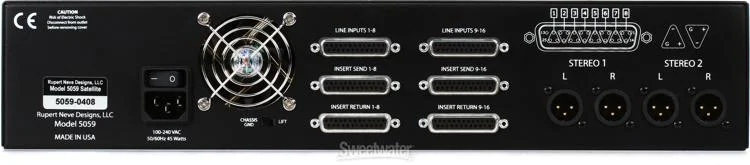
- Stereo buss 1 and 2 each has its own XLR outs
- DB-25 line input, insert send/return connectors
- Rugged 2U fan-cooled chassis, clad in classic Shelford livery
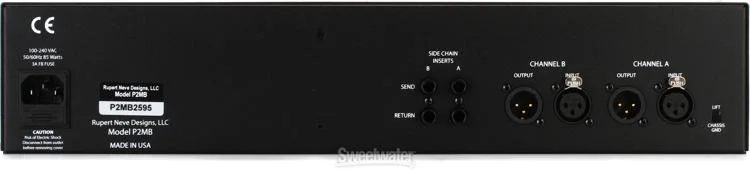
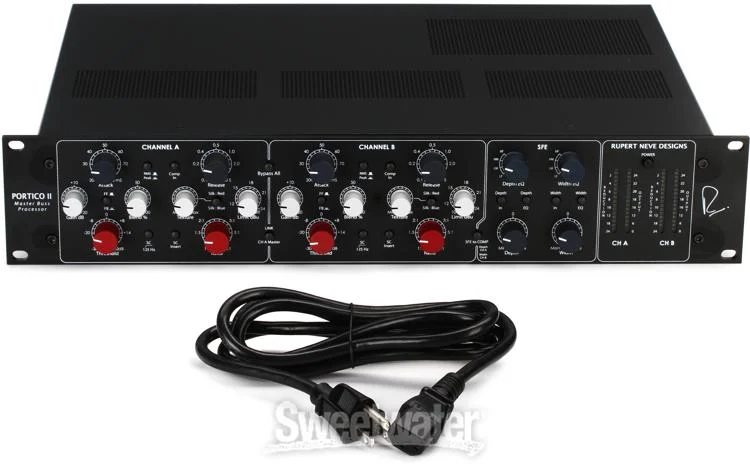
| The Rupert Neve Designs Portico II Master Bus Processor lets you enhance, reshape, and polish your sound to perfection. Whether you want to add finishing touches to your master bus, level out a stereo group, or add new life to mono sound sources, the Portico II Master Bus Processor gives you the compression, limiting, and stereo field manipulation you need. Featuring custom input and output transformers designed by Rupert Neve, the Portico II Master Bus Processor implements the same ultra-smooth Class A signal processing made famous by the 5088 console and the Portico II Channel, as well as 72V topology, which gives it enormous headroom while allowing it to integrate seamlessly with virtually any system. If you’re serious about your sound, then it’s time to ask your Sales Engineer about the Rupert Neve Designs Portico II Master Bus Processor!
Powerful and flexible compression
Both channels of the Portico II Master Bus Processor feature one of Rupert Neve Designs’ most versatile compressors to date. Whether you want to add punch to your mix or smooth out your vocal subgroup, the Portico II Master Bus Processor has the compression you need. Controls for ratio, threshold, attack, release, blend, sidechain highpass filter, limiting, and makeup gain let you dial in the perfect dynamics quickly and easily. Use the two compressors independently, or instantly link them with the push of a button. Variable Silk Red/Blue Texture controls let you add classic Neve harmonic warmth; while a blend control lets you dial in the dry signal for instant parallel processing, so you can get all of the compression you want without losing transients. In addition, the Portico II Master Bus Processor gives you a choice of either vintage-flavored feed-back or modern-sounding feed-forward compression modes.
Transparent, musical limiter that’s effortless to use
Often overlooked at first glance, the Portico II Master Bus Processor’s 1-knob limiter is a powerful, flexible, and remarkably easy-to-use tool that lets you get the most out of the Portico II Master Bus Processor’s compression section. Rupert Neve Designs’ Adaptive Release Technology gives this limiter its unique ability to grab onto fast transients, without smothering the rest of the signal. Plus, you have the option to blend compressed and dry signals together for parallel processing that maintains natural-sounding dynamics without clipping. This gracious behavior means you can set it and forget it, with the added security of knowing your masters will be free from clipping and broadcast-ready.
Sidechain inserts for creative ducking
Every dynamics processor has a sidechain circuit that examines the signal and determines how much the VCA will reduce gain — but not every unit provides access to its sidechain. In compressors without a separate sidechain input, your main input signal is, essentially, compressing itself. With compressors like the one in the RND Portico II Master Bus Processor, you can insert external processing on the sidechain — or introduce a different signal that determines the compression action on the main signal. It’s an incredibly useful feature that lets you, for instance, automatically duck a track to make space for another (very popular for that EDM mix pumping effect). Combined with the sidechain HP filter, it gives you an impressive amount of tonal versatility.
Amazing Stereo Field Editor
Although the Rupert Neve Designs Portico II Master Bus Processor functions wonderfully as a dual-mono processor, it really shines in stereo mode. That’s thanks to its unique Stereo Field Editor. The Stereo Field Editor uses advanced Mid/Side stereo manipulation techniques, allowing you to adjust your stereo bus’s width, depth, and ambience. Beyond widening your stereo image, the Portico II Master Bus Processor can actually bring center-panned instruments out in your mix. That makes the Portico II Master Bus Processor an invaluable tool for mastering, as well as defining the spread of your subgroups during mixdown.
The legend continues
Rupert Neve’s 80 Series consoles had a huge, punchy, and authoritative sound that defined the sound of ’70s rock. From London to New York to Los Angeles and beyond, top studios were installing Neve boards as fast as they could. By 1977, with the introduction of the NECAM automation system, 80 Series boards were the main component of the success formula for any recording studio with world-class aspirations. Mr. Neve’s current company, Rupert Neve Designs, continues to advance the state of the art with cutting-edge products that sound incredible and intelligently address the challenges of the digital age. With your Rupert Neve Designs Portico II Master Bus Processor from Sweetwater, the legend continues.
Rupert Neve Designs Portico II Master Bus Processor Features:
- Powerful 2-channel compressor/limiter/stereo field manipulator
- Custom input and output transformers designed by Rupert Neve
- Full compression sections for both channels, including attack, release, ratio, and threshold controls
- Sidechain inserts and highpass filters for both compressors
- Feed-back/Feed-forward switch lets you select between vintage-style and modern compression modes
- Silk Texture control with Red/Blue modes for classic Neve harmonic warmth
- Blend controls allow you to mix dry signal back into your compression, preserving transients while adding punch
- Simple and highly musical 1-knob limiter with Adaptive Release Technology allows for brickwall limiting that doesn’t distort or affect signal under the threshold
- Stereo Field Editor section includes independent level and EQ for width and depth, allowing you to dial in the perfect stereo field
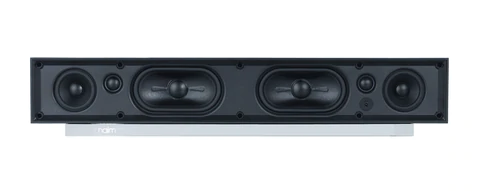
| Mu-so 2nd Generation is the successor to the multiple award-winning Mu-so wireless music system, re-engineered for class-leading performance, functionality, and usability by Naim's experts in Salisbury, England.
Combining Naim's 45 years of hi-fi mastery with the very latest music-streaming technology and premium design quality, this is the ultimate single-box system you and your music deserve. From up to 32bit high-resolution streaming to multiroom music to HDMI TV sound; you’ve never heard it so good from an all-in-one wireless system.
The all-new multicore Digital Signal Processor (DSP) drives higher performance, providing 2000 MIPS (Million Instructions Per Second) compared to the original Mu-so’s single-core, 150MIPS DSP.
Naim has also created a new limiter algorithm that keeps each of Mu-so 2nd Generation’s speaker drivers’ movement under control when at high volume levels. The new limiter, by design; is only active at extreme volume levels, and helps to retain the music’s clarity and increase long-term reliability.
Premium aluminum casing, in a new burnished grey finish.
It may look similar outside, but inside Mu-so 2nd Generation, the majority of components have been upgraded to improve performance.
The cabinet design has been re-engineered to create 13% more internal volume, enabling bigger, better bass. Both the cabinet bracing and baffle molding have been redesigned for improved rigidity, which suppresses and controls vibrations.
The distinctive heat-sink fins are now more compact, while still being ultra-effective, and continuing to feature Naim patented technology that discreetly incorporates the Wi-Fi antenna.
Specifications
Audio Inputs
HDMI: ARC in with CEC
Streaming: Apple AirPlay 2, Chromecast Built-in, UPnP, Spotify® Connect, TIDAL, Roon Ready, Bluetooth, Internet Radio
Analog input: 3.5mm Jack
USB: USB2 (Type A connector)
Digital (S/PDIF): Optical S/PDIF up to 96 kHz
Connectivity
Multiroom: Sync up to five Naim streaming products and control via the Naim App
Network: Ethernet (10/100Mbps), Wi-Fi (802.11a/b/g/n/ac), BLE v4.2
Formats
Internet radio formats: Windows Media-formatted content, MP3, ACC, Ogg Vorbis streams and MMS
Internet radio provider: vTuner Premium 5*
Audio formats
WAV, FLAC and AIFF – up to 24bit/384kHz
ALAC (Apple Lossless) – up to 24bit/384kHz
MP3 – up to 48kHz, 320kbit (16 bit)
AAC – up to 48kHz, 320kbit (16bit)
OGG and WMA – up to 48kHz (16bit)
DSD- 64 and 128Fs
Bluetooth - SBC, AAC
Note: Gapless playback supported on all formats
Warranty: Two years
Physical
Finishes: Burnished and anodized aluminum casework, CNC milled, bead blasted and anodized aluminum heatsinks, dual-tone grey and black fabric grill or light wood veneer and beige fabric grill.
Weight: 24.69 lb
Dimensions (HWD): 4.8" x 24.7" x 10.4"
Amplifier output: 450 W – (6 x 75 W)
Power Consumption
Typical use: 17 W
Standby mode: < 2 W
Deep sleep (No-network standby mode): < 0.5 W
Speaker system: Stereo 3-way; DSP-optimised vented box acoustic system
Supplied with: Dual-tone grey and black grill, remote control, power cord, reset pin-hole tool and information booklets |












Reviews
There are no reviews yet.