| Content | A lot of preamps on the market do a good job of raising the volume of microphones and instruments, but many pres today are doing only that: raising the volume. These “super clean” designs often leave the signal exiting the preamp sounding much the same as it did entering it, which ends up requiring a lot of work in post-production to get instruments to wake up and sound big in a mix.
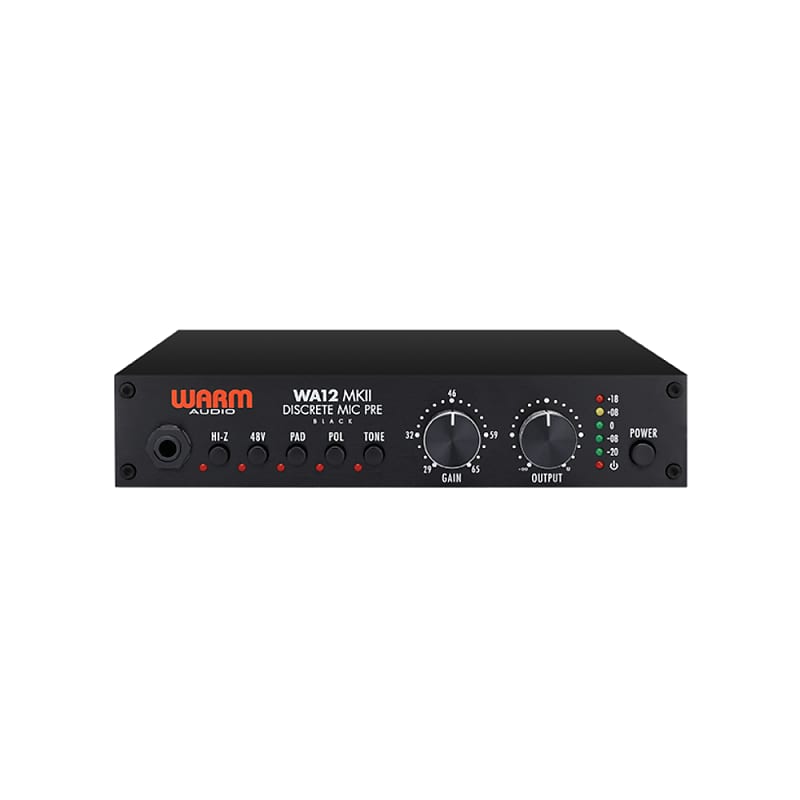
If you’re looking for a preamp to actually improve and shape your signal instead, you will most definitely love the WA12 MKII Black. This preamp is designed to transform the tone of plain instruments and vocals into exciting sounds that can stand on their own - so if your mixes lack depth, struggle to sound alive, or are just missing that professional touch you’ve always wanted, the the WA12 MKII Black is the affordable answer.
The WA12 MKII Black is a completely discrete, high voltage, dual-transformer microphone preamplifier design with high gain (+71dB), high headroom, low noise, and exciting sonic performance – which makes it an ideal choice for all types of recording applications. A high-quality mic preamp is one of the most critical pieces needed to achieve that elusive ‘larger than life’ sound, and the WA12 MKII Black delivers on that promise every single time.
The WA12 MKII Black is based around the X731 discrete op-amp, which is our own reproduction of the classic Melcor 1731 - considered by some to be the warmer predecessor to the modern 2520-style op-amp. The X731 can achieve vibrant, clean and lifelike tones, but it can also be driven into mild saturation at much higher gain levels. While the effects of that saturation can range from subtle to obvious, they always remain very pleasing to the ear, and because it was designed around the X731 the WA12 MKII Black can accept any discrete op-amp on the market that conforms to the +/-16v, 2520 pinout standard.
Our ears played a big part in the process of designing the WA12 MKII Black, and we didn’t stop tweaking until anything we ran through it sounded better. Using CineMag USA transformers and an all-discrete signal path, we ensured that this preamp would have the building blocks to compete with the best-sounding preamps on the market, and we’re very proud to offer such a robust and professional design in a small and affordable package.
- UTILIZES PREMIUM-GRADE INPUT AND OUTPUT TRANSFORMERS FROM CINEMAG USA
- FULLY DISCRETE DESIGN WITH A ROBUST 71DB OF GAIN
- UTILIZES A DISCRETE 6-PIN SOCKETED 1731-STYLE OPAMP, WHICH CAN BE SWAPPED WITH OTHER DESIGNS THAT CONFORM TO THE 6-PIN, 2520 FOOTPRINT +/- 16VDC STANDARD FOR VARYING TONE AND FLAVOR
- 20DB PAD.
- TONE BUTTON - SWITCHES THE INPUT IMPEDANCE FROM 150 TO 600 OHMS AND CHANGES THE TONE OF BOTH THE MIC AND HI-Z INPUTS
- MIC LEVEL BALANCED INPUT: XLR
- 2 MEGOHM TRUE HI-Z INPUT ON THE FRONT PANEL WHICH SENDS THE SIGNAL THROUGH THE ENTIRE CIRCUIT, INCLUDING BOTH CINEMAG TRANSFORMERS AND THE X731 OPAMP - GREAT FOR GUITARS, BASS, KEYS, KEYBOARDS AND ANY INSTRUMENT WITH A 1/4” OUTPUT JACK
- BALANCED OUTPUTS: XLR AND 1/4″/TRS
- 48 VOLT PHANTOM POWER
- LED METER GAIN INDICATION
- OUTPUT ATTENUATION CONTROL (POSITIONED AFTER THE CINEMAG OUTPUT TRANSFORMER) ALLOWS FOR DRIVING THE PREAMP AND TRANSFORMERS INTO SATURATION
- SWITCHABLE 115/230 VOLT IEC POWER INLET
| Radial X-Amp Active Reamper
- Active Reamp® with two outputs
- 100% discrete class-A signal path
- Transformer isolated to eliminate noise
- Variable 'set & forget' level control
The Radial X-Amp is an active Reamper™ that allows the engineer to play a pre-recorded track back through guitar amplifiers and pedals. This opens the door to explore new musical sounds and spur on the creative process so that your recording stands out.
Using the X-Amp is easy: start by recording a dry track using a high quality direct box like the Radial J48. Send the new track from your recorder via the X-Amp to your guitar amps, effect pedals or combinations thereof. Once the basic track has been recorded, replacing or adding tracks can be done well after the session player has gone home. This eliminates tiresome repetition and assures a fresh vibrant performance on the final recording. Furthermore, by driving two amps at the same time, new sounds and textures can be created while allowing you to make artistic decisions as the recording progresses.
Following the critically acclaimed Radial JD7 Injector, the X-Amp employs a unique class-A circuit design that has been optimized for use with guitars. Features include balanced line level input with LED peak indicator and level control, class-A circuit topology for optimal reach and frequency response, a transformer isolated output to eliminate hum and buzz caused by ground loops, a 180º polarity reverse switch to bring both amps into phase, and a dual ground lift switch for noise-free operation.
As with all Radial products, the X-Amp is built like a tank to provide years of trouble-free performance. An internal I-beam skeleton provides maximum protection against external stress which could cause solder points to fail. This is supplemented with an innovative bookend design that creates a protective zone around the switches, potentiometer and connectors. A full bottom no-slip pad performs double duty by keeping the X-Amp from sliding around when placed on a vibrating amplifier while also providing electrical and mechanical isolation. Reamping works equally well on bass, keyboards, drums and voice. Once you start Reamping, you will never record any other way.
The Radial X-Amp… the active Reamp® for professional recording engineers. | Rupert Neve Designs Portico 542 500 Series Tape FX Standard
FEATURES
- Add depth and character to your sound
- Control the mix of pre and post tape signals
- Send signals through "True Tape" circuitry
- Silk circuit, reduces negative feedback, adding harmonic content as needed
- Red Silk accentuates the saturation in the mid and high frequencies
- Use soft clip to tame overly transient material like drums
- Provides +/- 12dB adjustment of level on incoming signal levels
TECHNICAL SPECIFICATION
Rupert Neve Designs Portico 542 500 Series Tape FX
- Line Amp Specifications (Measurements with tape circuit disengaged)
- Noise: Measured at Main Output, un-weighted, 20Hz-22kHz, Input Terminated 40 Ohms.
- Unity Gain Better than -100dBu
- Frequency Response
- Measured at +10dBu, trim at unity.
- Main Output +/- 0.25dB from 5Hz to 60Khz -2dB @ 120KHz
- Maximum Output Level 23.25dBu
- Total Harmonic Distortion and Noise:
- @ 1kHz, +20dBu output level Better than 0.0025% @ 20Hz, +20dBu output level 0.07% Typical (2nd and 3rd harmonic)
- Tape FX Specifications
- Noise:
- Measured at Main Output, un-weighted, 20Hz-22kHz, Input Terminated 40 Ohms.
- Saturation @ minimum Better than -100dBu Saturation @ maximum Better than -100dBu
- Frequency Response:
- 15 IPS, Input @ -0 dBu -3dBu @ 28kHz Saturation @ minimum 0dBu @ 10Hz +5dBu Peak @ 60Hz
- Saturation @ maximum -3dBu @ 20kHz -3dBu @ 12.5Hz +2.4dBu Peak @ 60Hz
- 30 IPS, Input @ -0 dBu -3dBu @ 120kHz Saturation @ minimum -3dBu @ 10Hz +3.15dBu Peak @ 125Hz
- Saturation @ maximum -3dBu @ 100kHz -3dBu @ 12.5Hz
- +1.3dBu Peak @ 110Hz
- Total Harmonic Distortion and Noise
- Refer to sweeps on page10 15 IPS, Input @ -0 dBu 0.4% @ 3kHz to 1% @ 175Hz typical
- Saturation @ minimum Greater than 1% below 175Hz typical
- Saturation @ maximum 1% at 6kHz typical 0.3% @ 1kHz to 3% @ 50Hz typical
- 30 IPS, Input @ -0 dBu 1% at 1kHz typical
- Saturation @ minimum 0.6% @ 400Hz 5% @ 20Hz typical
- Saturation @ maximum 1.5% @ 20kHz to 0.4% @ 1kHz typical 0.4% @ 1kHz to 2 %@ 50Hz typical
- Power requirements:
- Supplied by 500 series rack with 110-125 mA @ +/- 16V DC
| FEATURES
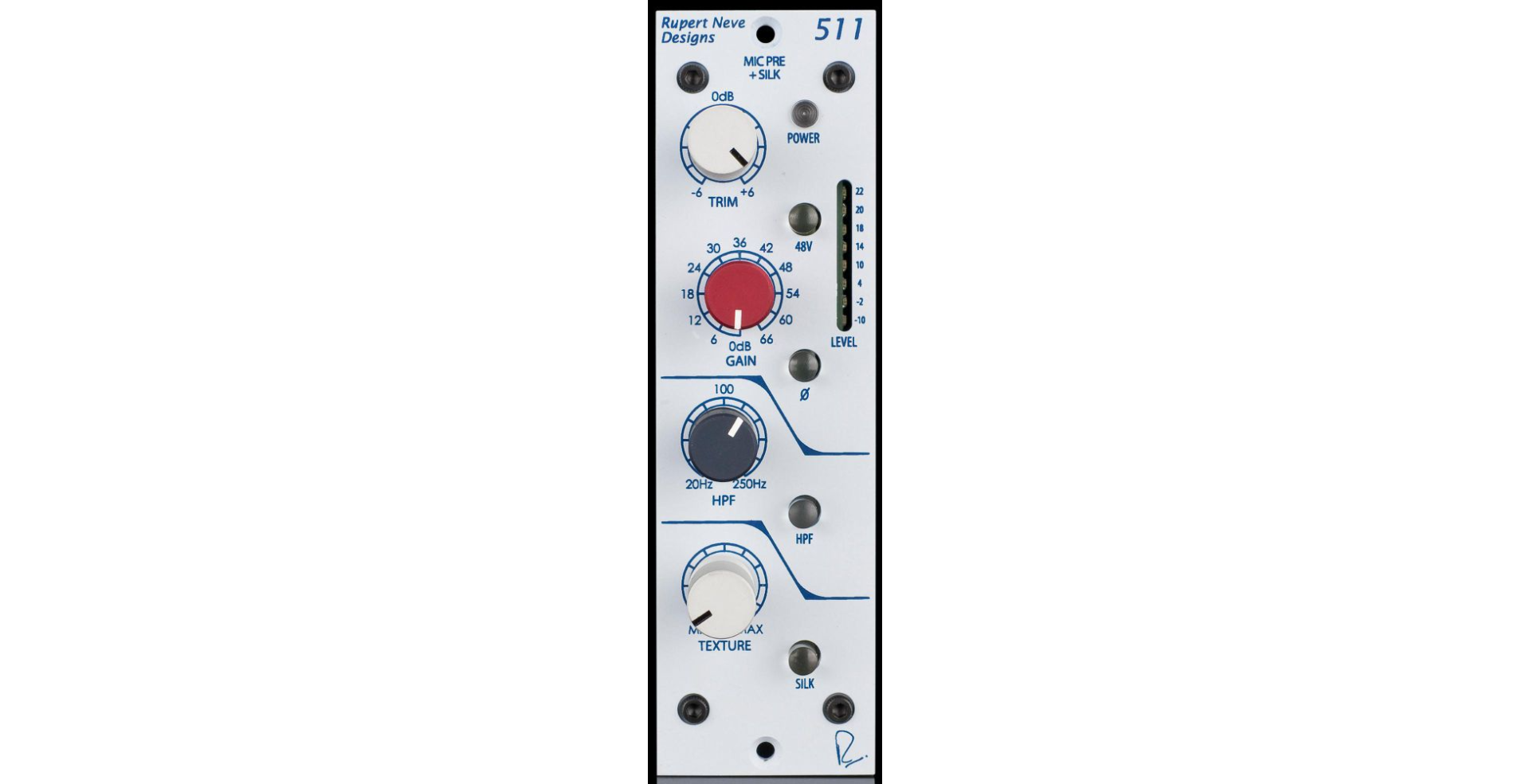
- 12-way precision rotary switch controls gain from 0 to 66 dB in 6 dB steps
- Continuously variable +/-6 dB level control
- Silk circuit, reduces negative feedback, adding harmonic content as needed
- Red Silk accentuates the saturation in the mid and high frequencies
- Same presence and sweetness found in standard Portico Series modules
|
Number of Channels |
Single |
|
Inputs |
1x XLR, balanced |
|
Output |
1x XLR, transformer-balanced |
|
Maximum Output Level |
+23dBu |
|
Meter |
8 segment LED meter |
|
Power Requirements |
Power Requirements @ +/-16VDC 100mA |
|
Dimensions |
Not specified by manufacturer |
|
Box Dimensions (LxWxH) |
10.2 x 7.8 x 2" |
| The Suhr Reactive Load delivers a simple solution to capture all of the warmth, and dynamics of your sound, without the hassle of miking a speaker cabinet during a live or recorded performance.
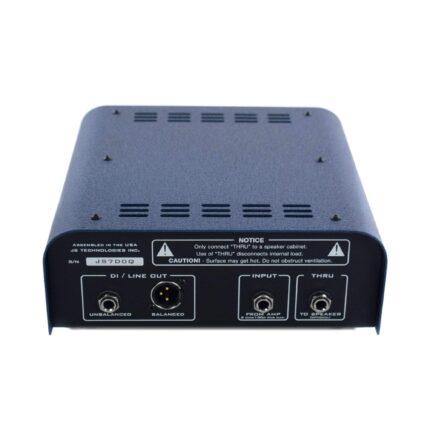
The Reactive Load takes the place of your speaker cabinet in your signal chain. It provides an 8Ω load for your tube amplifier (maximum 100 watts), and produces a balanced and unbalanced signal that interfaces with recording devices, effects, and power amplifiers.
The Suhr Reactive Load is the perfect link between your amplifier and computer audio recording interface. You can use the Reactive Load with your existing library of speaker impulse responses (IR) for the most realistic direct recording experience possible.
Traditional resistive load boxes will safely load your amplifier, but they also alter the tone, dynamics, and response of your amplifier. Real speakers do not have a fixed resistance across the entire frequency spectrum. Real speakers are reactive.
The impedance curve of the Reactive Load has been painstakingly tuned to react like a speaker. Your amp will never know the difference.
The Reactive Load is dedicated to being the absolute best load box possible with zero compromises, and therefore does not include speaker emulation. You can use the Reactive Load with your speaker-sim or impulse response of choice, and benefit from the natural response, dynamics, and touch sensitivity of your amp.
The Suhr Reactive Load features a balanced or unbalanced line level output. The INPUT is optimized for the 8 ohm output of your amplifier and the THRU jack can be connected to a physical speaker cabinet. If a physical cabinet is connected to the THRU jack, the Reactive Load’s internal load is bypassed and the amp will see the load of the physical cabinet.
SPEAKER INPUT IMPEDANCE: 8 Ohm
DI / LINE OUT LEVEL: +4 dBu at 7 watts input, maximum level setting
BALANCED LINE OUTPUT IMPEDANCE: Less than 6KΩ
UNBALANCED LINE OUTPUT IMPEDANCE: Less than 6KΩ
MAXIMUM RECOMMENDED INPUT POWER: 100 Watts RMS
ROHS COMPLIANT: Yes
DIMENSIONS: 8.8" (W) x 8.9" (D) x 3.6" (H)
WEIGHT: 6.6lb
| The vintage EQ tones you know & love.
The 551 is the only equalizer for the 500 Series actually designed by Rupert Neve. Featuring 3 bands of EQ inspired by Mr. Neve’s most prized vintage designs, along with custom-wound inductors, transformers and class-A gain blocks, the 551 brings the thick, powerful lows and sweet highs of Rupert’s classics to the 500-Series format.
The “Best-Of” EQ
The 551’s 3-band, custom-tapped inductor EQ was inspired by our favorite elements of Rupert’s vintage EQ designs. The low frequency band is designed to produce a creamy, resonant bass response similar to a vintage 1064 – but unlike the vintage modules, the LF band on the 551 can be used as either a shelf or a peak filter, adding punch, dimension, and control to your low end.
The midrange band is based on that of the 1073, ideal for sweetening vocals and instruments while bringing them forward in a mix, and its proportional “Q” response makes it well-suited for minimizing problematic frequencies. The high frequency band is a hybrid vintage / modern design, blending inductor circuitry with capacitor-based topologies to achieve vintage tones with enhanced control. The High Pass filter is a 12dB/octave design with a fixed 80Hz frequency, and can be used in tandem with the low frequency EQ to add low-end presence without clouding the source material.
As with Rupert’s most prized classic designs, each EQ section uses low-feedback, class-A discrete electronics to prevent low-level artifacts and harshness from detracting from the tonal shaping. However, this new circuit is a decidedly modern design with updated techniques and components that were simply not available 50 years ago, and is definitely not a “clone”.
What Are Inductors?
Inductors are wires wound around a coil that provide a form of frequency-dependant resistance. When they saturate, they bring out beautifully musical harmonics that give your tracks the smooth, polished sound that has made Rupert’s consoles and equipment so desirable for over fifty years. This is what makes them different from capacitor-based EQ designs, which do a great job at surgical equalization. But inductors provide the tone.
While it is certainly possible to create a functioning EQ using off-the-shelf inductors, we choose to use our own custom inductors for the 551. This attention to detail in controlling variables such as the winding and core materials in relation to the surrounding circuitry allows the 551 to capture the vitality and personality of Rupert’s classic designs.
NOISE
- Measured at Main Output, un-weighted, 22Hz-22kHz, source impedance 40 Ohm balanced.
- Better than -102 dBV
FREQUENCY RESPONSE
Main output, no load: +/- 0.1 dBu from 20 Hz to 31.5 kHz, -1 dB @ 120 kHz
MAXIMUM OUTPUT LEVEL
23.25 dBu
TOTAL HARMONIC DISTORTION AND NOISE
- @ 1 kHz, +20 dBu output level, no load: Better than 0.0025%
- @ 20 Hz, +20 dBu output level, no load: 0.13% Typical (2nd and 3rd harmonic)
HIGH PASS FILTER
- -2.7 dB @ 80 Hz
- Slope: 12 dB/Octave
NOISE
- Measured at Main Output, un-weighted, 22 Hz - 22 kHz, source impedance 40 Ohm balanced.
- Better than -94 dBV
FREQUENCY RESPONSE
Main output, no load: +/- 0.25 dBu from 20 Hz to 45 kHz, -2 dB @ 120 kHz
MAXIMUM OUTPUT LEVEL
23 dBu
TOTAL HARMONIC DISTORTION AND NOISE
- @ 1 kHz, +20 dBu output level, no load: Better than 0.009%
- @ 20 Hz, +20 dBu output level, no load: 0.13% Typical (2nd and 3rd harmonic)
POWER REQUIREMENTS
- 120mA on +16VDC
- 110ma on -16VD
|








Reviews
There are no reviews yet.