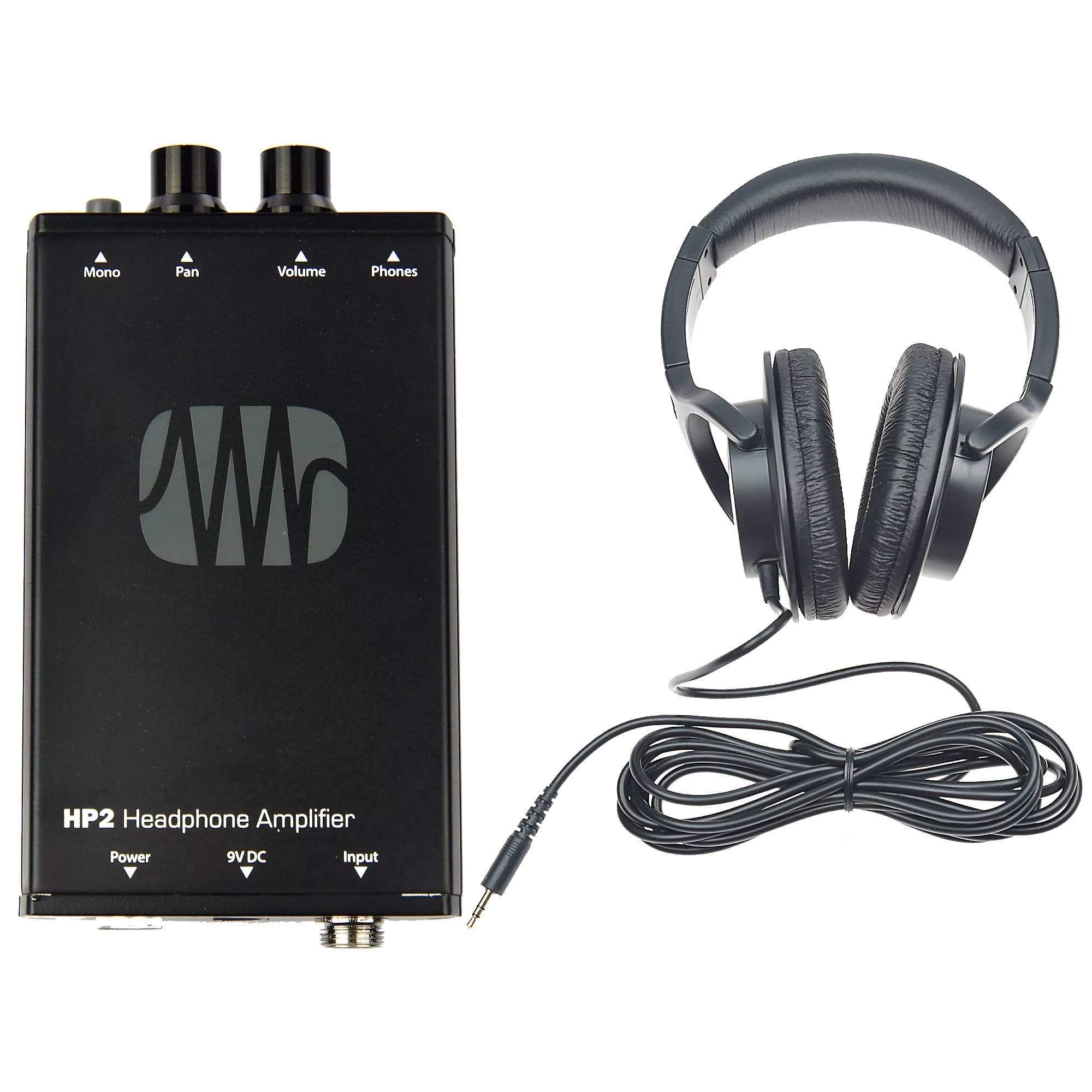
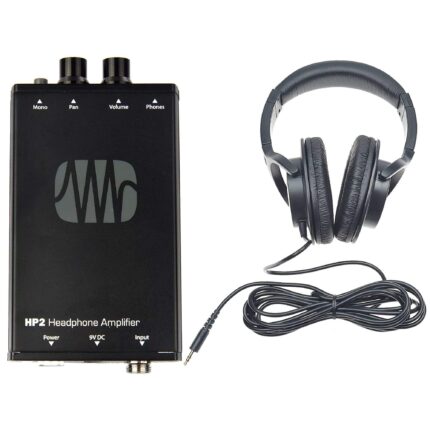
| Content | Designed for musicians and performers who demand mobility without compromising audio quality, the HP2 personal headphone amplifier is a great choice for driving wired in-ear monitors (IEMs), as well as headphones. PreSonus HP-series headphone amplifiers have long been popular for their loud, clean, clear sound and roadworthy built quality. The new HP2 delivers these qualities in an easily affordable, stereo device so you'll hear every note and beat clearly wherever your music takes you. | FEATURES
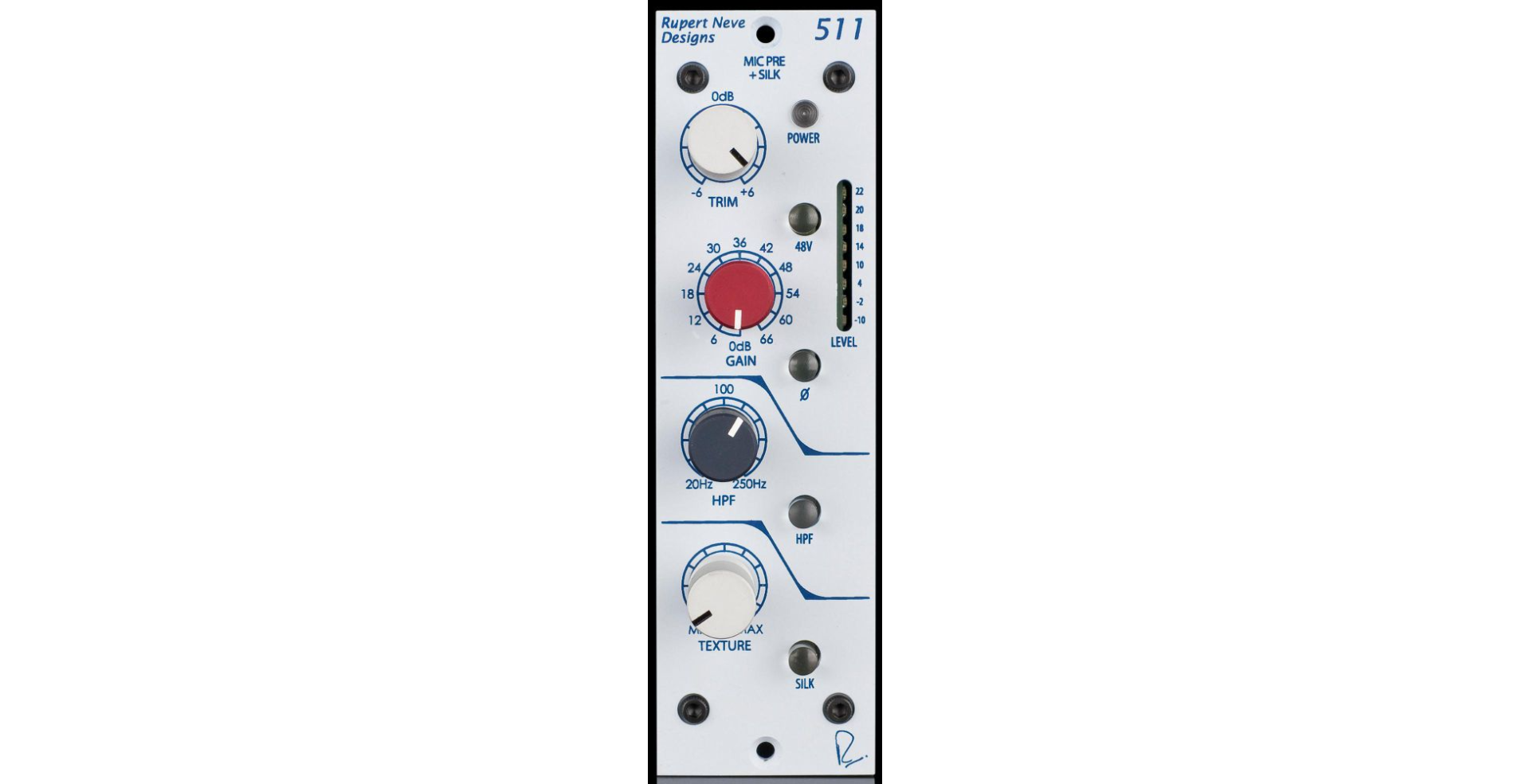
- World-class, transformer-coupled preamp, compressor, and DI
- Gain: 0 - 66dB in 6dB increments
- Compressor: Single-knob opto-coupler compressor with 2:1 ratio
- Blend: Determines balance of mic and DI inputs
- Instrument gain: 0 - 30dB on instrument input
- 48V phantom power
- Silk: Adds nostalgic warmth and presence when engaged
- Instrument input: Front-panel TRS input and passive-through for Hi-Z sources
- Polarity reverse
- Threshold: When signals exceed threshold level, gain is reduced at a controlled 2:1 ratio with fixed attack and release time constants
- Indicators: Signal presence and clipping on both mic and DI signals, as well as compressor activation.
TECHNICAL SPECIFICATION
Rupert Neve Designs Portico 517: 500 Series Mic Pre / DI / Comp
- Frequency Response: Main Output, no load, -0.2dB @ 10Hz -3dB @ 160kHz
- Noise measured at main output, unweighted, 22Hz - 22kHz, terminated 150 ohm: Gain at unity: better than -100dBu; gain at 66dB: better than -62dBu Equivalent Input Noise: better than -128dBu, noise factor 1.5dB
- Maximum output level from 20Hz to 40kHz: +23dBu
- Total Harmonic Distortion and Noise: @ 1kHz, +20 dBu output: Main Output: Better than 0.001% @ 20Hz, +20 dBu output: Main Output: Better than 0.002% Silk Engaged: Better than 0.2% Second harmonic
- Crosstalk: Measured channel to channel: Better than -90dB @ 15kHz.
- Phantom Power: +48 Volts DC +/- 1%
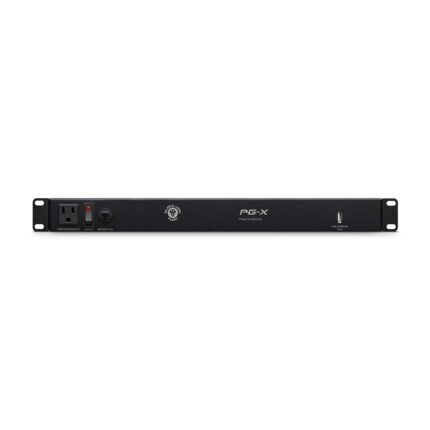
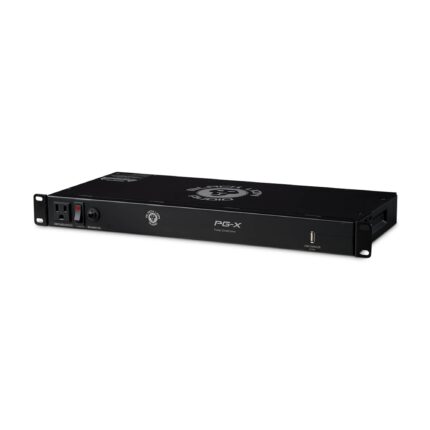
| There’s no doubt that when it comes to power, musicians have it bad. Whether it’s modern modeling amplifiers, or vintage synthesizers, bad power is gonna be heard throughout your signal. And it’s everywhere — in homes, on stages, and especially in many rehearsal rooms.
Black Lion Audio has been trusted for years for modifying the best gear and making it even better, and that’s what it took to create the PG-P: taking industry-standard designs, and improving them to the point of peak performance.
After creating an entire lineup of industry-best power conditioners, Black Lion Audio felt it was time to give the world proper portable power. The PG-P might look like a run-of-the-mill surge protector, but in reality it’s a studio-class power conditioner — PG-P doesn’t just provide more noise filtering than other portable conditioners, it provides the same noise filtering found in the majority of the world’s rack-mount power conditioners!
Your gear deserves the best power, and Black Lion Audio took great care in making sure the PG-P delivers just that — thanks to it’s PG-P Filtering Technology. The PG-P is built using premium Panasonic capacitors, due to their superior execution in eliminating high frequency noise that robs equipment of its peak performance. In testing, this has provided an average of 3x the noise filtering of other portable power conditioners at the same price point. Six wall-wart spaced outlets provide studio-grade power on the go; perfect for any musician’s rig!
- PG-P Filtering Technology for an average of 3x the noise reduction of other portable power conditioners
- The same noise filtering found in the majority of rack-mount power conditioners
- 6 wall-wart spaced outlet power conditioner
- Status LEDs for quick power analysis
- High-end Panasonic capacitors to filter out performance-robbing high-frequency noise
- Tour-grade 9ft power cable
- Proper safeguard protection with a power absorption rating of 540 joules
- Recessed feet keep the PG-P from sliding, while still providing mounting options (screw mount, velcro, etc.)
- Rounded corners make for a gentle surface area for smaller power cords.
| FEATURES
- 12-way precision rotary switch controls gain from 0 to 66 dB in 6 dB steps
- Continuously variable +/-6 dB level control
- Silk circuit, reduces negative feedback, adding harmonic content as needed
- Red Silk accentuates the saturation in the mid and high frequencies
- Same presence and sweetness found in standard Portico Series modules
|
Number of Channels |
Single |
|
Inputs |
1x XLR, balanced |
|
Output |
1x XLR, transformer-balanced |
|
Maximum Output Level |
+23dBu |
|
Meter |
8 segment LED meter |
|
Power Requirements |
Power Requirements @ +/-16VDC 100mA |
|
Dimensions |
Not specified by manufacturer |
|
Box Dimensions (LxWxH) |
10.2 x 7.8 x 2" |
| Proven reverberation classic for the future
With the VSR 3.2, we happily rely on the proven old mechanical way to create reverberation. Rightly, because the used reverberation spring by AccuBell (formerly Accutronics) creates that magic 60's reverb which is slightly metallic and dense at the same time.
Just like it predecessors, VSR 3.2 has a straight-forward and honest approach: signal in - spring reverb - vintage sound out.
VSR 3.2 is equipped with an equalizer that is exactly adapted to the springs' frequency response. In addition, there are controls to mix the dry and effect signal as well as controls for the input and output level. This way, VSR 3.2 simply exactly does what it was designed to do.
Designed for every situation
Although using a large spring (type 9), VSR 3.2 fits in a 19" housing with one rack unit – minimal space requirements. Thanks to its extremely solid chassis, VSR 3.2 is a reliable vintage-effect that cannot only be used in a controlled studio environment. On the contrary, it also serves fine when being used in straining live situations.
VSR 3.2 grants your sound an elegant touch of "good old times". Its simplicity makes it an unbelievable versatile companion.
Inputs
- 1/4"-jack input front
- unbalanced
- max. input sensitivity: –40 dBu
- impedance: 1 MΩ
- 1/4"-jack input rear (1)
- unbalanced
- max. input sensitivity: 0 dBu
- impedance: 100 kΩ
- 1/4"-jack input rear (2)
- unbalanced
- max. input sensitivity: –20 dBu
- impedance: 10 kΩ
Outputs
- 1/4"-jack output (1)
- unbalanced
- max. output level: 0 dBu
- 1/4"-jack output (2)
- unbalanced
- max. output level: - 20 dBu
Signal-to-Noise Ratio
- direct: > 80 dBu
- effect: > 70 dBu
THD + Noise
Miscellaneous
- power supply: external DC-adapter with 12 V/1000 mA
- dimensions: 19“, 1 HE, ca. 190 mm deep
- weight: 2.5 kg
| Condition: Item is subject to minor cosmetic imperfections. Packaging may be in poor shape. The item displayed in the images may not be the actual item you receive.
- Converts balanced line level signals to unbalanced
- Stereo signal path with set & forget level control
- Transformer isolated to eliminate hum & buzz
- J-Iso features Jensen™ transformers for optimal signal path
The Radial J-Iso and Pro-Iso are stereo line isolators designed to convert a professional +4dB line level balanced signal to an unbalanced -10dB consumer level device. This enables you to take the balanced output of a mixer and feed a consumer level recorder or audio input on a computer.
J-Iso Part # R800-1025: The J-Iso employs a premium Jensen transformer for optimal signal transfer to minimize distortion and artefact. Full bandwidth performance makes the J-Iso ideal for music production.
The passive design begins with 100% discrete components throughout. A set & forget level control lets you attenuate the input signal to prevent it from overloading the destination device. Output connections include a stereo pair of ¼" connectors, a set of RCAs and a mini 3.5mm (1/8") for interfacing to a mini recorder or lap-top computer. Transformer isolation helps eliminate hum and buzz caused by ground loops while eliminating stray DC currents from flowing.
Construction begins with 14 gauge steel throughout utilizing Radial's unique bookend construction. This creates a protective zone around the connectors and controls for added durability. The steel construction also assists by shielding the transformers from outside magnetic fields. Inside, the J-Iso features an innovative I-beam skeletal insert that makes it virtually impossible to torque the PC board. This reduces potential stress which could cause premature solder joint failure.
Designed for full range applications, the J-Iso combines exceptional signal handling with the type of durability that has made Radial famous. Signal Processors |








Reviews
There are no reviews yet.