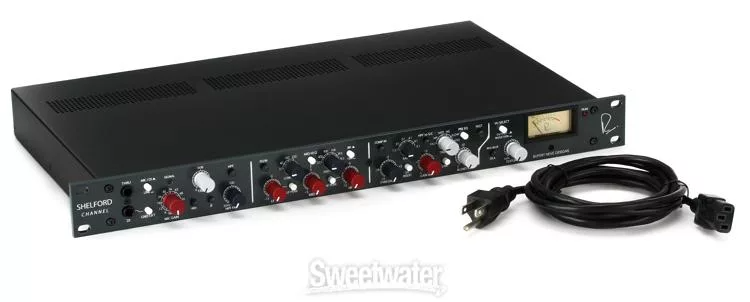
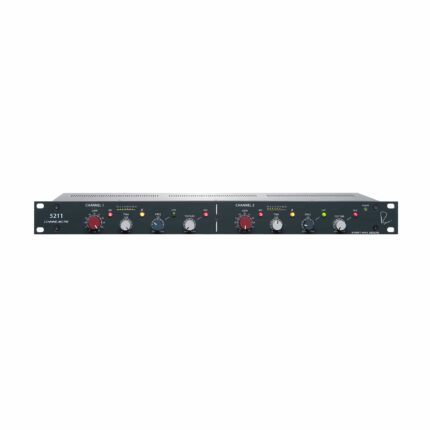
| Content | Rupert Neve Designs' Shelford Channel, over a half century in the making, is the definitive evolution of Mr. Neve's renowned 80 Series channel module technology, updated and refined for the contemporary studio. The Shelford Channel is fitted with Rupert's latest Class A transformer-gain mic preamp, the best-of-the-classics Inductor EQ from the Shelford 5052, a punchy diode-bridge compressor, the alluring analog textures of variable Silk saturation, a state-of-the-art dual-tap transformer output stage with massive headroom, and double the operating voltage of vintage designs. Offering rich tonal options for making audacious statements with your music, along with precision-detented controls for recall, the Shelford Channel delivers the authoritative sonic essence of classic Rupert Neve designs, along with modern versatility.
Input stage and transformer-gain mic pre
Rupert Neve's first new Class A, transformer-gain mic preamplifier in over 40 years makes its debut in the Shelford Channel. Rupert has spec'd this preamp with a direct-coupled transformer input; gain is provided by the custom transformer itself. The proprietary input transformer, and its meticulous integration with the surrounding Class A input amplifiers, plays an outsized role in the Channel's immediately recognizable sonics: punchy and creamy-smooth, with excellent isolation and vanishingly low noise.
The Shelford Channel's front-panel hi-Z instrument input uses the same discrete Class A field-effect transistor with transformer topology as Rupert Neve Designs' acclaimed RNDI; for gain, however, it utilizes the new RN4012 input transformer directly into the mic preamp. This design provides astonishing clarity on hi-Z sources, with substantial low-end weight and silky-smooth high frequencies. The DI also gives you a passive thru output to feed a guitar or bass amp.
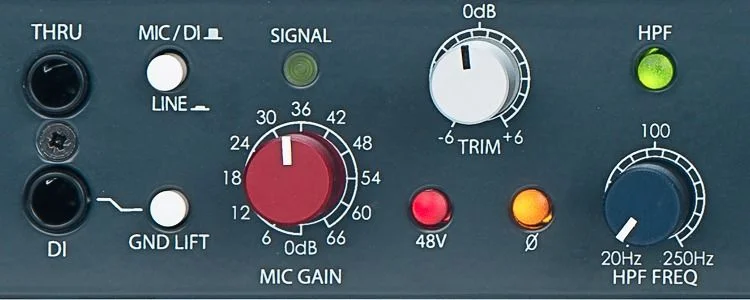
- Mic-DI/Line: switches between microphone/direct injection input and line input
- GND Lift: disconnects the audio signal ground from chassis earth
- Signal LED: green indicates Signal Present; red indicates imminent input stage clipping
- Mic Gain: 12-way precision rotary, controls gain from 0dB to 66dB in 6dB steps
- Trim: rotary switch provides further continuous gain adjustment of +/-6dB
- 48V: switch engages phantom power on the mic input
- Phase: inverts the polarity of the signal path (illuminates when engaged)
- HPF Freq: engages a 12dB/octave highpass filter, variable from 20Hz-250Hz
The best-of-the-classics inductor EQ
The Shelford Channel's EQ section is a 3-band, custom-tapped inductor circuit containing Rupert's favorite bands from his vintage equalizer designs. The low-frequency band is primarily based on the 1064 — acclaimed for its creamy, resonant bass. Unlike the 1064, though, the Channel gives you added dimension, punch, and control over your low end by letting you use the LF band as either a peaking or a shelving filter. The midrange band is based on the venerable 1073 and is perfect for sweetening instruments and vocals while nudging them forward in a mix. "Proportional Q" response also makes it ideal for attenuating problem frequencies. The high-frequency band is a hybrid design with the best of vintage and modern attributes. It should be noted that this EQ is in no way a clone; it's a decidedly modern design using components and techniques that simply did not exist in the 1970s — for instance, the use of capacitor-based topologies to achieve sonic richness and enhanced control.
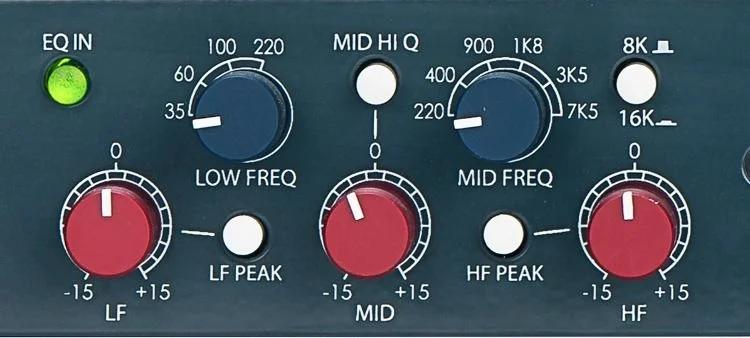
- EQ In: engages all EQ frequency bands except HPF
- LF: adjusts up to 15dB of boost/cut at the selected low frequency
- Low Freq: 4-position rotary switch for selecting LF band corner or center frequency
- LF Peak: selects LF shelving (out) or peaking (in) mode
- Mid Hi Q: selects between a mid-band resonance of 2 (out) or 3.5 (in)
- Mid: adjusts up to 15dB of boost/cut at selected mid frequency
- Mid Freq: 6-position rotary switch selects center frequency of the midband EQ stage
- HF Peak: selects HF shelving (out) or peaking (in) mode
- 8K/16K: selects between an 8kHz (out) or 16kHz (in) center or corner frequency for HF band
- HF: adjusts up to 15dB of boost or cut at selected high frequency
The Super Diode-bridge Compressor
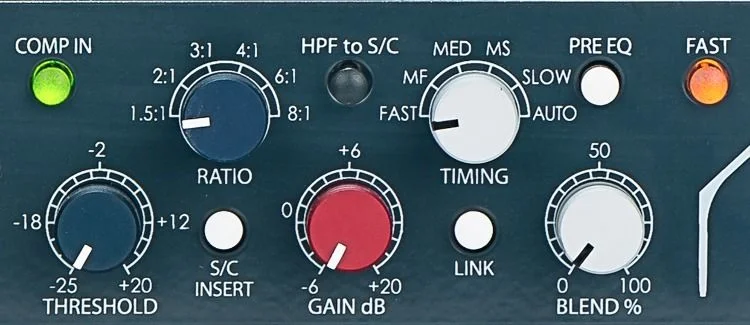
Like the Shelford Channel's inductor EQ and transformer-gain microphone preamp, the diode-bridge compressor/limiter is based on the topologies found in vintage Neve designs such as the 2254. It improves, however, on the early designs by the inclusion of full-wave rectification and a bevy of new control features. Although Rupert's vintage diode-bridge compressors were prized for their warm, punchy response, they were somewhat compromised by imprecise controls, attack-time inflexibility, low headroom, and high noise. The Shelford Channel's Super Diode-bridge Compressor delivers the attitude-packed, "in your face" sound of those classics, but with modern precision and flexibility — which makes it ideal on any source. Full Side-chain and stereo Link features are provided.
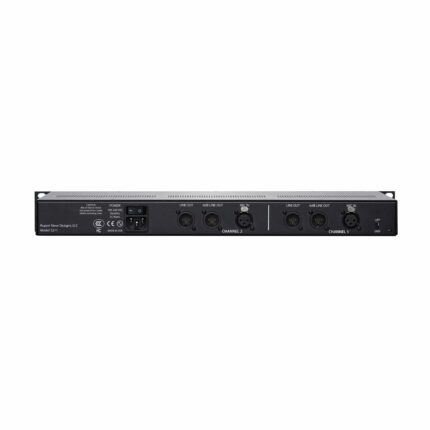
- Side Chain Insert Jacks (rear-panel): for fine tuning of compressor operation
- Comp In: engages the Channel's compressor-limiter section
- Threshold: sets level where the compressor "kicks in"
- Ratio: sets compression slope from 1.5:1 (minimal) to 8:1 (heavy)
- SC Insert: inserts rear-panel sidechain insert jacks into sidechain signal path
- HPF to S/C: routes highpass filter into the circuit that compressor uses to determine level
- Gain: for adding make-up gain to compensate for level attenuation lost to compression
- Timing: 6-position rotary adjusts attack/release speed of the compressor
- Link: links the sidechain control of multiple units for ganged or stereo operation
- Pre EQ: changes the order of compressor in the circuit chain
- Blend: mixes the dry and compressed signal for handy parallel compression
- Fast: speeds up both attack and release of the selected compressor time constant
Dual-tap transformer output
The Shelford Channel's output stage serves up the inimitable sound of Rupert Neve's classic designs while providing far more tonal versatility. The dual-tap output for the RN2042 square-core output transformer provides both high- and low-headroom outputs without compromising performance. The high-headroom tap takes advantage of the Shelford's higher-voltage design, delivering a pristine sound without non-linear output-stage coloration at high levels. The low-headroom tap, on the other hand, lets you drive the full voltage range of the Channel to accentuate this non-linear harmonic content — without clipping most pro interfaces. For vocals, drums, guitars, bass, and other instruments, this output lets you hit the transformer's sweet spot, which can inject life into a recorded performance in a way that other effects cannot.
The Silk and Texture controls
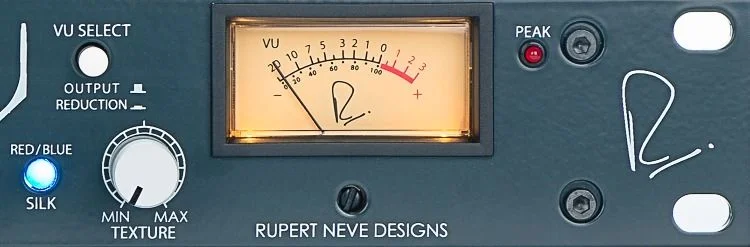
The Shelford Channel is packing a secret weapon the classics never had: its output transformer features the Silk Red/Blue and Texture controls from the Portico II Series that let you tailor the harmonic content and tonality of the output stage. By engaging these controls and sufficiently driving your output, you can dial in delectable 2nd- and 3rd-order harmonic distortion (that's the good kind) and saturation of the output transformer, imbuing your tracks with juicy rich thickness (think: 1073 on steroids) — with no danger of overloading the output stage. The Silk Red mode emphasizes harmonic content generated by the source's high frequencies; Blue mode, conversely, works off the low frequencies. The Texture knob controls the amount of added harmonic content. Disengage Silk, and your output is pristine and modern, while retaining Rupert's bigger-than-life transformer sonic signature.
The magical sound of Neve
Rupert Neve is an audio legend whose electronics designs defined the golden age of analog. Those of us at Sweetwater who have had the privilege of working on a Neve 8078 or its predecessors can attest to the fact that Neve's Series 80 consoles were indeed the pinnacle of hand-wired analog mixing desks. Mr. Neve has remained at the forefront of audio-circuit innovation for over half a century, and his current company, Rupert Neve Designs, continues to advance the state of the art with cutting-edge products that sound incredible and intelligently address the challenges of the digital age.
Rupert Neve Designs Shelford Channel Features:
- The definitive evolution of Rupert Neve's renowned 80 Series channel module technology
- A complete channel strip that delivers the essence of classic designs, along with modern versatility
- Input stage and transformer-gain mic pre
- Front-panel hi-Z direct input
- Best-of-the-classics inductor EQ
- Super Diode-bridge Compressor
- Dual-tap transformer output
- Silk and Texture controls
| The TB12 Tone Beast Black is a fully professional preamp design with loads of gain that can effortlessly capture an array of sources very well. It is a swiss army knife full of options and tones. With top notch CineMag transformers and multiple discrete signal paths, it's hard to beat the Tone Beast's big, bold, fully-professional sound at this price.
The Tone Beast Black is a mic pre that likes to be pushed and when pushed will colorize your signal ever so sweetly. The 2 opamps and 2 output transformers at the flip of their switches won't appear to be much different, but as one drives the pre into harmonic distortion, the unique character of each of these components becomes apparent. The Tone Beast Black is customizable and allows users to source and swap in their own opamps. The output control on the TB12 allows you to limit the signal exiting the preamp even when pushing the gain to really hot levels, giving you maximum control.
When designing the TB12 Tone Beast Black our goal was to make a microphone preamplifier affordable and jam packed full of options, without compromising the quality and design parameters that make this type of microphone preamplifier so desirable.
The TB12 "Tone Beast Black" is a fully discrete, high-voltage microphone preamplifier, utilzing CineMag USA Transformers. Have no fear of hurting the Beast, you can push it very hard into full-on distortion if you wish, and these can sound quite nice on electric guitar, bass or anything else that likes some grit.
The different component options in the TB12 are subtle, but when driven into saturation are noticeable and can make a big difference to the way your final mix will sound. Home-based musicians and professional studios alike will find the Tone Beast Black to be an extremely powerful and fully professional piece of gear that is capable of warming and shaping signals/mixes in a way that is very pleasing to the ear.
- 71DB OF GAIN
- TRANSFORMER SELECTION PROVIDES BOTH STEEL AND 50% NICKEL CINEMAG OUTPUT TRANSFORMERS FOR VARYING CHARACTER
- TRANSFORMER BYPASS SWITCH ALLOWS FOR REMOVAL OF THE OUTPUT TRANSFORMER FROM THE CIRCUIT
- DISCRETE OPAMP SELECTION ALLOWS FOR CHOOSING BETWEEN A 1731(VINTAGE) AND 918(CLEANER) STYLE OPAMP. THESE ARE SOCKETED/SWAPPABLE WITH YOUR CHOICE OF 2520 6 PIN FOOTPRINT OPAMPS
- IMPEDANCE SWITCH LABELED TONE TO SWITCH BETWEEN 150 AND 600 OHMS INPUT IMPEDANCE
- 2 MEG OHM TRUE HI-Z INPUT ON FRONT PANEL SENDS INSTRUMENT SIGNAL THROUGH ENTIRE CIRCUIT INCLUDING BOTH CINEMAG TRANSFORMERS AND THE DISCRETE OPAMPS. GREAT FOR GUITARS, BASS, KEYBOARDS AND OTHER INSTRUMENTS THAT HAVE A 1/4″ OUTPUT JACK
- 80HZ HIPASS FILTER
- POLARITY REVERSE
- UTILIZES PREMIUM GRADE CINEMAG USA TRANSFORMERS
- +48V PHANTOM POWER
- OUTPUT ATTENUATION ALLOWS FOR SATURATION FLEXIBILITY OF BOTH OPAMPS AND TRANSFORMERS
- ¼" INSERT FOR THE USE OF INLINE COMPRESSORS, EQ'S ETC
- BALANCED XLR MIC (FRONT AND BACK), BALANCED TRS LINE, AND ¼" UNBALANCED INSTRUMENT INPUTS
- BALANCED XLR AND TRS OUTPUTS
- -20DB PAD
- LED VU METER
- 19" RACKMOUNTABLE
- SWITCHABLE 115/230 VOLT IEC POWER INLET.
- CAPACITOR SELECTION BETWEEN TANTALUM AND ELECTROLYTIC FOR DIFFERENT CHARACTERS
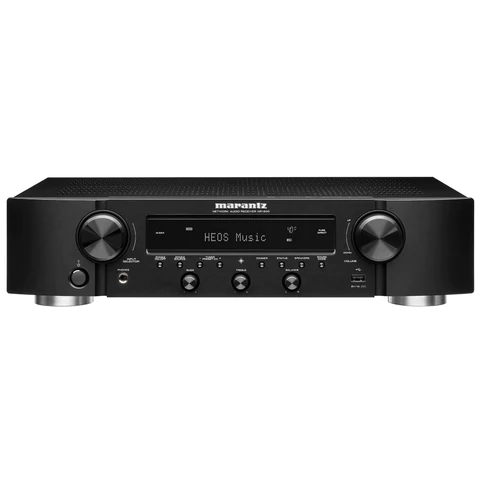
| MARANTZ NR1200 STEREO RECEIVER
2ch Slim Stereo Streaming Receiver with HEOS Built-in
Indulge in high-resolution sonic perfection with the Marantz NR1200 two-channel slim stereo receiver that powers detailed, high-fidelity audio from a compact chassis. At half the height of a traditional receiver, the NR1200 drives impeccable sound for your movies, shows, hi-fi audio and more. The NR1200 supports the latest HDMI connectivity with its 5 inputs, each one supporting HDCP 2.3, 4K Ultra HD 60Hz video, HLG and more. Stream music from leading music services and control the NR1200 with voice control compatibility via Amazon Alexa, Google Assistant, and Apple Siri.
Features
- Slim profile that’s half the height of a traditional AV receiver: Delivers exceptional performance and sound quality
- Power to suit your audio preferences: Two-channel discrete power amplifier with separate L/R power amp circuit and power transformer with 75 W per channel (8-ohm, 20 Hz – 20 kHz, 0.08% THD)
- Hi-Fi construction and performance: Engineered with dedicated Hi-Fi parts for two-channel Hi-Fi performance, including custom-designed power capacitors, sound parts exquisitely tuned by sound masters and dual DAC circuit design
- Versatile HDMI ARC connectivity: 5 HDMI inputs with full HDCP 2.3 support plus one HDMI out with ARC support for single cable connection with your television
- Flexibility for all configurations: Speaker A/B, tone control to tune the sound to your exact specifications and dedicated dual subwoofer output for evenly dispersed bass, and no audible peaks or dips
- AM / FM tuner: Hear all of your favorite radio stations with exquisite detail
- Play vinyl with exceptional clarity: Integrated phono input that easily connects to your turntable
- Drive an exceptional gaming experience: Auto Low Latency Mode (ALLM) ensures Xbox One users have a more responsive and immersive gaming experience when connected with select TV models that also support ALLM
- Smart TV connectivity: Control the NR1200 with your TV remote, and HDMI-CEC support for seamless pass-through of the latest picture and audio coding from your TV to the stereo receiver
- High-performance, high-resolution audio playback: Ability to decode high-resolution audio ALAC, FLAC and WAV lossless files up to 24-bit/192-kHz — plus, DSD 2.8MHz and 5.6MHz tracks for high-resolution listening
- HEOS Built-in: Enjoy more flexible music streaming in one room or many
- Stream your favorite music from popular services: Play music on Spotify, Pandora, TuneIn, Deezer and many others via Bluetooth, AirPlay 2 or the HEOS Built-in app
- Integrate with your home-network: Built-in Wi-Fi with 2.4GHz/5GHz dual band support (dual antenna)
- Speak your commands: Supports all major voice control agents and streaming services for seamless control
Specifications
NETWORK
- HEOS multiroom and streaming, Wi-Fi, Bluetooth, AirPlay 2
- FLAC / ALAC / WAV up to 192/24
- DSD up to DSD5.6
- TuneIn internet radio
- Spotify Connect, Deezer, Tidal, Napster, Pandora, Sirius XM
HDMI
No. of inputs: 5
No. of outputs: 1
Supported formats / features:
- 4K 60 Hz 4:4:4, HDCP 2.3
- Enhanced ARC
- HDR / HLG
- 3D signal pass-through
- HDMI pass-through in stand-by
OTHER INPUTS AND OUTPUTS
Audio
Analog in: 3
Phono (MM): 1
Digital in (optical / coax): 1 / 1
USB (iPhone, iPod): 1
Multichannel pre-out: 2.2
Subwoofer out: 2
Power output (8 ohm / 6 ohm): 75 W / 100 W
Dimensions (WDH): 17.3" x 14.9" x 4.1"
Weight: 18.1 lb | In addition to the 100% analog tape emulation circuitry – great for bringing out 3rd-order harmonics – the 542 incorporates a soft-clip circuit that tames the harshest sources and enhances 2nd-order harmonics, variable Silk Red & Blue for an infinite variety of transformer tones, and a blend control to dial in in the perfect amount of saturation.
Transformers Imitating Tape
Unlike digital emulations, the “True Tape” drive circuit works by feeding a custom-designed interstage transformer acting as a “record head”, which in turn is coupled to a correctly-equalized replay amplifier. As the voltage rises on the “record head”, saturation increases, and a soft clip circuit engages at higher levels to round off peak transients. The sound of the tape circuit can be further modified with selectable 15 / 30 IPS modes and a pre/post-tape blend control.
What is Silk?
In addition to the tape circuit, the continuously variable Texture control with Silk Red and Silk Blue modes provides a whole other level of control over the harmonic density and tonality of your tracks & mixes. The Silk Red mode accentuates transformer saturation in the high and high-mid frequencies to amplify the vibrant midrange harmonics associated with Rupert’s vintage equipment, while Silk Blue accentuates saturation of the lows and low-mids to add thickness and weight to any source – especially useful for “thin-sounding” tracks or mixes. Unlike EQ, these Silk & Texture controls saturate the output transformers, and add highly musical harmonics to the source material according to the amount of Texture applied.
Drive the 542 hard, choose your Silk flavor, and crank the Texture knob for a rich, saturated, vintage vibe – or disengage Silk entirely for a more purist, hi-fi tape effect. The choice is yours.
LINE AMP NOISE
- Measurements with tape circuit disengaged. Measured at Main Output, un-weighted, 20 Hz - 22 kHz, Input Terminated 40 Ohm.
- Unity Gain: Better than -100 dBV
FREQUENCY RESPONSE
- Measured at +10 dBu, trim at unity.
- Main Output: +/- 0.25 dB from 5 Hz to 60 kHz, -2 dB @ 120 kHz
MAXIMUM OUTPUT LEVEL
23.25 dBu
TOTAL HARMONIC DISTORTION AND NOISE
- @ 1 kHz, +20 dBu output level: Better than 0.002%
- @ 20 Hz, +20 dBu output level: 0.07% Typical (2nd and 3rd harmonic)
TAPE FX SPECIFICATIONS
NOISE
- Measured at Main Output, un-weighted, 20 Hz - 22 kHz, Input Terminated 40 Ohm.
- Saturation @ minimum: Better than -100 dBu
- Saturation @ maximum: Better than -100 dBu
FREQUENCY RESPONSE
- 15 IPS, Input @ -0 dBu: -3 dBu @ 28 kHz
- Saturation @ minimum: 0 dBu @ 10 Hz
- +5 dBu Peak @ 60 Hz Saturation @ maximum: -3 dBu @ 20 kHz
- -3 dBu @ 12.5 Hz
- +2.4 dBu Peak @ 60 Hz
- 30 IPS, Input @ -0 dBu: -3 dBu @ 120 kHz
- Saturation @ minimum: -3 dBu @ 10 Hz, +3.15 dBu Peak @ 125 Hz
- Saturation @ maximum: -3 dBu @ 100 kHz
- -3 dBu @ 12.5 Hz
- +1.3 dBu Peak @ 110 Hz
TOTAL HARMONIC DISTORTION AND NOISE
15 IPS
- Input @ -0 dBu: 0.4% @ 3 kHz to 1% @ 175 Hz typical Saturation @ minimum: Greater than 1% below 175 Hz typical
- Saturation @ maximum: 1% at 6 kHz typical, 0.3% @ 1 kHz to 3% @ 50 Hz typical
30 IPS
- Input @ -0 dBu: 1% at 1 kHz typical
- Saturation @ minimum: 0.6% @ 400 Hz to 5% @ 20 Hz typical
- Saturation @ maximum: 1.5% @ 20 kHz to 0.4% @ 1 kHz typical, 0.4% @ 1 kHz to 2% @ 50 Hz typical
POWER REQUIREMENTS
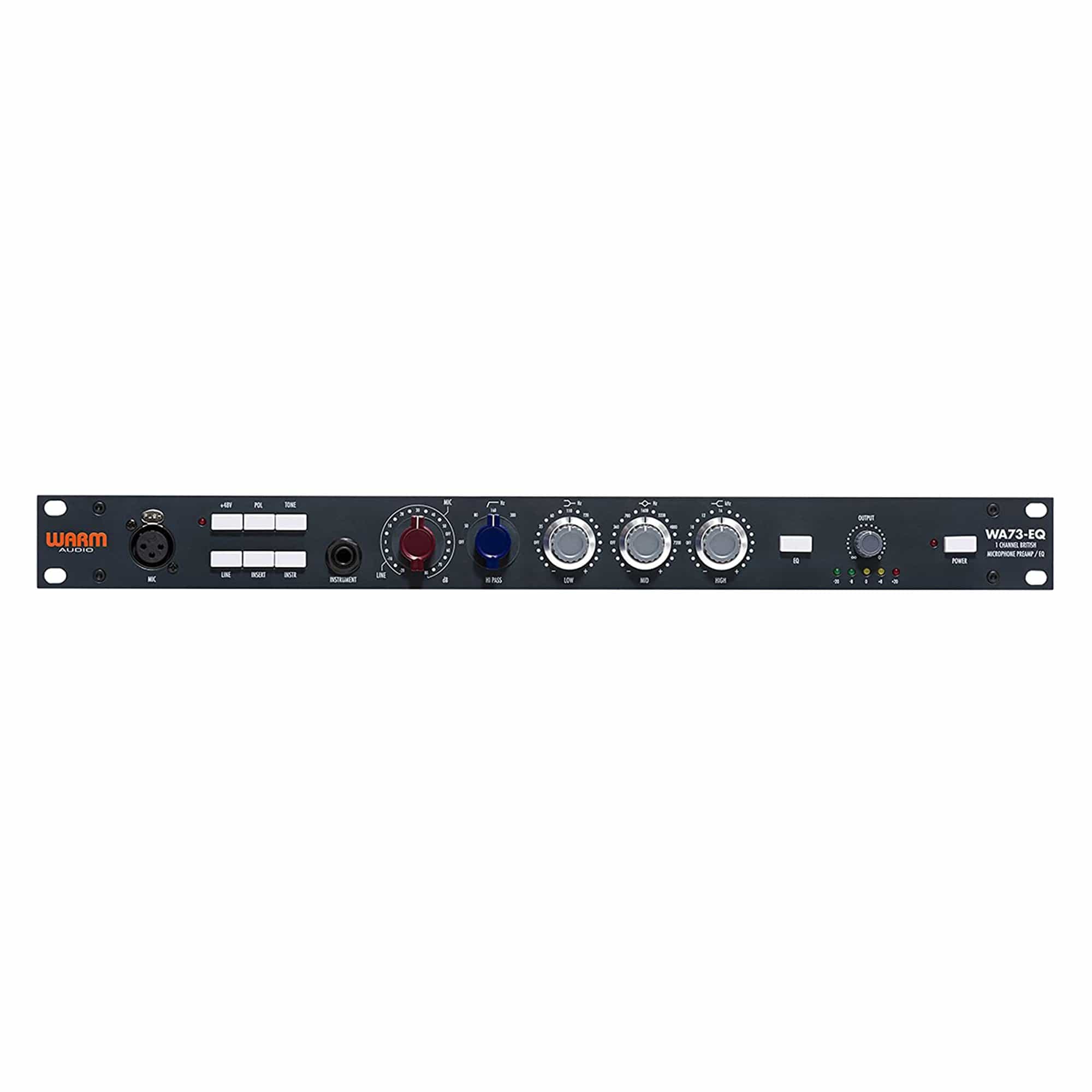
Supplied by 500 series rack with 110-125 mA @ +/- 16V DC | If there’s one style of preamp that professional engineers would unanimously agree has defined the tone of pop/rock records for decades, it would most definitely be the venerable '73-style of mic pre. '73-style preamps have been massively used in recording and live applications for many years and are still considered to be the “Holy Grail” of preamp choices today. The Warm Audio “WA73 Family” consists of single and dual channel '73-style preamps (with & w/out EQ), that each pay careful homage to British audio history.
When we at Warm Audio decided to release the WA73-EQ it was imperative that it met vintage expectation in both design and performance. The tone and sweet character that vintage '73-style mic preamps impart is so unique and familiar, that we had only the pure desire to release sonically accurate reproductions. After years of R&D, intense research and countless hours of auditioning, the WA73-EQ was born!
The WA73-EQ is a “Desert Island” boutique preamp, but it can also be classified as a studio and live work-horse. Classic '73-style preamps are known for being versatile tools that work with all kinds of microphones from Condenser, to Dynamic, to Ribbon. The WA73-EQ equally shines on all types of microphones and sources including; vocals, acoustic/electric guitars, bass, drums, percussion, orchestras, keyboards, and even as a tone shaping tool to run partial or complete mixes through. With 80dB of gain and a fully discrete Carnhill Transformer balanced signal path, there’s no recording, mixing or engineering task that the WA73-EQ can’t handle.
Enthusiasts unequivocally get excited about the components used in classic '73-style British preamps. The signal transformers are a common topic of conversation. Vintage units used various versions of transformers throughout the years, but the most coveted were the earliest versions. These are regarded as the most desirable choice due to their fluid and forgiving nature. They saturate sweetly when pushed, and have been known to make engineers cry when they hear how beautiful their mixes sound through them!
Warm Audio worked closely with Carnhill Transformers of Cambridgeshire, UK, to design faithful reproductions of these most coveted, early version transformers. We at Warm Audio have not yet heard a modern day '73-style preamp sound as sweet and musical as does our WA73-EQ with these beautiful custom Transformers.
An important part of the classic British circuits not often discussed are the different styles of capacitors and output transistor used. We found it important to maintain integrity to the original design by using tantalum and polystyrene capacitors in the signal path and an output transistor choice that is much smoother in the high gain settings than what is typically found in modern '73-style reproductions.
A great sounding '73-style circuit should be just as reliable as it is great sounding. The complex dual concentric switch potentiometers in the EQ sections of the WA73-EQ are made in the UK by Blore Edwards who manufacture military spec switches and potentiometers. The use of Blore-Edwards components is no small inclusion for a '73-style preamp-eq in this price range.
Classic '73-style preamps were often hand-wired and so is the WA73-EQ! Guru’s claim that a portion of the sought after classic British tone can be attributed to the hand-wired nature of the build. The WA73-EQ is hand-wired and hand assembled, including the pcb components that are all populated by hand.
- SINGLE CHANNEL, CLASS A, '73-STYLE BRITISH MICROPHONE PREAMP WITH EQ
- UK MADE CARNHILL TRANSFORMERS
- UK MADE - BLORE EDWARDS EQ DUAL-CONCENTRIC SWITCH POTENTIOMETERS
- HAND WIRED, HAND ASSEMBLED
- 80DB OF GAIN - RESISTOR STEPPED GAIN SWITCH
- FULLY DISCRETE
- TONE BUTTON - CHANGES INPUT TRANSFORMER IMPEDANCE FOR VARYING TONE
- POLARITY SWITCH
- 48V PHANTOM POWER
- INDUCTOR BASED 3 BAND EQ
- LOW BAND BOOST/CUT - 35, 60, 110, 220 HZ
- MID BAND BOOST/CUT - 360, 700, 1600, 3200, 4800, 7200 HZ
- HIGH BAND BOOST/CUT - 10, 12, 16 KHZ
- ADDITIONAL HIGH BAND FREQUENCY EQ POINTS ADDED (COMPARED TO VINTAGE 1073)
- 4 POSITION INDUCTOR BASED HIPASS FILTER - 50, 80, 160, 300 HZ
- XLR MIC INPUTS (FRONT & BACK)
- LINE LEVEL TRS INPUT
- TS SEND/RECEIVE INSERT JACKS
- XLR & TRS LINE LEVEL OUTPUTS
- DIRECT IN, INSTRUMENT INPUT
- OUTPUT CONTROL
- LED LEVEL INDICATION
- FREQ RESPONSE 20HZ - 20KHZ +/-.5 DB
- 19" RACK MOUNTABLE
- INTERNAL IEC 115V/230V POWER INLET
| The Shelford Channel is built around Rupert Neve’s first new transformer-gain, class-A microphone preamplifier in over 40 years, a “best-of-the-classics” inductor EQ section, a tone-packed diode bridge compressor, the power of variable Silk saturation, a new dual-tap transformer output stage, and twice the operating voltage of vintage designs.
The Input Stage and Transformer Gain Mic Pre
Like Rupert’s designs from his time in Little Shelford , the Shelford Channel’s preamplifier uses a directly-coupled transformer input with gain provided by the custom transformer itself – a first in over 40 years for Rupert Neve. This new custom-designed input transformer, along with its careful integration with the surrounding class-A circuitry, is critical to the Channel’s bold and instantly recognizable character.
Conveniently, the Direct Input uses the same topology as the best-selling RNDI Active Transformer Direct Interface, providing astonishing clarity for high-Z instrument signals, with unparalleled low-frequency response and an incredibly smooth high end.
What is Silk?
The Silk & Texture circuit on the Shelford Channel allows you to fine-tune the amount (and type) of harmonic content in the output stage. This means your signal can be adjusted from quite transparent to settings that produce nearly 10x the amount of sonic color as Rupert’s vintage modules – and in two very unique modes. No matter what sound you’re looking for, Silk can help get you there.
The Dual Tap Transformer Output
Complementing the Silk circuit is the custom-designed output transformer, which uses Rupert Neve Designs’ unique dual-tap output topology. This offers both full-headroom (+26dBu) and -6dB outputs, allowing the engineer to drive the unit fully into classic transformer saturation without clipping converters and other devices later in the chain.
The “Best-Of” EQ
The Shelford Channel’s 3-band, custom-tapped inductor EQ was inspired by our favorite elements of Rupert’s vintage EQ designs. The low frequency band is designed to produce a creamy, resonant bass response similar to a vintage 1064 – but unlike the vintage modules, the LF band on the Shelford Channel can be used as either a shelf or a peak filter, adding punch, dimension, and control to your low end.
The midrange band is based on that of the 1073, ideal for sweetening vocals and instruments while bringing them forward in a mix, and its proportional “Q” response makes it well-suited for minimizing problematic frequencies. The high frequency band is a hybrid vintage / modern design, blending inductor circuitry with capacitor-based topologies to achieve vintage tones with enhanced control, with the shelf / peak corner switchable between 8K or 16K.
The Diode Bridge Compressor
Like the Inductor EQ and Transformer Gain microphone preamp, the Diode Bridge Compressor in the Shelford Channel is based on the same topologies found in Rupert’s vintage designs – but refined & adapted for the modern engineer.
What is diode bridge compression? Where the VCA compressor found in the Master Buss Processor provides unmatched clarity, the weighty, harmonically rich tonality of diode bridge compression can be essential in pushing key sources like vocals, electric guitars, bass and drums to the forefront of a mix.
By understanding the limitations of vintage units like the legendary 2254, painstaking effort was taken to reproduce the unique tone of these classics while improving the noise floor & accuracy, expanding inflexible time constants, adding full wave sidechain detection for improved dynamic response, and widening the range of threshold and ratio controls.
Delivering the powerful sound of these iconic designs with enhanced flexibility for the modern age, the Shelford’s diode bridge compressor is a dynamic tool equipped to make a statement on virtually any mix or track.
MIC PREAMP
INPUT IMPEDANCE
2200 Ohm
MAXIMUM INPUT
- +21.5 dBu from 150 Hz to 22 kHz
- +8 dBu 20 Hz to 22 kHz
NOISE
- Un-weighted, 22 Hz-22 kHz, source impedance 150 Ohm balanced.
- Main Out @ unity gain -100.9 dBu
- -6 dB Out @ unity gain -106.6 dBu
- +30 dB gain (Main Out) -91.37 dBu
- +66 dB Gain (Main Out) -64.1 dBu
- Equivalent Input Noise -121.37 dBu
FREQUENCY RESPONSE
+/-0.25 dB from 17 Hz to 45 kHz
DIRECT INPUT
MAXIMUM INPUT
8 dBu @ 20 Hz to 120 kHz
NOISE (MAIN OUTPUT)
-100 dBu (22 Hz to 22 kHz)
LINE INPUT
MAXIMUM INPUT LEVEL
+30.5 dBu 20 Hz to 30 kHz
TOTAL HARMONIC DISTORTION AND NOISE
- @ 1 kHz, +20 dBu output level, no load: Better than 0.002%
- @ 20 Hz, +20 dBu output level, no load: 0.05% Typical (2nd and 3rd harmonic)
NOISE (MAIN OUTPUT)
Un-weighted, 22 Hz - 22 kHz, source impedance 40 Ohm balanced, no load.
-101.1 dBu
FREQUENCY RESPONSE
+/- 0.25 dBu from less than 10 Hz to 110 kHz
-0.32 dB @ 120 kHz
MAXIMUM OUTPUT LEVEL
+26 dBu @ 16 Hz to 20 kHz
TOTAL HARMONIC DISTORTION AND NOISE WITH SILK ENGAGED
RED
- MIN TEXTURE @ 100 Hz, +20 dBu input level, no load: 0.0131%, mostly 3rd harmonic (typical)
- MAX TEXTURE @ 100 Hz, +20 dBu input level, no load: 1.66%, mostly 2rd harmonic (typical)
BLUE
- MIN TEXTURE @ 100Hz, +20 dBu input level, no load: 0.0079%, mostly 3rd harmonic (typical)
- MAX TEXTURE @ 100Hz, +20 dBu input level, no load: 0.941%, mostly 2rd harmonic (typical)
HIGH PASS FILTER
- Continuously variable swept frequency from 20 Hz to 250 Hz.
- Slope: 12 dB/Octave
EQ NOISE
Un-weighted, 22 Hz-22 kHz: -92 dBu
SIGNAL PRESENT
Illuminates GREEN when input stage signal level reaches -20 dBu
OVERLOAD INDICATOR
Illuminates RED when input stage signal level reaches -23 dBu
DIODE BRIDGE COMPRESSOR
- NOISE (BW 22 Hz – 22 kHz)
- 0 dB Makeup Gain: -84.5 dBu
- +20 dB Makeup Gain: -64.2 dBu
TIME CONSTANTS
- Measurements taken represent full range achievable between 1.5:1 Ratio and 8:1 Ratio setting.
- 0 dBu I/P 1kHz Burst Tone used for all recorded measurements.
- Fast (TC1): Attack 180µS — 1.8mS // Release 100mS – 150mS
- MedFast (TC2): Attack 750µS – 5.25mS // Release 160mS – 250mS
- Med (TC3): 2.7mS – 18mS // Release 350mS – 525mS
- MedSlow (TC4): 4.6mS – 38mS // Release 600mS – 1 S
- Slow (TC5): 11mS – 72.5mS // Release 800mS – 1.25 S
- Auto (TC6): 5.75mS – 35.5mS // Release T1 400mS – 850mS, T2 TBD
- “Fast” Mode Multiplier: Modifies aforementioned TC’s by 70% of original value
PRODUCT DIMENSIONS
19” (48.3 cm) x 10.5” (26.7 cm) x 1.75” (4.4 cm) |











Reviews
There are no reviews yet.